Fremont’s Latest General Plan Push: When Local Government Overreach Meets Your Property Rights
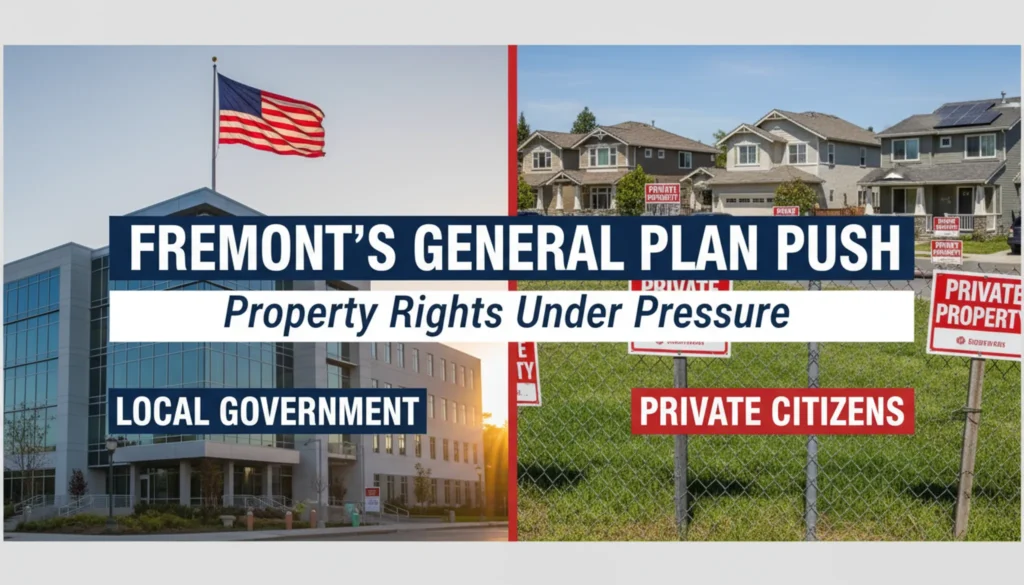
The City of Fremont has quietly released draft General Plan amendments for public review, and if you’re a property owner, taxpayer, or believer in limited government, you should be paying attention. While city officials frame these changes as mere compliance with state mandates, a closer examination reveals yet another example of how well-intentioned legislation can become a vehicle for expanding government control over private property and individual freedoms.
The State Mandate Behind the Changes
The amendments stem from recent changes to state law, specifically Senate Bill 1425 and Assembly Bill 1889, which require cities to update their General Plans regarding open space access, climate resiliency, and wildlife habitat connectivity. On the surface, these requirements may sound reasonable—who doesn’t want clean air and accessible parks? But conservative principles teach us to look beyond the feel-good rhetoric and examine the real-world implications of government expansion.
These state-mandated updates represent a troubling trend: Sacramento politicians imposing one-size-fits-all solutions on local communities, regardless of their unique circumstances, fiscal constraints, or residents’ priorities. Fremont, like many California cities, now finds itself caught between state compliance requirements and the practical realities of governance.
Support Independent Local Journalism
TheTownHall.News is a non-profit reader-supported journalism. Just $5 helps us hire local reporters, investigate important issues, and hold public officials accountable across Alameda County. If you believe our community deserves strong, independent journalism, please consider donating $5 today to support our work.The Public Review Process: A Lesson in Civic Engagement
To their credit, Fremont officials have opened a public review period running from October 13 to October 27, 2025, allowing residents to submit comments via email to the Planning Division. This represents exactly the kind of local democratic process that conservatives champion—direct citizen participation in government decisions that affect their daily lives.
However, the brief two-week window raises questions about whether the city is genuinely seeking robust public input or simply checking a procedural box. Meaningful public engagement requires adequate time for citizens to review complex planning documents, consult with neighbors, and formulate thoughtful responses. Property owners and business leaders, who will bear the brunt of any new regulations, deserve more than a rushed review process.
The Hidden Costs of Compliance
While the city presents these amendments as updates to existing plans rather than wholesale changes, conservatives understand that even seemingly minor regulatory adjustments can have significant economic consequences. Every new environmental requirement, every additional layer of habitat protection, and every expanded definition of “open space access” potentially translates into:
- Increased development costs that get passed on to homebuyers and renters
- Reduced property values for landowners facing new restrictions
- Higher taxes to fund compliance monitoring and enforcement
- Delayed project approvals that stifle economic growth
The amendments reference “existing citywide plans and policies that have been implemented since the 2011 adoption of the General Plan,” suggesting that Fremont has already been moving in this direction for over a decade. This incremental approach—implementing policies piece by piece rather than through comprehensive public debate—exemplifies how government scope gradually expands beyond its proper boundaries.

Property Rights Under Pressure
At the heart of these General Plan amendments lies a fundamental tension between collective environmental goals and individual property rights. The focus on “wildlife and habitat connectivity” sounds environmentally responsible, but it often translates into restrictions on how property owners can use their land.
Conservative philosophy recognizes that property rights form the foundation of economic freedom and prosperity. When government—whether state or local—can dictate how private landowners must manage their property to serve broader environmental objectives, it represents a significant shift away from free-market principles toward centralized planning.
The emphasis on “open space access” raises additional concerns. While public access to recreational areas benefits communities, mandating such access can effectively convert private property into quasi-public space, reducing its value and the owner’s autonomy. Property owners who purchased land with certain expectations about allowable uses may find themselves facing new restrictions without compensation.
The “United Against Hate” Distraction
Simultaneously, Fremont continues promoting its “Fremont Against Hate” initiative, joining with other Bay Area cities in what officials describe as efforts to “bridge divisions and bring communities together.” While combating genuine hate crimes remains important, these broadly defined anti-hate programs often raise legitimate concerns about free speech and ideological conformity.
The timing is notable: while the city asks residents to focus on feel-good unity messaging, it’s simultaneously pushing through substantive policy changes that could significantly impact property rights and economic freedom. This pattern—using social justice rhetoric to deflect attention from controversial policy initiatives—has become increasingly common in progressive-leaning jurisdictions.
Support Independent Local Journalism
TheTownHall.News is a non-profit reader-supported journalism. Just $5 helps us hire local reporters, investigate important issues, and hold public officials accountable across Alameda County. If you believe our community deserves strong, independent journalism, please consider donating $5 today to support our work.Conservative citizens should ask: What specific activities does “Fremont Against Hate” encompass? How does the city define “hate” and “bias”? Will these initiatives include speech codes or reporting mechanisms that could chill legitimate political discourse? The vague language surrounding such programs often masks efforts to suppress conservative viewpoints under the guise of promoting tolerance.
The Fiscal Accountability Question
Neither the General Plan amendments nor the anti-hate initiative comes with detailed cost projections, yet both will require ongoing city resources to implement and maintain. Fremont taxpayers deserve transparent accounting of how much these programs will cost and what other priorities might be deferred to accommodate them.
Conservative fiscal principles demand that government justify every expenditure and prioritize essential services over ideological initiatives. Before expanding into new areas like habitat connectivity monitoring or hate prevention programming, the city should demonstrate that it has adequately funded core services like public safety, infrastructure maintenance, and basic municipal operations.
A Call for Citizen Vigilance
The Fremont General Plan amendments represent more than technical updates—they exemplify the ongoing tension between individual liberty and collective mandates that defines much of contemporary politics. State lawmakers in Sacramento pass feel-good legislation requiring local compliance, local officials implement the mandates while claiming their hands are tied, and citizens gradually lose control over their property and communities.
This process succeeds only when citizens remain passive. Conservative principles call for active engagement in local government, where individual voices carry the most weight and meaningful change remains possible.
Conclusion: Defending Local Control and Individual Rights
Fremont’s draft General Plan amendments deserve scrutiny not because environmental protection lacks merit, but because the process illustrates how state mandates can override local priorities and individual rights. When Sacramento politicians decide that every California city must prioritize habitat connectivity and climate resiliency according to their specifications, they’re effectively nullifying local democratic control.
The real test lies not in the amendments themselves, but in how Fremont residents respond. Will they engage meaningfully in the review process, ask tough questions about costs and implementation, and demand accountability from their elected officials? Or will they allow these changes to proceed with minimal oversight, setting precedent for future expansions of government authority?
Conservative citizens understand that protecting freedom requires constant vigilance, especially at the local level where policies directly impact daily life. The General Plan amendments may seem technical and mundane, but they represent fundamental questions about who controls land use, how much regulation citizens will accept, and whether local communities retain meaningful self-governance.
Call to Action
Don’t let these important decisions happen without your voice. Review the draft General Plan amendments on Fremont’s website, submit your comments before the October 27 deadline, and attend Planning Commission meetings when these items come up for discussion. Share this article with neighbors and fellow property owners who need to understand what’s at stake. Most importantly, stay engaged with local government—it’s where your individual vote and voice matter most. The future of property rights and limited government depends on citizens who refuse to remain silent when bureaucrats expand their reach into our communities and our lives.