When Infrastructure Fails: Dublin Big Rig Crash Exposes California’s Transportation Crisis
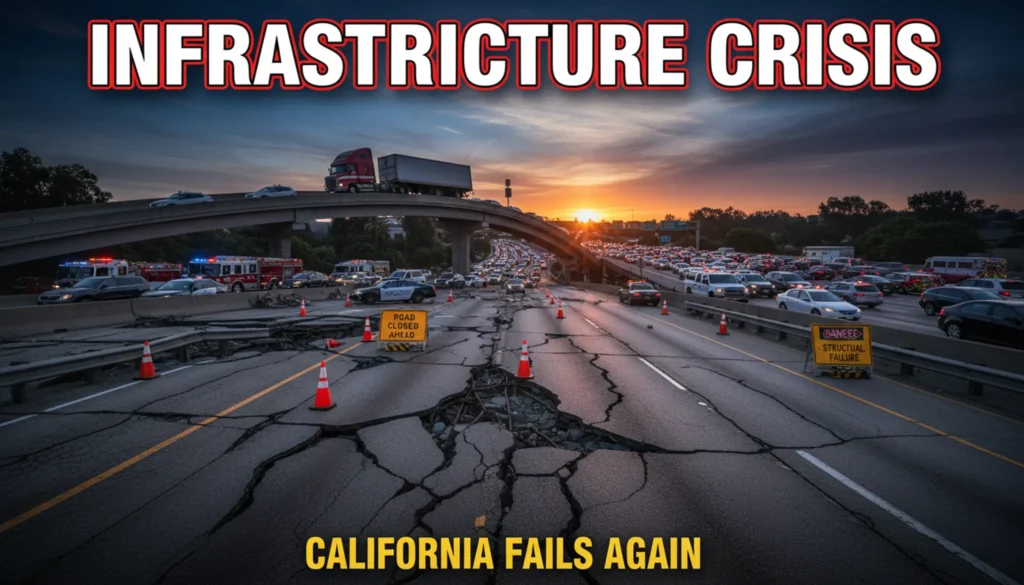
This morning, as hardworking Dublin residents prepared for another day of contributing to California’s economy, a massive big rig overturned on the critical I-680 to I-580 transition ramp, grinding traffic to a halt and stranding thousands of commuters. While accidents happen, this incident serves as a stark reminder of a deeper problem plaguing the Golden State: decades of infrastructure neglect while billions flow to pet projects and bureaucratic bloat.
The crash, which closed one of Dublin’s most vital transportation arteries, didn’t just inconvenience drivers—it cost businesses money, forced parents to scramble for childcare arrangements, and highlighted the fragility of a transportation system that California’s working families depend on every single day.
The Real Cost of Government Misplaced Priorities
Where Your Tax Dollars Really Go
While California drivers navigate crumbling roads and dangerous interchanges, Sacramento continues to funnel taxpayer money toward ideological projects that do little to improve the daily lives of working families. The state’s high-speed rail boondoggle has consumed over $100 billion with little to show for it, while basic infrastructure maintenance takes a backseat to progressive virtue signaling.
Support Independent Local Journalism
TheTownHall.News is a non-profit reader-supported journalism. Just $5 helps us hire local reporters, investigate important issues, and hold public officials accountable across Alameda County. If you believe our community deserves strong, independent journalism, please consider donating $5 today to support our work.Consider this: California has some of the highest gas taxes in the nation, supposedly dedicated to road improvements. Yet drivers in Dublin and throughout the East Bay continue to face deteriorating conditions, poorly designed interchanges, and inadequate safety measures. Where is the accountability? Where are the results?
The I-680/I-580 interchange represents a perfect example of government failure to prioritize basic responsibilities. This critical junction handles thousands of vehicles daily, connecting working families to their jobs and businesses to their customers. Yet instead of investing in proven infrastructure improvements, California’s leadership has chosen to chase trendy projects that generate headlines but deliver little practical value.
The Hidden Costs of Poor Infrastructure
When a major route like today’s crash site closes, the economic ripple effects extend far beyond traffic delays. Small business owners lose revenue when employees can’t reach work or customers can’t access services. Parents face unexpected childcare costs when school pickup times become impossible to meet. Emergency services struggle to respond efficiently when alternate routes become congested.
These aren’t abstract policy discussions—they’re real consequences affecting real families who are already struggling with California’s crushing cost of living. Every minute spent in traffic due to poor infrastructure planning is time stolen from families, productivity lost from the economy, and fuel wasted that working people can barely afford.

Law and Order: The Safety Imperative
Accountability Starts with Responsible Governance
True conservative governance demands accountability at every level. When infrastructure fails, when safety measures prove inadequate, when preventable accidents occur, taxpayers deserve answers—not excuses. The Dublin crash should prompt serious questions about inspection protocols, safety standards, and maintenance schedules for our most critical transportation infrastructure.
Law and order isn’t just about criminal justice—it’s about creating orderly, safe communities where families can thrive. That includes ensuring our roads and highways meet the highest safety standards, that commercial vehicle regulations are properly enforced, and that infrastructure investments prioritize public safety over political considerations.
Personal Responsibility in Public Policy
While we must hold government accountable for infrastructure failures, we also recognize that effective solutions require personal responsibility from all stakeholders. Commercial drivers must maintain the highest safety standards. Citizens must demand transparency from their elected officials. Local communities must engage in the planning process to ensure their needs are heard and addressed.
The conservative approach to infrastructure doesn’t just throw money at problems—it demands efficiency, accountability, and results. It recognizes that government’s primary responsibility is protecting public safety and facilitating commerce, not pursuing experimental social engineering projects.
Fiscal Accountability: Getting Our Priorities Straight
The True Cost of Progressive Priorities
California’s infrastructure crisis didn’t happen overnight—it’s the result of decades of misplaced priorities and fiscal irresponsibility. While basic road maintenance and safety improvements languished, state and local governments pursued expensive progressive initiatives that sound good in press releases but fail to address the fundamental needs of working families.
Support Independent Local Journalism
TheTownHall.News is a non-profit reader-supported journalism. Just $5 helps us hire local reporters, investigate important issues, and hold public officials accountable across Alameda County. If you believe our community deserves strong, independent journalism, please consider donating $5 today to support our work.The math is simple: every dollar spent on ineffective programs is a dollar not available for critical infrastructure. Every bureaucratic layer added to the approval process delays needed improvements. Every environmental review that takes years instead of months keeps dangerous conditions in place longer.
Conservative fiscal principles demand that we prioritize spending based on actual public benefit, not political popularity. Infrastructure improvements that enhance safety, reduce commute times, and facilitate economic growth should take precedence over ideological pet projects that primarily serve to advance political careers.
Streamlining for Results
Effective infrastructure improvement requires streamlined processes that eliminate bureaucratic delays while maintaining appropriate safety and environmental standards. The conservative approach recognizes that excessive regulation often becomes a barrier to progress, preventing the very improvements that would enhance public safety and economic prosperity.
Local communities like Dublin need infrastructure solutions that work—not endless studies, reviews, and bureaucratic processes that delay action while problems worsen. The private sector consistently demonstrates superior efficiency in project delivery when freed from excessive government interference.
A Path Forward: Conservative Solutions That Work
Prioritizing Core Functions
Conservative governance starts with a simple principle: government should excel at its core functions before expanding into peripheral activities. Transportation infrastructure is undeniably a core government responsibility, yet California has allowed this fundamental duty to deteriorate while pursuing an ever-expanding array of social programs and regulatory initiatives.
The solution requires refocusing state and local priorities on basic infrastructure needs. This means dedicating transportation revenues exclusively to transportation improvements, eliminating diversions to unrelated programs, and establishing clear performance metrics that hold officials accountable for results.
Embracing Innovation and Efficiency
Conservative solutions don’t just preserve the status quo—they embrace innovation that delivers better results at lower costs. Public-private partnerships can leverage private sector efficiency while maintaining public oversight. Performance-based contracting ensures taxpayers get value for their investment. Modern technology can optimize traffic flow and prevent accidents before they occur.
The Dublin crash should serve as a wake-up call for embracing proven solutions rather than continuing failed approaches. Communities that prioritize infrastructure investment, streamline approval processes, and demand accountability consistently deliver better results for their residents.
Conclusion: Demanding Better for Our Communities
Today’s crash in Dublin represents more than a traffic inconvenience—it symbolizes the broader failure of progressive governance to address the fundamental needs of working families. While California’s political class pursues ideological priorities, real people suffer real consequences from deteriorating infrastructure and misplaced government priorities.
Conservative principles offer a clear alternative: prioritize core government functions, demand fiscal accountability, streamline bureaucratic processes, and measure success by results rather than intentions. The families stuck in traffic this morning, the businesses losing revenue, and the emergency responders navigating congested alternate routes all deserve better than the status quo.
The choice is clear: continue accepting infrastructure failure as inevitable, or demand the accountable, efficient governance that conservative principles provide. Dublin’s working families—and communities throughout California—deserve leaders who understand that government’s first responsibility is ensuring the basic systems that allow society to function safely and efficiently.
Call to Action
Stay informed about infrastructure issues in your community. Contact your local representatives and demand accountability for transportation spending. Share this article with neighbors and fellow commuters who deserve to know how misplaced priorities affect their daily lives. Most importantly, vote for candidates who prioritize core government functions over ideological experiments. Your family’s safety and economic prosperity depend on it.
Follow us for more coverage of how conservative solutions can address California’s infrastructure crisis and restore accountable governance to our communities.