The Price of Progressive Promises: NYC’s New Mayor and the Reality Check That’s Coming
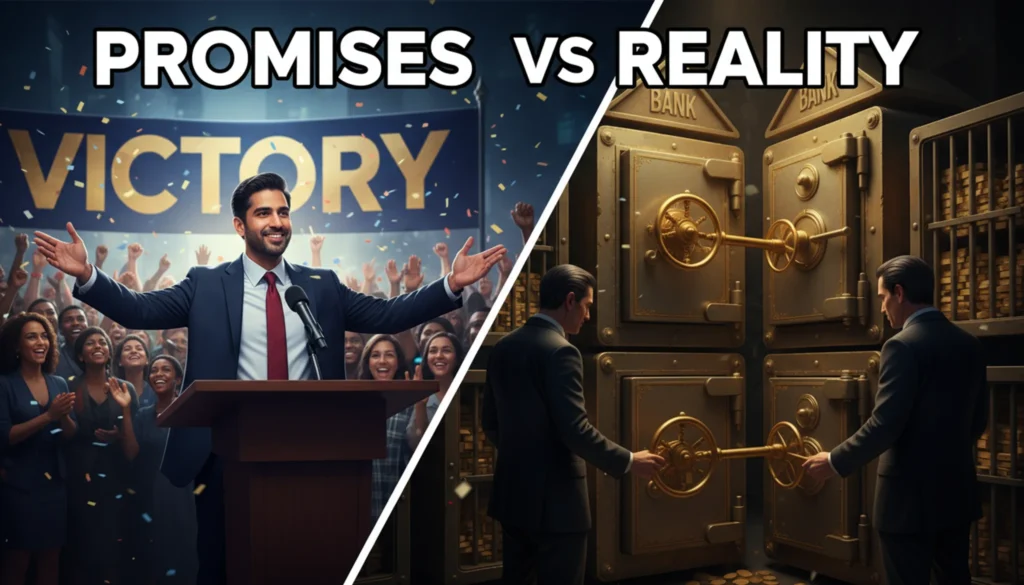
The champagne had barely finished flowing at Zohran Mamdani’s victory party when the real work began—not in City Hall, but in corporate boardrooms across Manhattan. Within hours of the 34-year-old democratic socialist’s stunning mayoral victory, Wall Street executives were reportedly scrambling to assess the financial implications of his ambitious—and expensive—campaign promises.
The irony is palpable. Many of the same progressive-leaning businesses and wealthy donors who championed “social justice” causes during the campaign are now quietly consulting their accountants about tax shelters and relocation strategies. It’s a classic case of liberal virtue signaling meeting conservative fiscal reality.
The Campaign Promise Buffet
Mamdani’s platform reads like a progressive wish list: universal childcare, free public transportation, city-owned grocery stores, and rent freezes. On paper, these policies sound compassionate and forward-thinking. In practice, they represent a massive expansion of government that would fundamentally reshape New York City’s relationship with its residents—and their wallets.
Support Independent Local Journalism
TheTownHall.News is a non-profit reader-supported journalism. Just $5 helps us hire local reporters, investigate important issues, and hold public officials accountable across Alameda County. If you believe our community deserves strong, independent journalism, please consider donating $5 today to support our work.The New York Times analysis of Mamdani’s proposals reveals staggering costs that would require unprecedented tax increases or massive borrowing. Universal childcare alone could cost billions annually, while making all city buses free would eliminate hundreds of millions in revenue that the Metropolitan Transportation Authority desperately needs.
This isn’t just about numbers on a spreadsheet—it’s about the fundamental question of who pays when government promises everything to everyone.
The Business Community’s Wake-Up Call
The business community’s reaction has been swift and telling. Reports indicate that major financial firms are already exploring contingency plans, from relocating operations to restructuring tax strategies. This isn’t panic—it’s prudent business planning in the face of policies that could dramatically increase the cost of doing business in America’s financial capital.
Conservative principles teach us that businesses don’t simply absorb higher costs—they pass them on to consumers, reduce hiring, or relocate to more business-friendly environments. When New York’s largest employers start planning exit strategies, every working family in the city should be concerned about their economic future.

The Empire Center’s analysis of Mamdani’s tax proposals reveals the scope of the challenge. To fund his ambitious agenda, the mayor-elect would need to implement some of the highest tax rates in the nation—rates that would make New York City even less competitive compared to states like Florida and Texas, which have been attracting businesses and residents fleeing high-tax jurisdictions.
The Fiscal Responsibility Gap
Here’s where conservative values offer a crucial counterpoint to progressive idealism: sustainable prosperity requires fiscal discipline, not just good intentions. When government promises services it cannot afford, someone always pays the bill—usually working families through higher taxes, reduced services elsewhere, or both.
Mamdani’s supporters argue that his policies will reduce inequality and improve quality of life. But conservative economics suggests a different outcome: when you make it more expensive to operate businesses and live in a city, you don’t get more equality—you get fewer opportunities for everyone.
Consider the rent freeze proposal. While it sounds like relief for tenants, economic history shows that rent control typically reduces housing supply, discourages maintenance, and creates housing shortages. The people hurt most are often the working-class families the policy was designed to help.
The Accountability Question
Perhaps most concerning is the apparent disconnect between campaign rhetoric and governing reality. During the campaign, many wealthy donors and progressive businesses supported Mamdani’s vision. Now that he’s won, these same supporters are reportedly seeking ways to minimize their exposure to the very policies they endorsed.
Support Independent Local Journalism
TheTownHall.News is a non-profit reader-supported journalism. Just $5 helps us hire local reporters, investigate important issues, and hold public officials accountable across Alameda County. If you believe our community deserves strong, independent journalism, please consider donating $5 today to support our work.This hypocrisy reveals a fundamental problem with progressive politics: it’s easy to support generous government programs when you assume someone else will pay for them. Conservative principles emphasize personal responsibility and fiscal accountability—values that demand honest conversations about costs and trade-offs.
The question facing New York City isn’t whether Mamdani’s goals are admirable—many are. The question is whether his methods are sustainable and whether the city can afford the social engineering experiment he’s proposing.
The Path Forward
New York City stands at a crossroads. It can continue down the path of ever-expanding government and higher taxes, following the model of cities like San Francisco and Seattle that have seen businesses and middle-class families flee. Or it can embrace policies that encourage economic growth, job creation, and genuine opportunity for all residents.
Conservative solutions don’t ignore social problems—they address them through proven methods that strengthen rather than burden the economy. Instead of universal childcare funded by taxpayers, why not expand tax credits that help families choose their own childcare solutions? Instead of free buses that eliminate accountability and increase costs, why not targeted assistance for low-income riders while maintaining a sustainable funding model?
The business community’s nervous reaction to Mamdani’s victory isn’t about greed—it’s about recognizing that sustainable social progress requires a strong economic foundation. When businesses thrive, they create jobs, generate tax revenue, and provide the prosperity that makes social programs possible.
A Reality Check for Progressive Promises
The early signs suggest that Mamdani’s honeymoon period with the business community will be brief. Wall Street’s preparations for his administration indicate a fundamental tension between campaign promises and economic reality.
Conservative principles remind us that good intentions without fiscal discipline often lead to unintended consequences. When government expands beyond its means, it doesn’t just burden taxpayers—it undermines the very prosperity that makes generous social programs possible.
The challenge for Mayor-elect Mamdani will be reconciling his progressive vision with the fiscal constraints of governing. The business community’s reaction suggests they’re not confident he can thread that needle.
Call to Action
The next four years will be crucial for New York City’s future. Conservative voices must stay engaged in local politics, holding elected officials accountable for fiscal responsibility and economic growth. Share this article to help others understand the real costs of progressive promises, and consider supporting candidates and organizations that champion sustainable, market-based solutions to social challenges.
Stay informed about local budget debates, attend city council meetings, and make your voice heard. The future of America’s greatest city depends on citizens who understand that compassion without fiscal discipline isn’t progress—it’s a path to decline.