Treasury Exposes $9 Billion Biden-Era Contracting Scandal: How DEI Policies Enabled Massive Fraud
Written by Tom Wong, Investigative Journalist
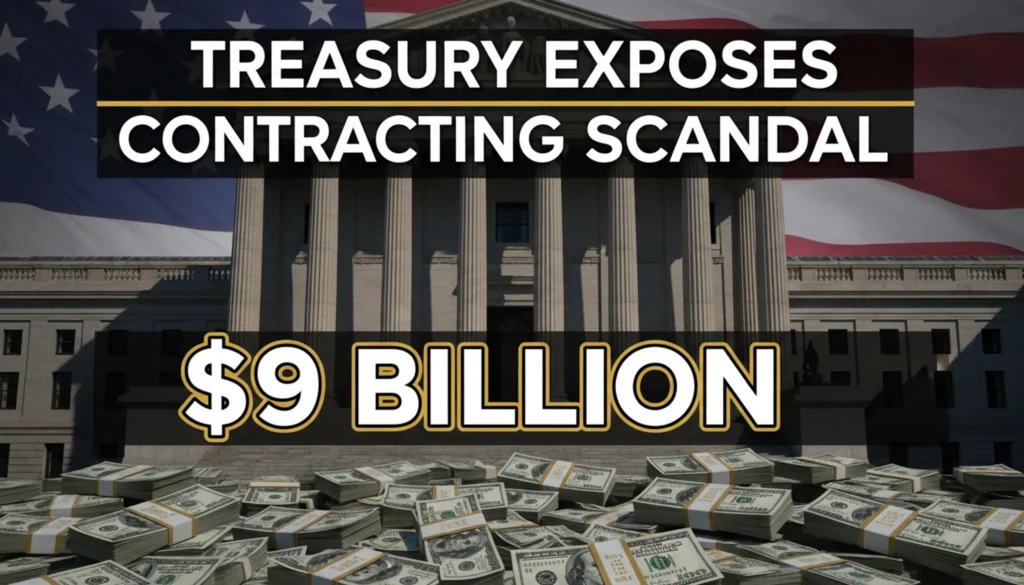
The numbers are staggering, and the implications are even worse. On November 6th, Treasury Secretary Scott Bessent ordered a department-wide investigation into what may be one of the largest procurement fraud schemes in federal history—$9 billion in potentially fraudulent contracts awarded under the Biden administration’s “equity in procurement” initiative.
I’ve spent years investigating government waste, but this revelation exposes something far more sinister: how progressive ideology created the perfect cover for massive taxpayer theft.
Support Independent Local Journalism
TheTownHall.News is a non-profit reader-supported journalism. Just $5 helps us hire local reporters, investigate important issues, and hold public officials accountable across Alameda County. If you believe our community deserves strong, independent journalism, please consider donating $5 today to support our work.Why This Matters Now
This isn’t just another story about government inefficiency. This is about how the Biden administration’s obsession with diversity, equity, and inclusion (DEI) policies systematically dismantled procurement safeguards, allowing sophisticated fraudsters to exploit programs meant to help legitimate small businesses. Every American taxpayer funded this scheme, and every legitimate small business owner was cheated out of fair competition.
The Treasury investigation centers on abuse of the Small Business Administration’s 8(a) Business Development Program and other preference-based contracting initiatives. According to the Treasury announcement, large companies created “pass-through arrangements” where eligible small businesses received minimal fees while subcontracting nearly all work—essentially selling their certification status to the highest bidder.
The ATI Government Solutions Case: A $253 Million Warning Shot
The Treasury’s investigation began after discovering fraud allegations against ATI Government Solutions, resulting in the suspension and termination of more than $253 million in contract awards. But ATI represents just the tip of the iceberg.
The fraud mechanics are both sophisticated and brazen. Large contractors identified small businesses eligible for 8(a) program benefits—companies owned by socially and economically disadvantaged individuals. These large contractors then created partnerships where the small business would bid for and win federal contracts, but immediately subcontract nearly all work back to the large company.

The small business received a small fee for lending their certification status, while the large contractor performed the actual work and collected the majority of taxpayer funds. This arrangement violated both the spirit and letter of federal contracting law, which requires that certified small businesses perform a substantial portion of the work themselves.
The Numbers Tell the Story
To understand the scope of this scandal, consider these facts:
- $9 billion: Total value of contracts under Treasury’s investigation
- $253 million: Value of ATI Government Solutions contracts already suspended
- 4 years: Duration of Biden administration’s “equity in procurement” push
- Multiple agencies: SBA’s audit extends beyond Treasury to examine contracts government-wide
SBA Administrator Kelly Loeffler didn’t mince words in her statement: “During the Biden Administration, federal contracting set-aside programs proliferated without scrutiny or oversight.” Her agency launched a full audit of the 8(a) program earlier this year after discovering widespread abuse across multiple federal agencies.
Trump Administration’s Swift Response
President Trump’s approach to this crisis demonstrates the stark contrast between his administration’s accountability focus and the Biden administration’s ideologically-driven procurement policies. Within months of taking office, Treasury Secretary Bessent ordered comprehensive reforms:
Enhanced Oversight Measures:
Support Independent Local Journalism
TheTownHall.News is a non-profit reader-supported journalism. Just $5 helps us hire local reporters, investigate important issues, and hold public officials accountable across Alameda County. If you believe our community deserves strong, independent journalism, please consider donating $5 today to support our work.- Detailed staffing plans required for all service contracts
- Monthly workforce performance reports to detect non-performance
- Strengthened verification procedures for small business certifications
Fraud Detection Protocols:
- Department-wide audit of preference-based contracting
- Coordination with SBA’s ongoing 8(a) program investigation
- New accountability measures for acquisition professionals
“President Trump has directed his administration to eliminate fraud and waste wherever it occurs, ensuring that each taxpayer dollar is spent as intended,” Secretary Bessent stated. This represents a fundamental shift from the Biden administration’s approach, which prioritized equity goals over fraud prevention.
The DEI Connection: How Ideology Enabled Fraud
The most troubling aspect of this scandal is how DEI ideology created perfect cover for sophisticated fraud schemes. The Biden administration’s emphasis on equity in procurement created enormous pressure on federal acquisition officers to award contracts to certified disadvantaged businesses, regardless of red flags.
Administrator Loeffler’s statement directly addresses this connection: “This Administration will not tolerate DEI-based contracting and abuse that compromises opportunity for legitimate and eligible small businesses.”
The timeline reveals how quickly things deteriorated. The Biden administration launched its “equity in procurement” initiative in 2021, promising to increase federal contracting opportunities for disadvantaged businesses. Instead, it appears to have created a multi-billion-dollar fraud scheme that enriched well-connected contractors while legitimate small businesses struggled to compete.
Real Victims: Legitimate Small Businesses
Lost in the political rhetoric are the real victims of this fraud: legitimate small business owners who played by the rules and lost opportunities to fraudulent competitors. These entrepreneurs watched as contracts they deserved went to sophisticated pass-through schemes that made a mockery of programs designed to level the playing field.
The competitive bidding process was corrupted, potentially costing taxpayers additional billions in inflated contract prices. When fraudulent companies don’t actually perform the work they’re contracted to do, quality suffers and costs escalate—all at taxpayer expense.
Constitutional and Legal Implications
This scandal raises serious constitutional questions about the federal government’s role in race-based contracting preferences. The widespread fraud could provide grounds for challenging the entire 8(a) program structure, especially in light of recent Supreme Court decisions limiting affirmative action programs.
The fraud also violates numerous federal statutes, including the False Claims Act, which allows for treble damages and significant penalties. Criminal prosecutions are likely, with potential sentences of up to 20 years for major contractors involved in the schemes.
The Path Forward: Conservative Solutions
The Trump administration’s response demonstrates how principled conservative governance can address both fraud and legitimate small business development:
Immediate Reforms:
- Merit-based contracting with enhanced fraud detection
- Elimination of race-based preferences that enable pass-through schemes
- Strengthened oversight and accountability measures
Long-term Solutions:
- Transition to income-based assistance programs that avoid constitutional issues
- Enhanced competition through reduced regulatory barriers for all small businesses
- Focus on geographic preferences that help rural and economically disadvantaged communities
Accountability Measures:
- Criminal prosecution of fraudulent contractors
- Recovery of stolen taxpayer funds through civil litigation
- Professional sanctions for acquisition officials who ignored obvious red flags
Treasury’s new requirements for detailed staffing plans and monthly workforce performance reports represent exactly the kind of common-sense oversight that should have been in place all along. These tools will help detect non-performance and pass-through contracting that could point to potential fraud.
Looking Ahead: Accountability and Reform
This scandal perfectly encapsulates why American voters rejected the Biden administration’s approach to governance. When ideology trumps accountability, taxpayers pay the price while fraudsters profit.
The Treasury investigation represents just the beginning of what promises to be the largest procurement fraud investigation in federal history. As Secretary Bessent’s team uncovers additional evidence, we can expect criminal referrals, civil lawsuits, and fundamental reforms to federal contracting procedures.
For legitimate small business owners, the Trump administration’s reforms offer hope for fair competition and genuine opportunity. For taxpayers, these reforms represent a commitment to fiscal responsibility and constitutional governance.
The choice facing America in future elections couldn’t be clearer: continue down the path of ideologically-driven governance that enables massive fraud, or return to principled leadership that puts accountability and taxpayer protection first.
President Trump’s swift action on this scandal demonstrates exactly why conservative governance matters. When government focuses on its core responsibilities rather than progressive social engineering, everyone benefits—except the fraudsters who have been stealing from American taxpayers for far too long.
As this investigation unfolds, Americans deserve full transparency about how their tax dollars were misused and what steps are being taken to prevent future fraud. The $9 billion under investigation represents real money that could have funded legitimate government services or remained in taxpayers’ pockets.
Treasury’s comprehensive audit sends a clear message: the era of unchecked DEI-driven contracting is over. Under President Trump’s leadership, federal agencies will prioritize accountability, transparency, and results—not progressive ideology that enables fraud and wastes taxpayer money.