Trump’s Venezuela Showdown: Why Tough Foreign Policy Beats Diplomatic Weakness
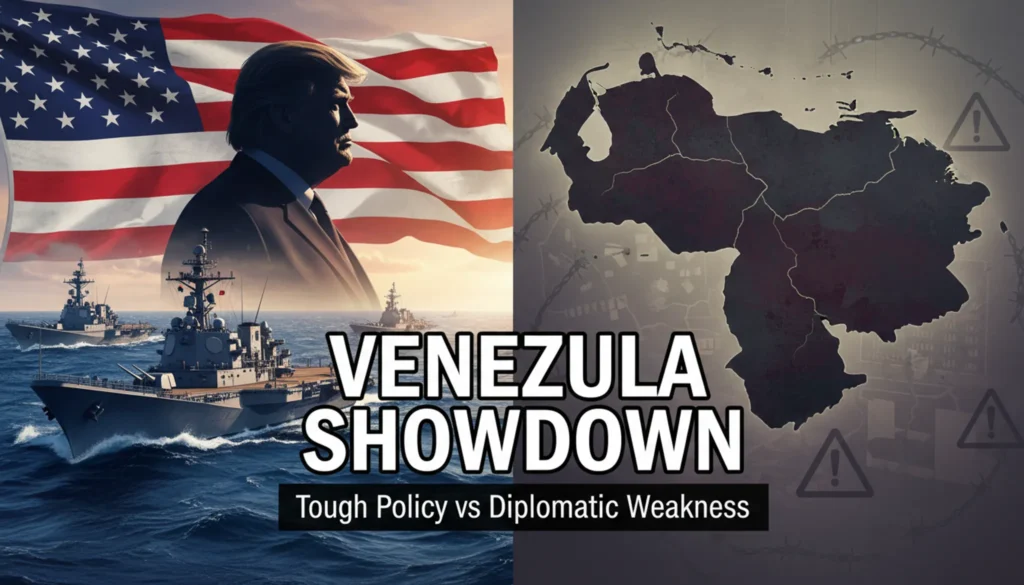
A Return to Strength in Foreign Policy
For years, American foreign policy toward Latin America has oscillated between ineffective diplomatic overtures and passive acceptance of authoritarian regimes that threaten U.S. national security. President Donald Trump’s recent escalation with Venezuelan dictator Nicolás Maduro represents a fundamental departure from this failed approach—and it’s exactly what American interests require.
On November 29th, Trump declared Venezuelan airspace “closed in its entirety,” following military strikes against drug-trafficking vessels and the designation of the Cartel de los Soles as a terrorist organization. Simultaneously, Trump announced plans to pardon former Honduran President Juan Orlando Hernández, currently serving a 45-year sentence for drug trafficking charges. While critics immediately condemned these actions as contradictory or reckless, they fundamentally misunderstand the strategic calculus of effective foreign policy rooted in American interests, national security, and the rule of law.
These decisions aren’t contradictions—they’re components of a coherent strategy that prioritizes results over appearances, American sovereignty over international approval, and decisive action over endless diplomatic theater.
Support Independent Local Journalism
TheTownHall.News is a non-profit reader-supported journalism. Just $5 helps us hire local reporters, investigate important issues, and hold public officials accountable across Alameda County. If you believe our community deserves strong, independent journalism, please consider donating $5 today to support our work.The Venezuela Crisis: When Diplomacy Enables Dictatorship
Venezuela under Maduro has become a narco-state that directly threatens American security. According to the U.S. Department of Justice, Maduro leads the Cartel de los Soles, a drug-trafficking organization comprised of high-ranking Venezuelan officials who have flooded American communities with cocaine while enriching themselves through corruption. The Trump administration’s recent designation of this cartel as a terrorist organization acknowledges what conservatives have long understood: some regimes cannot be reformed through dialogue—they must be confronted.
The State Department reports that Venezuelan drug trafficking operations have been responsible for pumping massive quantities of narcotics into the United States and Europe. This isn’t merely a foreign policy challenge; it’s a domestic crisis that affects American families, communities, and the rule of law within our borders.
Trump’s military strikes against Venezuelan drug-trafficking boats represent a principled application of force to protect American interests. Unlike previous administrations that treated Latin American drug trafficking as primarily a law enforcement matter, Trump recognizes it as a national security threat requiring comprehensive response. This is what “America First” foreign policy looks like in practice: identifying threats, acting decisively, and refusing to subordinate American security to diplomatic niceties.
The closure of Venezuelan airspace sends an unmistakable message to Maduro and other regional adversaries: the United States will no longer tolerate narco-dictatorships operating with impunity on our doorstep. Critics who worry about “escalation” miss the point entirely—escalation already occurred when Maduro transformed Venezuela into a drug-trafficking hub targeting American citizens.

The Hernández Pardon: Context Matters in Foreign Policy
Trump’s announcement that he will pardon Juan Orlando Hernández has generated predictable outrage from the left and confusion among some conservatives. Hernández was convicted in 2024 of conspiring to import cocaine into the United States and weapons charges, receiving a 45-year sentence. On its face, pardoning a convicted drug trafficker seems to contradict Trump’s tough stance on Venezuela.
However, foreign policy cannot be conducted through simplistic moral absolutes divorced from strategic context. According to NPR and BBC reporting, Trump stated that Hernández “was treated very harshly and unfairly.” While the evidence presented at trial was substantial, the pardon consideration reflects several legitimate conservative principles that transcend the immediate case.
First, it acknowledges the reality of prosecutorial overreach. The American justice system, while generally fair, is not infallible. A 45-year sentence—essentially a life sentence for a foreign leader—raises questions about proportionality, particularly when compared to sentences for similar offenses. Conservatives who champion criminal justice reform and skepticism toward unchecked prosecutorial power should recognize these concerns as consistent with our principles.
Second, foreign policy requires understanding regional dynamics that courtrooms cannot fully capture. Hernández was a U.S. ally who cooperated on migration control and regional security issues during his presidency. The pardon reflects a pragmatic recognition that international relationships involve complex trade-offs that pure legal proceedings may not adequately weigh.
Third, and perhaps most importantly, the pardon demonstrates that American foreign policy operates on American terms, not international tribunals or progressive demands for ideological consistency. Trump’s willingness to make controversial decisions based on strategic assessment rather than media approval exemplifies the kind of sovereign decision-making that conservatives value.
Support Independent Local Journalism
TheTownHall.News is a non-profit reader-supported journalism. Just $5 helps us hire local reporters, investigate important issues, and hold public officials accountable across Alameda County. If you believe our community deserves strong, independent journalism, please consider donating $5 today to support our work.Principled Realism vs. Naive Idealism
The apparent tension between confronting Maduro and pardoning Hernández actually illustrates a sophisticated understanding of foreign policy that progressives consistently fail to grasp: different situations require different approaches, and effective leadership means making difficult distinctions rather than applying rigid ideological templates.
Maduro represents an active, ongoing threat to American security with no indication of reform or cooperation. His regime has stolen an election, oppressed his population, and built an entire state apparatus around drug trafficking. Military and economic pressure serves American interests by degrading his capacity to harm us.
Hernández, by contrast, represents a former ally whose conviction and imprisonment serve no current strategic purpose and may actually harm U.S. interests by discouraging future cooperation from regional partners who fear similar treatment. The pardon doesn’t excuse wrongdoing—it acknowledges that foreign policy sometimes requires prioritizing strategic relationships over perfect moral consistency.
This is “principled realism”—a foreign policy approach that maintains core values while recognizing that international relations require flexibility, strategic calculation, and willingness to make imperfect choices in an imperfect world. It’s the same philosophy that guided Ronald Reagan’s anti-communist alliances, which sometimes involved supporting flawed partners in service of defeating a greater threat.
The Conservative Case for Decisive Action
Conservative foreign policy principles—national sovereignty, military strength, skepticism of international institutions, and prioritization of American interests—all support Trump’s Venezuela strategy.
National Security First: The primary responsibility of any government is protecting its citizens. Venezuelan drug trafficking directly threatens American communities. Military action against trafficking vessels and economic pressure on the Maduro regime serve this fundamental obligation.
Strength Deters Aggression: Decades of diplomatic engagement with Venezuela have failed spectacularly. The Obama administration’s soft approach emboldened Maduro, while Trump’s maximum pressure campaign demonstrates that American resolve can change adversary calculations. As The Hill reports, Trump’s declaration that Venezuelan airspace is closed represents the kind of clear deterrence that prevents conflicts rather than inviting them.
Sovereignty Matters: Progressive critics who demand Trump seek congressional approval for every military action against drug traffickers fundamentally misunderstand executive authority in foreign affairs. The president has constitutional authority to protect American interests from imminent threats. Requiring congressional debate before interdicting drug shipments would render such operations impossible.
Results Over Process: Conservatives value outcomes over procedural orthodoxy. If Trump’s approach degrades Maduro’s drug-trafficking capabilities and protects American communities, it succeeds regardless of whether it satisfies diplomatic conventions or progressive sensibilities.
Learning from Past Failures
American foreign policy toward Latin America has failed for decades precisely because it prioritized diplomatic engagement over results. The Obama administration’s reset with Cuba produced no meaningful reforms while legitimizing the Castro regime. Previous administrations’ tolerance of Venezuelan socialism enabled Maduro’s consolidation of power and transformation of that country into a humanitarian disaster and security threat.
Trump’s approach represents a necessary correction. It recognizes that some regimes respond only to pressure, that American interests sometimes require military action, and that effective foreign policy demands flexibility rather than rigid adherence to diplomatic norms designed for a different era.
The Hernández pardon, controversial as it may be, demonstrates that Trump’s foreign policy operates according to strategic calculation rather than performative consistency. This pragmatism—grounded in American interests rather than international approval—is precisely what conservatives should demand from their leaders.
Conclusion: Foreign Policy Requires Tough Choices
Trump’s simultaneous confrontation with Maduro and pardon of Hernández reveals an uncomfortable truth that progressives refuse to acknowledge: effective foreign policy cannot be reduced to simple moral narratives. It requires distinguishing between active threats and resolved situations, between ongoing dangers and strategic relationships, between enemies who must be confronted and partners whose cooperation serves American interests.
The Venezuela escalation demonstrates that American foreign policy works best when it operates from strength, acts decisively to protect national security, and refuses to subordinate American interests to diplomatic conventions. The Hernández pardon, whatever its controversies, reflects the kind of strategic flexibility that international relations require.
Conservatives should support both decisions—not because they’re perfect, but because they reflect a foreign policy framework that prioritizes American security, exercises sovereign authority, and makes tough choices rather than seeking approval from international institutions or media critics who have never successfully confronted a real threat.
The alternative—endless diplomatic engagement with narco-dictators, subordination of American interests to international opinion, and refusal to exercise military power when necessary—has failed repeatedly. Trump’s approach may be controversial, but it’s grounded in the hard realities of international relations that idealistic approaches consistently ignore.
Call to Action
Stay informed about how American foreign policy affects your security and prosperity. The media will continue portraying decisive action as reckless and strategic flexibility as hypocrisy. Don’t let their narrative shape your understanding. Research the facts, understand the strategic context, and demand that your representatives prioritize American interests over international approval.
Share this article with friends and family who want to understand the conservative case for Trump’s Venezuela policy. Contact your senators and representatives to express support for foreign policy that puts American security first. And most importantly, stay engaged—because the battle for effective foreign policy that serves American interests requires informed citizens who refuse to accept failed diplomatic orthodoxies as the only option.