AC Transit Bus Crash in Oakland: When Will Taxpayer-Funded Transit Prioritize Safety and Accountability?
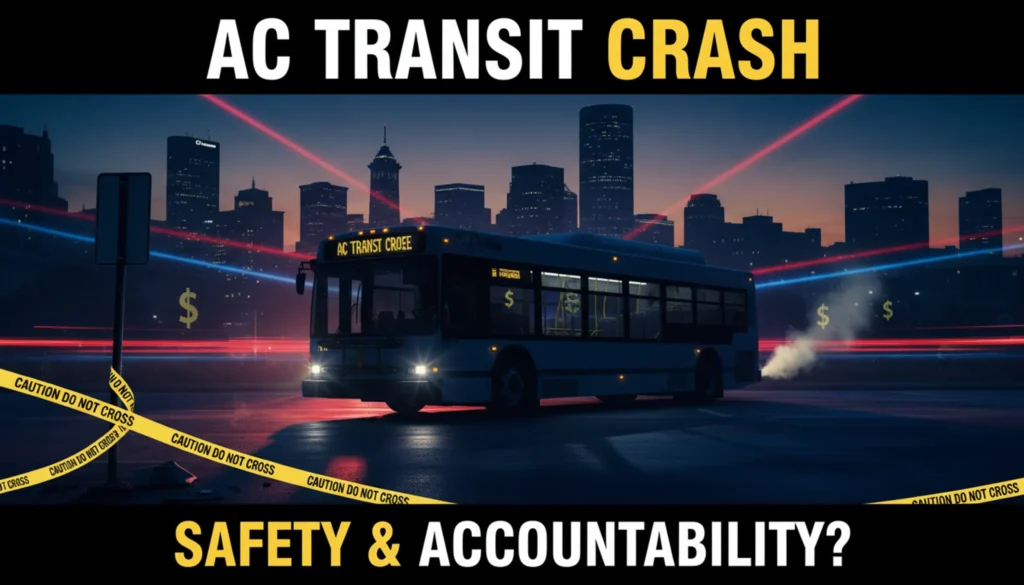
On Tuesday afternoon, December 3, 2025, yet another AC Transit bus crashed in East Oakland, this time plowing into an auto body shop and sending 11 people to the hospital. The Line 40 bus collided with an SUV at the intersection near 6821 Foothill Boulevard, jumped the curb, smashed through an iron fence, and slammed into the front of a collision repair business—an irony not lost on observers.
While authorities report that injuries were fortunately minor and no one was critically hurt, this incident raises serious questions that taxpayers and transit riders deserve answers to: How safe is AC Transit? Why do these crashes keep happening? And most importantly, is the agency prioritizing safety and operational excellence, or has it become yet another bloated government entity more concerned with progressive policies than protecting the people it serves?
For an agency operating on a $610 million annual budget—funded largely by taxpayer dollars—AC Transit owes the public more than reassurances and investigations that quietly fade from view. It’s time for accountability, transparency, and a hard look at whether our public transit system is being run with the competence and fiscal responsibility that residents deserve.
Support Independent Local Journalism
TheTownHall.News is a non-profit reader-supported journalism. Just $5 helps us hire local reporters, investigate important issues, and hold public officials accountable across Alameda County. If you believe our community deserves strong, independent journalism, please consider donating $5 today to support our work.A Pattern of Crashes Demands Answers
This week’s crash is far from an isolated incident. In March 2024, just nine months earlier, an AC Transit Tempo bus was struck head-on by a speeding vehicle on International Boulevard near 54th Avenue, injuring 16 people, two of them critically. That horrific crash involved a car veering into the bus’s path after colliding with another vehicle—a chaotic scene that left passengers traumatized and raised immediate questions about route safety and traffic management in Oakland’s high-crash corridors.
Now, less than a year later, another AC Transit bus has crashed, this time with the bus itself leaving the roadway and crashing into a building. According to AC Transit spokesman Robert Lyles, a white SUV crossed in front of the bus at the intersection, leading to the collision that sent the bus careening off course. The Oakland Police Department is leading the investigation, and authorities have stated it’s currently unknown whether drugs, alcohol, or other factors played a role.
What we do know is troubling: The bus was equipped with cameras, but the recording system may have been damaged in the crash—meaning critical evidence that could explain exactly what happened might be lost. This raises immediate questions about the durability and reliability of AC Transit’s safety equipment. If cameras can’t survive a crash, how useful are they in determining fault and preventing future incidents?
For taxpayers funding a $610 million operation, these are not minor concerns. They’re fundamental questions about competence, safety standards, and whether AC Transit is doing everything possible to protect riders and the public.

The Cost of Public Transit: Are Taxpayers Getting Value?
AC Transit’s FY 2025-26 operating budget totals $610.1 million—more than half a billion dollars annually. This massive sum comes from multiple sources: federal grants, state funding, local sales taxes, property tax receipts, parcel taxes, and yes, fare revenue (though fares cover only a fraction of actual operating costs). According to the California Policy Center, AC Transit’s budget works out to roughly $15 per typical four-mile ride when you factor in all subsidies—far more than riders pay at the farebox.
This is the reality of public transit in California: heavily subsidized operations that depend on taxpayer generosity while often failing to deliver the reliability, safety, and service quality that would justify such enormous expenditures. And when accidents like this week’s crash occur, the costs multiply—emergency response, hospital bills, potential lawsuits, vehicle repairs or replacement, building damage, and lost service hours all add up.
Conservative principles demand fiscal accountability. When government agencies spend taxpayer money, they have an obligation to operate efficiently, prioritize core functions like safety, and demonstrate that every dollar is being used wisely. AC Transit, like many public agencies, has faced persistent fiscal pressures, including a projected $238 million budget gap over fiscal years 2025-2029. Yet despite these financial challenges, has the agency truly prioritized operational excellence and safety above all else?
Safety Theater vs. Real Safety
In November 2024, just one month before this latest crash, AC Transit conducted a Transit Safety Survey required by Senate Bill 434. The results? Most respondents said they felt safe riding AC Transit. But feeling safe and being safe are two different things—and perception surveys don’t prevent buses from crashing into buildings.
Real safety requires rigorous driver training, strict hiring standards, comprehensive vehicle maintenance, route analysis to identify high-risk areas, and a culture of accountability where mistakes have consequences. It requires management focused on operational excellence rather than checking boxes for state-mandated surveys.
Support Independent Local Journalism
TheTownHall.News is a non-profit reader-supported journalism. Just $5 helps us hire local reporters, investigate important issues, and hold public officials accountable across Alameda County. If you believe our community deserves strong, independent journalism, please consider donating $5 today to support our work.Conservative values emphasize personal responsibility and accountability at every level. Bus drivers have a responsibility to operate vehicles safely. Supervisors have a responsibility to ensure drivers are properly trained and fit for duty. Management has a responsibility to maintain vehicles and implement safety protocols. And the agency as a whole has a responsibility to taxpayers to run a tight ship that prioritizes safety above bureaucratic bloat.
When crashes keep happening, it’s fair to ask: Is AC Transit meeting these responsibilities?
The Progressive Transit Trap
Public transit agencies across California have increasingly embraced progressive policies that often prioritize ideology over operational effectiveness. Fare-free programs sound compassionate but reduce accountability and eliminate an important revenue stream. Lax enforcement of rules creates disorder and drives away paying customers. Diversity initiatives in hiring are laudable, but not if they come at the expense of selecting the most qualified candidates for safety-critical positions.
AC Transit’s recent Tempo Bus Rapid Transit (BRT) project provides a cautionary tale. A bombshell report released in May 2025 found that construction of the Tempo service increased traffic casualties by 30% in the project area. The report argued that the project was undermined by a lack of community input and poor planning—exactly the kind of top-down, ideology-driven decision-making that conservatives have long warned against.
When government agencies become more focused on progressive credentials than core competencies, everyone suffers. Riders deserve safe, reliable service. Taxpayers deserve efficient use of their money. And communities deserve transit systems that enhance safety rather than creating new hazards.
What Accountability Looks Like
In the private sector, companies that experience repeated safety incidents face consequences: lawsuits, insurance premium increases, regulatory scrutiny, loss of customers, and potentially bankruptcy. These market forces create powerful incentives for safety and competence.
Government agencies like AC Transit operate under different rules. They can’t go bankrupt because taxpayers keep funding them regardless of performance. They face limited competition because they hold monopoly or near-monopoly status in their service areas. And they’re often shielded from consequences by government immunity laws and union protections.
This is why conservative principles emphasize limited government and market-based solutions. When government grows too large and faces too little accountability, performance inevitably suffers. The solution isn’t more funding or more surveys—it’s fundamental reform that introduces accountability, transparency, and consequences for failure.
Specifically, AC Transit should:
Release full investigation findings publicly. Taxpayers funding this agency deserve to know exactly what caused this crash, what caused the March 2024 crash, and what systemic issues might be contributing to a pattern of incidents.
Conduct an independent safety audit. Internal reviews are insufficient. An outside expert should examine AC Transit’s safety protocols, training programs, vehicle maintenance, and operational culture.
Implement performance metrics with consequences. Safety statistics should be published regularly, and management compensation should be tied to safety performance. If crashes increase, management pay should decrease.
Review driver screening and training. Are standards rigorous enough? Is ongoing training adequate? Are drivers being held accountable for preventable incidents?
Examine route safety. Some routes clearly have higher accident rates. What’s being done to address high-risk corridors? Are traffic management improvements needed?
Control costs and eliminate waste. A $238 million projected budget gap suggests fiscal mismanagement. Before asking taxpayers for more money, AC Transit should demonstrate it’s using current funding efficiently.
The Broader Implications
The AC Transit bus crash is about more than one accident on one afternoon in Oakland. It’s a window into how government agencies operate when they face insufficient accountability and prioritize the wrong things.
Across California and the nation, public transit systems are struggling. Ridership remains below pre-pandemic levels in many areas. Costs continue rising. Safety concerns persist. And taxpayers are increasingly questioning whether these massive subsidies are justified.
The conservative answer is clear: Government should do fewer things, but do them well. If we’re going to have publicly funded transit, it should be safe, reliable, and efficiently operated. It should prioritize core functions over progressive pet projects. And it should be accountable to the taxpayers and riders it serves.
When an AC Transit bus crashes into a building, it’s not just a traffic incident—it’s a failure of the system. And failures demand accountability.
Conclusion: Demanding Better
Eleven people went to the hospital this week because an AC Transit bus left the roadway and crashed into a building. Thankfully, injuries were minor. But minor injuries don’t excuse major questions about safety, accountability, and fiscal responsibility.
AC Transit operates on more than half a billion taxpayer dollars annually. That enormous sum comes with enormous responsibilities—responsibilities that include keeping buses on the road, drivers properly trained, vehicles well-maintained, and the public safe. When crashes keep happening, when investigations go nowhere, when cameras fail at critical moments, and when billion-dollar budgets can’t prevent buses from plowing into buildings, something is fundamentally wrong.
Conservative principles demand accountability. Taxpayers deserve to know their money is being used wisely. Riders deserve safe service. And communities deserve transit agencies focused on operational excellence rather than progressive ideology.
The Oakland bus crash should be a wake-up call. The question is whether anyone at AC Transit—or in the government agencies that oversee and fund it—is listening.
Call to Action
This crash investigation shouldn’t be allowed to quietly disappear from public view. Contact your local representatives and demand answers. Ask Oakland City Council members and Alameda County Supervisors what they’re doing to ensure AC Transit prioritizes safety. Request that full investigation findings be made public. Attend AC Transit Board meetings and ask tough questions about safety protocols, driver training, and fiscal accountability. Share this article with friends, family, and neighbors who ride AC Transit or pay the taxes that fund it. Most importantly, remember this incident when transit agencies ask for more funding—demand proof of competence and accountability before approving another dollar. Public safety and fiscal responsibility aren’t negotiable, and government agencies that fail to deliver both should face consequences. Stay informed, stay engaged, and demand better from the public servants who work for you.