Northeast Winter Storm Chaos Proves Government Can’t Save You—Personal Preparedness Can
When the Storm Hits, You’re On Your Own
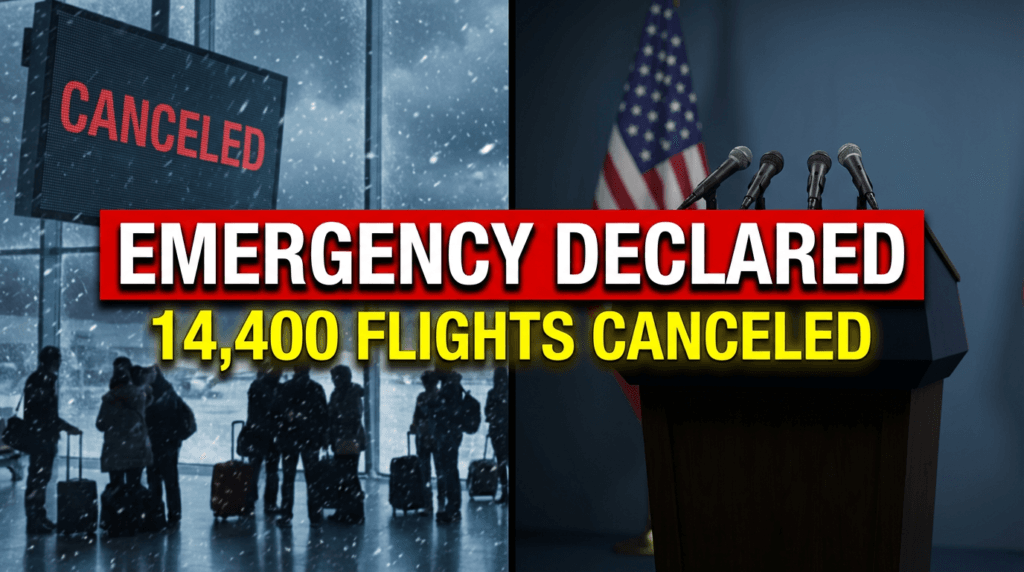
As families attempted to return home after Christmas celebrations this weekend, a harsh reality struck the Northeast: when winter weather arrives, government declarations mean little, and personal preparedness means everything. A mix of snow and ice descended upon New York, New Jersey, and surrounding states, leaving over 14,400 flights canceled or delayed by Saturday morning alone. Major airports including Newark Liberty International, JFK, and LaGuardia ground to a near standstill, stranding thousands of travelers who trusted that modern infrastructure and government oversight would protect them.
New Jersey’s Acting Governor Tahesha Way declared a state of emergency on Friday afternoon. New York followed suit. Yet despite these official proclamations, chaos reigned. The question conservatives must ask is simple: what good are emergency declarations when they can’t prevent the disruption, can’t clear the runways faster, and can’t get you home to your family?
This latest winter storm serves as a powerful reminder of a fundamental conservative principle: government cannot—and should not—be your primary line of defense against nature’s challenges. Personal responsibility, individual preparedness, and community resilience will always outperform bureaucratic responses when crisis strikes.
Support Independent Local Journalism
TheTownHall.News is a non-profit reader-supported journalism. Just $5 helps us hire local reporters, investigate important issues, and hold public officials accountable across Alameda County. If you believe our community deserves strong, independent journalism, please consider donating $5 today to support our work.The Illusion of Government Protection
Emergency declarations have become political theater. Officials issue them to appear proactive, to signal concern, and to unlock federal funding streams. But for the average American stuck at LaGuardia Airport watching their flight status change from “delayed” to “canceled,” these declarations offer no tangible benefit.
New Jersey’s state of emergency went into effect at 1:00 p.m. on Friday, December 26th. The storm had been forecasted days in advance. Meteorologists warned of heavy snow and ice across the region. Yet thousands of travelers still found themselves stranded, and roads remained treacherous well into Saturday despite the mobilization of state resources.
This pattern repeats itself every winter. Government agencies activate emergency operations centers, deploy snowplows, and issue travel advisories. These are necessary functions, to be sure, but they represent reactive measures rather than proactive solutions. The fundamental problem isn’t that government does too little—it’s that Americans have been conditioned to expect government to do everything.
Infrastructure Failures Reveal Deeper Problems
The Northeast corridor boasts some of America’s busiest airports and most heavily trafficked roadways. These facilities operate in a region that experiences winter weather annually. Yet every significant snowstorm produces the same result: widespread delays, cancellations, and disruption.

This reveals a critical truth about government-managed infrastructure: it’s built to minimum standards, maintained at minimum levels, and operated with maximum bureaucracy. The Port Authority of New York and New Jersey oversees JFK, LaGuardia, and Newark airports. These facilities processed over 140 million passengers in 2024, yet a few inches of snow can bring operations to their knees.
Where is the accountability? Where are the performance standards that justify the billions in taxpayer funding these agencies receive? The answer is nowhere, because government monopolies face no market competition and answer to no bottom line. A private airport operator would face financial ruin from repeated operational failures. Government agencies simply issue press releases and request additional funding.
Conservative principles demand fiscal accountability and operational efficiency. When infrastructure repeatedly fails to perform its basic function—moving people and goods reliably—taxpayers deserve answers and reforms, not excuses and emergency declarations.
Personal Preparedness: The Conservative Alternative
While government officials were declaring emergencies, prepared Americans were already taking action. They monitored weather forecasts independently. They adjusted travel plans proactively. They stocked supplies at home. They checked on elderly neighbors. They took responsibility for their own safety and well-being without waiting for official guidance.
This is the conservative approach to crisis management: anticipate problems, prepare solutions, and act decisively. It’s rooted in the understanding that you are the primary guardian of your family’s safety and security. Government might provide support services, but it cannot and will not protect you from every hardship.
Support Independent Local Journalism
TheTownHall.News is a non-profit reader-supported journalism. Just $5 helps us hire local reporters, investigate important issues, and hold public officials accountable across Alameda County. If you believe our community deserves strong, independent journalism, please consider donating $5 today to support our work.Families who chose to delay travel, or who packed emergency supplies for potential delays, fared far better than those who assumed “the system” would function smoothly. Those who maintained generator fuel, food stocks, and winter supplies at home faced the storm with confidence rather than panic. Personal preparedness isn’t about distrusting government—it’s about understanding government’s limitations and taking responsibility for what you can control.
The Cost of Dependency
The progressive vision encourages citizens to look to government for solutions to every problem. Bad weather? Government will declare an emergency. Flight canceled? Government will regulate airlines. Road not plowed? Government will investigate. This dependency mindset creates learned helplessness and erodes the self-reliance that built America.
Consider the financial cost of this latest storm. Emergency declarations trigger state and federal spending. Airport delays cost airlines millions in operational expenses—costs ultimately passed to consumers through higher fares. Lost productivity, missed connections, and disrupted commerce ripple through the economy. Yet much of this damage could be mitigated through better personal planning and reduced dependency on just-in-time systems.
Conservatives understand that resilience requires redundancy. Don’t book the last possible flight if you need to be somewhere important. Don’t wait until the storm hits to buy supplies. Don’t assume someone else will solve your problems. These aren’t radical concepts—they’re common sense principles that previous generations understood intuitively.
Law and Order in Crisis
Winter storms also test our commitment to law and order. When roads become dangerous, some drivers ignore travel advisories and create hazards for emergency responders. When flights are canceled, some passengers become belligerent with airline staff who have no control over the weather. When power goes out, some individuals engage in price gouging or theft.
Conservatives recognize that personal responsibility extends to respecting the rights and safety of others during difficult circumstances. Emergency conditions don’t suspend the rule of law—they test whether citizens will maintain civilized behavior when systems are stressed. The vast majority do, which speaks to the fundamental decency of the American people when government steps back and allows communities to self-organize.
Moving Forward: Practical Solutions
Rather than expanding government’s emergency management apparatus, conservatives should advocate for practical reforms that enhance actual preparedness:
Infrastructure Accountability: Demand performance metrics for publicly funded transportation systems. If airports can’t handle predictable winter weather, leadership should be replaced and operations reformed.
Personal Responsibility Education: Schools and communities should teach practical preparedness skills rather than encouraging dependency on government services. Every household should maintain emergency supplies and plans.
Regulatory Reform: Excessive regulations often prevent private sector innovation in infrastructure and emergency services. Reducing barriers to competition would improve service quality and reliability.
Fiscal Discipline: Emergency declarations shouldn’t be blank checks. Every dollar spent should be justified, tracked, and evaluated for effectiveness. Taxpayers deserve transparency about how emergency funds are used.
Community Resilience: Strong families, churches, and local organizations provide better disaster response than distant bureaucracies. Government should support rather than supplant these organic community networks.
Conclusion: Choose Preparedness Over Dependency
The Northeast winter storm of December 2025 will soon fade from headlines. Airports will resume normal operations. Roads will be cleared. Life will return to normal. But the lessons should endure.
Government cannot control the weather. It cannot guarantee your safety. It cannot eliminate risk from your life. What government can do—and what it should focus on—is maintaining basic infrastructure, protecting property rights, and preserving the freedom that allows individuals and communities to prepare and respond effectively.
The conservative approach isn’t about abandoning government services or ignoring genuine infrastructure needs. It’s about maintaining proper perspective on government’s role and capabilities. It’s about preserving the culture of self-reliance that made America resilient. It’s about understanding that the best emergency response begins long before any official declaration—it begins with personal responsibility and preparation.
When the next storm approaches, don’t wait for a government declaration to take action. Check your supplies. Make your plans. Help your neighbors. Take responsibility for your own preparedness. That’s not just conservative principle—it’s practical wisdom that works regardless of political philosophy.
Call to Action
Don’t wait for the next emergency to catch you unprepared. Take action today: build your family emergency kit, review your household preparedness plan, and commit to personal responsibility over government dependency. Share this article with friends and family who need to hear this message. Follow our coverage for more common-sense conservative perspectives on the issues that matter to your family’s safety and security. Stay informed, stay prepared, and stay free.