California Infrastructure Crisis: How Misplaced Priorities Left State Vulnerable to Devastating Storms
A Predictable Disaster
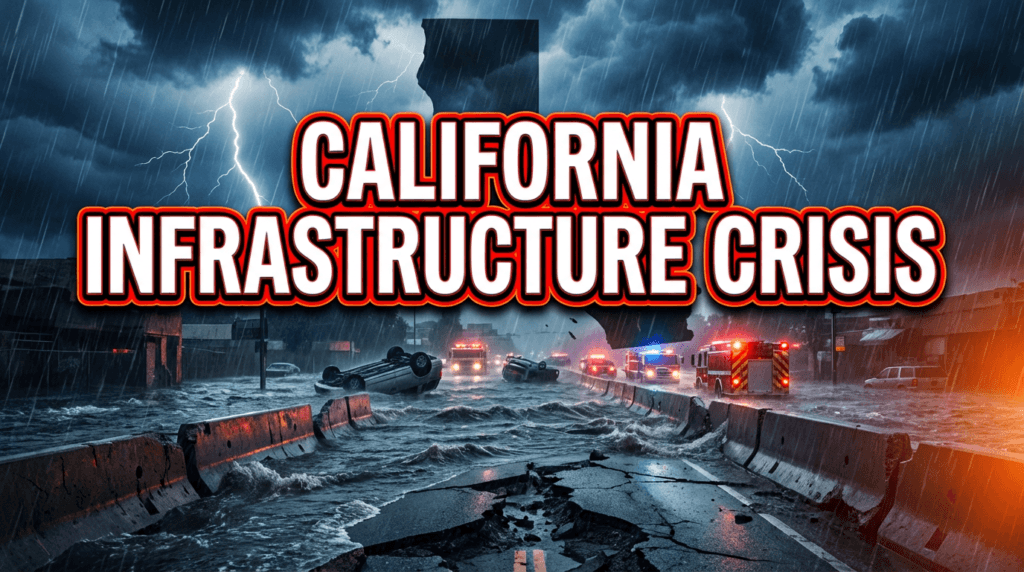
As torrential rains battered California over the Christmas holiday, forcing water rescues and causing catastrophic flooding across Southern California, one question demands an answer: How did the nation’s wealthiest state find itself so unprepared for weather patterns that meteorologists have warned about for years?
The devastating storms that swept through California weren’t unexpected natural disasters—they were predictable seasonal weather events that exposed decades of infrastructure neglect, mismanaged budgets, and a state government more interested in virtue-signaling projects than protecting its citizens. While families huddled in evacuation centers and first responders worked around the clock to save lives, California’s leadership must confront an uncomfortable truth: this crisis didn’t have to be this severe.
The Golden State has spent billions on pet projects and progressive initiatives while its essential infrastructure—the dams, drainage systems, levees, and water management facilities that protect lives and property—crumbled beneath the weight of deferred maintenance and political indifference. This isn’t just poor governance; it’s a betrayal of the fundamental responsibility government owes its citizens.
Support Independent Local Journalism
TheTownHall.News is a non-profit reader-supported journalism. Just $5 helps us hire local reporters, investigate important issues, and hold public officials accountable across Alameda County. If you believe our community deserves strong, independent journalism, please consider donating $5 today to support our work.The Infrastructure Crisis Nobody Wanted to Address
California’s infrastructure has been graded a C-minus by the American Society of Civil Engineers, with specific warnings about the state’s aging flood control systems, deteriorating dams, and inadequate stormwater management. These aren’t revelations—they’re longstanding problems that state leadership has consistently chosen to ignore in favor of more politically fashionable spending.
Consider the numbers: California has allocated billions toward its perpetually delayed high-speed rail project—a boondoggle that recently lost $4 billion in federal funding—while critical flood control infrastructure received a fraction of that attention. The state’s dam safety program has identified hundreds of high-hazard dams in need of repair, yet funding remains inadequate and timelines stretch into decades.
When storms hit, it’s not the high-speed rail project that saves lives. It’s functioning drainage systems, properly maintained levees, and adequate emergency response infrastructure. These are the unglamorous, essential functions of government that conservative principles have always emphasized: protect citizens first, pursue vanity projects never.
Fiscal Accountability: Where Did the Money Go?
California residents pay some of the highest taxes in the nation. The state’s top income tax rate reaches 13.3 percent, sales taxes hover around 7.25 percent statewide (higher in many localities), and property taxes generate billions annually. With a state budget exceeding $300 billion, Californians have every right to ask: where is our money going, and why aren’t we prepared for predictable weather events?

The answer reveals a troubling pattern of fiscal irresponsibility. While essential infrastructure languished, California’s government expanded spending on programs that sound progressive but deliver questionable results. The state has spent billions on homelessness initiatives with little measurable improvement, poured resources into climate activism while neglecting climate adaptation, and prioritized ideological projects over practical necessities.
This represents a fundamental failure of fiscal accountability. Conservative principles demand that government spending prioritize core functions—public safety, infrastructure, emergency preparedness—before expanding into experimental social programs. When a state collects record tax revenues yet cannot protect its citizens from foreseeable weather events, something has gone catastrophically wrong with spending priorities.
Personal Responsibility Meets Government Failure
While personal preparedness remains important—every household should maintain emergency supplies and evacuation plans—this crisis exposes the limits of individual responsibility when government fails its basic duties. Citizens pay taxes with the reasonable expectation that government will maintain the infrastructure protecting their communities. When that infrastructure fails due to neglect, blaming citizens for not being sufficiently prepared becomes an exercise in deflection.
Conservative philosophy recognizes that limited government must be effective government. We don’t need government doing everything, but what it does undertake—particularly public safety and infrastructure—it must do well. California’s government has inverted this principle, attempting to manage every aspect of citizens’ lives while failing at its core responsibilities.
The families evacuated from their homes didn’t fail to prepare adequately; their government failed to maintain the flood control systems their tax dollars were supposed to support. The businesses suffering flood damage aren’t victims of their own poor planning; they’re victims of a state government that prioritized political theater over practical governance.
Support Independent Local Journalism
TheTownHall.News is a non-profit reader-supported journalism. Just $5 helps us hire local reporters, investigate important issues, and hold public officials accountable across Alameda County. If you believe our community deserves strong, independent journalism, please consider donating $5 today to support our work.Law and Order: First Responders Deserve Better
Amid this crisis, California’s first responders—firefighters, law enforcement, emergency medical personnel—have performed heroically, conducting water rescues and saving lives despite being hamstrung by inadequate resources and aging equipment. These men and women represent the best of public service, yet they’ve been forced to work with infrastructure and support systems that reflect decades of underinvestment.
Conservative principles have always emphasized supporting law enforcement and emergency services—not with empty rhetoric, but with adequate funding, modern equipment, and the infrastructure necessary to do their jobs effectively. When budget priorities shift toward progressive pet projects while first responders make do with outdated equipment and crumbling infrastructure, we’ve abandoned our commitment to law and order in favor of political posturing.
These first responders deserve a government that prioritizes their ability to protect citizens over its desire to signal progressive values. They deserve maintained roads for emergency access, functioning communication systems, and flood control infrastructure that prevents emergencies rather than creating them.
The Path Forward: Demanding Accountability
California’s storm crisis should serve as a wake-up call, but meaningful change requires more than acknowledgment—it demands action rooted in conservative principles of accountability, fiscal responsibility, and limited but effective government.
First, California must conduct a comprehensive audit of infrastructure spending over the past two decades, identifying how budget priorities shifted away from essential maintenance toward politically motivated projects. Taxpayers deserve transparency about where their money went and why critical infrastructure was neglected.
Second, the state must establish a protected infrastructure fund that cannot be raided for other purposes. Essential maintenance and upgrades to flood control, water management, and emergency response systems should receive guaranteed funding before any discretionary spending occurs.
Third, California needs to embrace cost-benefit analysis for all major spending initiatives. Before allocating billions to experimental programs or politically fashionable projects, the state must demonstrate that core infrastructure needs have been met. This represents basic fiscal responsibility that any household or business would practice.
Fourth, regulatory reform must streamline infrastructure projects. California’s permitting process has become so byzantine that essential repairs and upgrades take years longer than necessary, driving up costs and delaying critical improvements. Effective government removes obstacles to necessary work rather than creating them.
Conclusion: Choose Priorities Wisely
The devastating storms that hit California over Christmas didn’t create the state’s infrastructure crisis—they merely exposed it. Decades of misplaced priorities, fiscal irresponsibility, and political vanity projects left California vulnerable to predictable weather events that proper planning and maintenance could have mitigated.
This isn’t about demanding perfection or eliminating all risk; it’s about insisting that government fulfill its basic responsibilities before pursuing ideological agendas. Conservative principles offer a clear framework: protect citizens first, maintain essential infrastructure, practice fiscal accountability, and ensure that limited government is effective government.
California’s residents deserve better than a government that prioritizes progressive credentials over practical governance. They deserve infrastructure that works, emergency systems that function, and leadership that understands the difference between essential responsibilities and political theater.
The question now is whether California’s leadership will learn from this crisis and realign priorities, or whether the next predictable disaster will find the state equally unprepared, having spent its resources on everything except what matters most.
Call to Action
Stay informed and hold leadership accountable. Contact your state representatives and demand transparent accounting of infrastructure spending and a commitment to prioritizing essential maintenance over pet projects. Share this article with fellow Californians who deserve to know how their tax dollars are being spent—or misspent. Subscribe to independent news sources that ask tough questions about fiscal responsibility and government priorities. The power to demand better governance starts with informed, engaged citizens who refuse to accept excuses for predictable failures. Your voice matters—use it before the next crisis hits.