Iran Declares War on America: Why Weakness Invites Aggression and Strength Ensures Peace
The Cost of Ignoring Threats
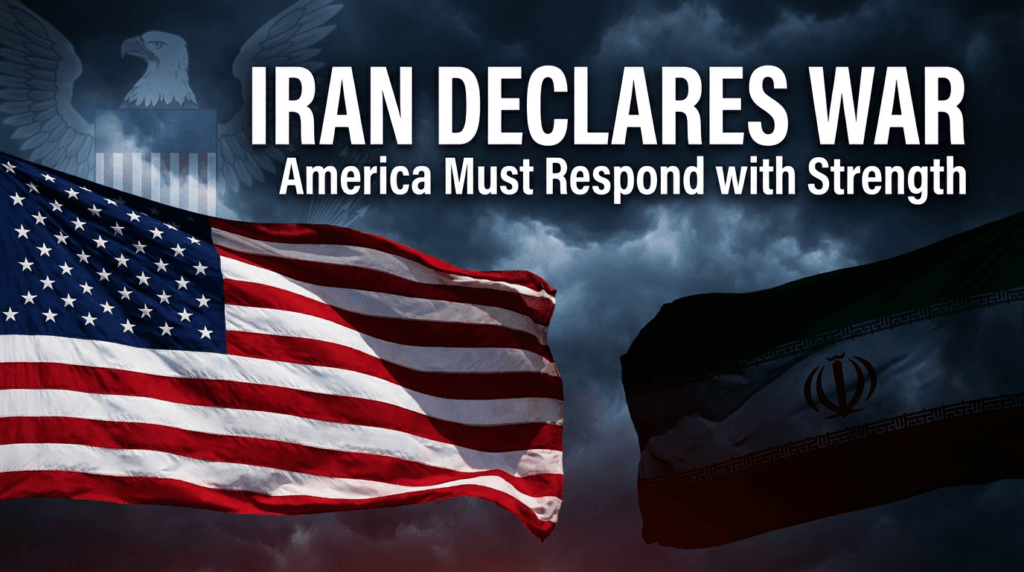
On December 28, 2025, Iranian President Masoud Pezeshkian declared that his nation is engaged in a “full-fledged war” with the United States, Israel, and Europe. While some dismiss this as mere rhetoric, conservatives understand a fundamental truth: words matter, especially when they come from a theocratic regime with a four-decade history of hostility toward America, sponsorship of terrorism, and relentless pursuit of nuclear weapons.
This isn’t Iran’s first bellicose statement, nor will it be its last. But it arrives at a critical juncture—following a devastating 12-day conflict in June 2025 that killed over 1,100 Iranians and 28 Israelis, amid renewed uranium enrichment activities, and as the regime faces crippling economic sanctions. Pezeshkian’s declaration isn’t just bluster; it’s a window into the regime’s mindset and a test of American resolve.
History teaches us that appeasement invites aggression, while strength deters it. As America navigates this dangerous moment, we must reject the failed policies of accommodation that emboldened Iran for years and instead embrace a doctrine of peace through strength—one that protects American interests, supports our allies, and holds rogue regimes accountable.
Support Independent Local Journalism
TheTownHall.News is a non-profit reader-supported journalism. Just $5 helps us hire local reporters, investigate important issues, and hold public officials accountable across Alameda County. If you believe our community deserves strong, independent journalism, please consider donating $5 today to support our work.Understanding Iran’s Declaration: Rhetoric or Reality?
Pezeshkian’s statement, published on Supreme Leader Ayatollah Ali Khamenei’s official website, claims Iran faces economic, cultural, political, and security siege from the West. He compared the current situation unfavorably to the Iran-Iraq War of the 1980s, suggesting today’s multifaceted pressures are “more complex” than conventional warfare.
The Context Behind the Words
This declaration didn’t emerge in a vacuum. Iran has systematically escalated tensions through:
- Nuclear brinkmanship: Accelerated uranium enrichment in late May 2025 prompted Israeli and American strikes on Iranian nuclear facilities, triggering the June conflict.
- Proxy warfare: Iran continues funding and arming terrorist organizations including Hezbollah, Hamas, and Houthi rebels who destabilize the Middle East and threaten American interests.
- Ballistic missile development: Intelligence reports confirm Iran is developing unconventional warheads for ballistic missiles capable of reaching U.S. allies and American military installations.
- Hostility toward allies: Iran’s Supreme Leader has repeatedly called for Israel’s destruction while threatening European nations.
When a hostile regime declares “full-fledged war” while simultaneously pursuing nuclear weapons and threatening “more decisive response” to any future strikes, taking them at their word isn’t alarmism—it’s prudence.
The Conservative Case for Strength Over Appeasement
Peace Through Strength: Reagan’s Timeless Wisdom
President Ronald Reagan understood that peace isn’t achieved through wishful thinking or diplomatic niceties with hostile actors. It’s secured through unmistakable strength, clear red lines, and the demonstrated willingness to defend American interests. Reagan’s approach to the Soviet Union—combining military readiness with economic pressure—ultimately contributed to winning the Cold War without firing a shot.

The same principle applies to Iran. The regime doesn’t respect weakness or concessions; it exploits them. The 2015 Joint Comprehensive Plan of Action (JCPOA), commonly known as the Iran nuclear deal, exemplified the failure of appeasement. Despite receiving billions in sanctions relief—including pallets of cash flown to Tehran—Iran continued developing ballistic missiles, funding terrorism, and ultimately accelerated its nuclear program once it sensed American resolve weakening.
Fiscal Accountability: No More Ransom Payments
Conservatives believe in fiscal accountability, and that principle extends to foreign policy. American taxpayers should never fund regimes that chant “Death to America” and plot against our interests. Yet previous administrations released approximately $150 billion in sanctions relief to Iran, money that financed proxy wars, terrorist attacks, and nuclear development rather than improving Iranian citizens’ lives.
Pezeshkian himself acknowledged Iran’s “domestic economic challenges exacerbated by sanctions,” but he blames the West rather than his regime’s corruption and misplaced priorities. The Iranian people deserve better than a government that spends billions on nuclear weapons and regional aggression while they suffer economically. Maximum economic pressure isn’t cruelty—it’s the most effective non-military tool to change the regime’s calculus and potentially empower the Iranian people to demand reform.
National Security: The First Duty of Government
Limited government doesn’t mean weak government. Conservatives understand that the federal government’s primary constitutional obligation is protecting American citizens from foreign threats. Iran’s declaration of war, combined with its nuclear ambitions and ballistic missile program, represents exactly the type of threat that demands robust government action.
The June 2025 conflict demonstrated both the necessity and effectiveness of military strength. Israeli and American strikes on Iranian nuclear facilities, while costly, significantly degraded Iran’s nuclear program and eliminated senior commanders who orchestrated attacks against American forces and allies. Pezeshkian’s admission that Iran suffered approximately 1,100 casualties, including nuclear scientists, confirms these operations achieved their objectives.
Support Independent Local Journalism
TheTownHall.News is a non-profit reader-supported journalism. Just $5 helps us hire local reporters, investigate important issues, and hold public officials accountable across Alameda County. If you believe our community deserves strong, independent journalism, please consider donating $5 today to support our work.Critics argue such actions risk escalation, but the opposite is true. Allowing Iran to develop nuclear weapons unchecked guarantees future conflict on far more catastrophic terms. Deterrence works when adversaries believe America has both the capability and will to act decisively.
Supporting Our Allies: The Israel Connection
Iran’s declaration explicitly targets Israel alongside America and Europe. This isn’t coincidental—Israel represents everything the Iranian regime despises: a thriving democracy, technological powerhouse, and steadfast American ally in a volatile region.
Why Israel Matters to American Conservatives
Supporting Israel aligns with conservative principles:
- Shared values: Israel is the Middle East’s only genuine democracy, respecting religious freedom, rule of law, and individual rights.
- Strategic partnership: Israel provides invaluable intelligence, military innovation, and regional stability that protects American interests.
- Moral clarity: Standing with democracies against theocratic dictatorships reflects American values and strengthens our global credibility.
- Biblical heritage: For many conservatives, supporting Israel carries deep religious significance rooted in Judeo-Christian tradition.
When Iran threatens Israel, it threatens American interests. The upcoming meeting between Israeli Prime Minister Benjamin Netanyahu and President Donald Trump represents an opportunity to coordinate strategy, reinforce deterrence, and demonstrate that America stands unequivocally with our allies.
The Path Forward: Deterrence, Sanctions, and Resolve
Maximum Pressure Campaign 2.0
The Trump administration’s maximum pressure campaign significantly weakened Iran’s economy and constrained its regional aggression. Reinstating and strengthening these measures should be immediate priorities:
- Comprehensive sanctions: Target Iran’s oil exports, financial institutions, and regime officials.
- Secondary sanctions: Penalize foreign companies and nations that enable Iran’s economy.
- Asset freezes: Prevent the regime from accessing international financial systems.
- Technology restrictions: Block Iran’s access to dual-use technologies for nuclear and missile programs.
Military Readiness and Regional Presence
Strength deters aggression. America must maintain robust military capabilities in the Middle East, including:
- Naval presence: Carrier strike groups demonstrating American power projection.
- Air superiority: Advanced aircraft capable of striking Iranian nuclear facilities if necessary.
- Missile defense: Protecting allies from Iranian ballistic missile threats.
- Intelligence cooperation: Enhanced coordination with Israel and regional partners.
Supporting Iranian Civil Society
The Iranian people aren’t America’s enemy—the theocratic regime is. During widespread protests in recent years, brave Iranians demanded freedom, economic opportunity, and an end to the regime’s adventurism. America should support these aspirations through:
- Broadcasting: Funding Persian-language media that provides uncensored information.
- Internet freedom: Helping Iranians circumvent regime censorship.
- Diplomatic support: Amplifying Iranian voices calling for reform.
- Sanctions targeting: Ensuring pressure falls on regime leaders, not ordinary citizens.
Rejecting False Choices
Critics often present false dichotomies: either accept Iran’s nuclear program or launch full-scale war. This ignores the spectrum of options between appeasement and invasion. Targeted strikes, crippling sanctions, covert operations, and unwavering support for allies can contain Iranian aggression without American boots on the ground.
The June 2025 conflict demonstrated that limited, precise military action achieves objectives while avoiding prolonged occupation. Conservatives don’t seek endless wars—we seek decisive action that protects American interests and prevents larger conflicts through credible deterrence.
Conclusion: Strength Preserves Peace
Iran’s declaration of war against America isn’t surprising—it’s the logical extension of forty-six years of hostility since the 1979 Islamic Revolution. What matters now is America’s response. Will we return to the failed appeasement policies that enriched and emboldened the regime? Or will we embrace peace through strength, making clear that threats against America and our allies carry unacceptable costs?
Conservative principles provide the answer. Personal responsibility means holding Iran accountable for its actions. Fiscal accountability means no more ransom payments. Limited but effective government means prioritizing national security. Traditional values mean standing with democratic allies against theocratic tyranny.
President Pezeshkian warned that Iran will respond “more decisively” to future attacks. America’s message should be equally clear: any attack on American interests, citizens, or allies will be met with overwhelming force. Peace isn’t achieved through weakness or wishful thinking—it’s secured through unmistakable strength and demonstrated resolve.
The stakes couldn’t be higher. A nuclear-armed Iran doesn’t just threaten regional stability; it endangers American cities, emboldens other rogue regimes, and makes catastrophic conflict more likely. This is the moment for moral clarity, strategic wisdom, and unwavering strength.
Call to Action
Stay informed. Iran’s threats aren’t going away, and understanding the stakes is every citizen’s responsibility. Follow credible news sources and reject media narratives that downplay Iranian aggression or advocate appeasement.
Contact your representatives. Tell your senators and congressmen to support maximum pressure sanctions, military readiness, and unwavering support for Israel. Demand they oppose any return to failed nuclear deals that enrich the regime.
Share this article. Help others understand why strength, not weakness, preserves peace. Conservative principles aren’t just political preferences—they’re proven strategies for protecting American interests and preventing conflict.
Support organizations that advocate for strong national defense, Iranian civil society, and the U.S.-Israel alliance.
America has faced dangerous adversaries before and prevailed through strength, resolve, and moral clarity. Iran’s declaration of war is serious, but it’s not insurmountable. With the right leadership and policies grounded in conservative principles, we can deter aggression, protect our interests, and ensure peace through strength for generations to come.
The question isn’t whether Iran means what it says—it’s whether America has the courage to respond accordingly.