Trump Furniture Tariff Pause Shows Strategic Leadership on Trade Policy
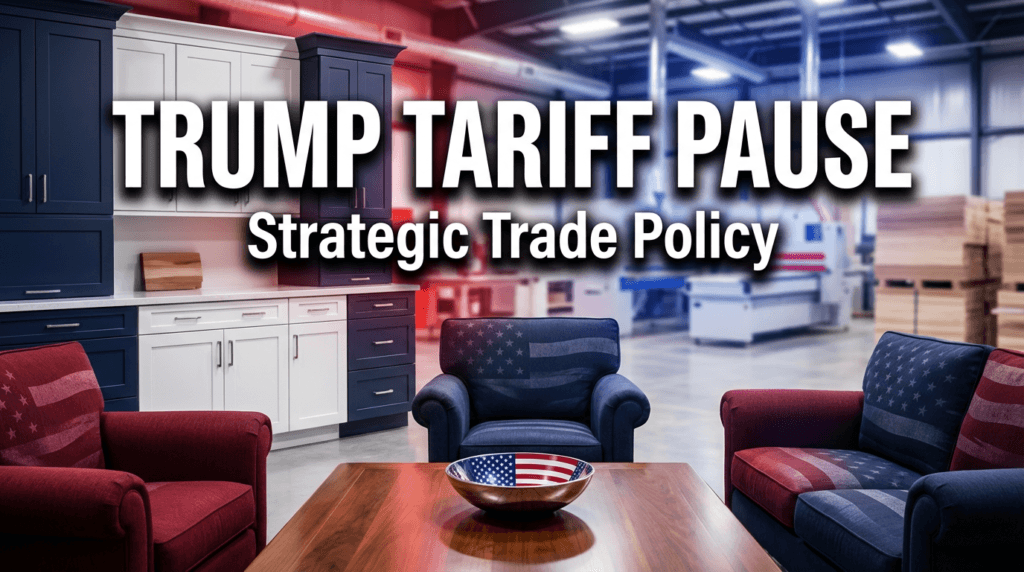
In a New Year’s Eve proclamation that demonstrates both strategic flexibility and commitment to American interests, President Donald Trump signed an executive order pausing planned tariff increases on upholstered furniture, kitchen cabinets, and vanities for one year. The decision keeps the current 25% tariff rate in place while delaying increases to 30% on furniture and 50% on cabinets and vanities that were scheduled to take effect January 1, 2026.
This move exemplifies precisely the kind of nimble, results-oriented governance that conservatives have long championed—a willingness to adjust tactics without abandoning core principles. Rather than rigidly adhering to a predetermined schedule regardless of circumstances, President Trump has shown the pragmatic leadership necessary to balance multiple priorities: protecting American manufacturing, providing relief to consumers and homeowners, and maintaining leverage in ongoing trade negotiations.
The Strategic Foundation: Section 232 and National Security
To understand the significance of this pause, we must first recognize the solid foundation upon which these tariffs rest. In September 2025, President Trump invoked Section 232 authority to impose tariffs on timber, lumber, and derivative products—including furniture and cabinets—citing threats to national security and the need to strengthen domestic manufacturing capacity.
Support Independent Local Journalism
TheTownHall.News is a non-profit reader-supported journalism. Just $5 helps us hire local reporters, investigate important issues, and hold public officials accountable across Alameda County. If you believe our community deserves strong, independent journalism, please consider donating $5 today to support our work.This wasn’t arbitrary protectionism. Section 232 of the Trade Expansion Act of 1962 explicitly empowers the president to adjust imports when they threaten national security. The erosion of America’s timber and manufacturing industries over decades of unfair trade practices has left our nation vulnerable and dependent on foreign supply chains—a weakness exposed dramatically during recent global disruptions.
The original tariff framework imposed a 10% duty on softwood timber and lumber, and 25% on upholstered wooden furniture, kitchen cabinets, and vanities. The September proclamation included provisions for these rates to escalate: furniture to 30% and cabinets and vanities to 50% by January 2026. These increases were designed to provide even stronger incentives for reshoring manufacturing and rebuilding American industrial capacity.
Why the Pause Makes Sense: Principled Pragmatism
The decision to pause the tariff increases demonstrates several conservative principles working in harmony rather than conflict.
Fiscal Responsibility and Consumer Relief

Conservatives understand that government policies must account for their real-world impact on families and businesses. With the housing market facing challenges and Americans still recovering from inflationary pressures, imposing dramatic cost increases on home improvement and construction would have placed unnecessary burdens on homeowners, small contractors, and families trying to build or renovate.
The pause maintains protection for American manufacturers while preventing a sudden price shock that could ripple through the housing sector. This isn’t abandoning principle—it’s applying wisdom. A 25% tariff already provides substantial incentive for domestic production; rushing to 50% without allowing markets and manufacturers time to adjust would create unnecessary disruption.
Strategic Timing and Political Reality
With midterm elections approaching, critics have suggested this pause is merely political calculation. But conservatives should recognize this as appropriate responsiveness to constituent concerns—exactly what representative government should deliver. When policies risk becoming counterproductive to their stated goals, adjustment isn’t weakness; it’s responsible governance.
Moreover, the one-year delay provides a strategic window. American furniture and cabinet manufacturers need time to expand capacity, invest in equipment, and hire workers. Domestic timber producers require time to increase output. Rushing the escalation before these supply chains can respond would simply inflate prices without achieving the desired reshoring of production.
Support Independent Local Journalism
TheTownHall.News is a non-profit reader-supported journalism. Just $5 helps us hire local reporters, investigate important issues, and hold public officials accountable across Alameda County. If you believe our community deserves strong, independent journalism, please consider donating $5 today to support our work.The Bigger Picture: America First Trade Policy
This tariff pause doesn’t represent retreat from President Trump’s America First trade agenda—it exemplifies its sophistication. Effective trade policy isn’t about imposing maximum tariffs regardless of circumstances; it’s about using tariffs strategically to achieve specific objectives while minimizing unintended consequences.
The 25% tariff remains in place, continuing to protect American workers and incentivize domestic production. The pause on increases provides breathing room for:
- Domestic manufacturers to scale up production capacity
- Supply chains to adjust and reorient toward American sources
- Consumers and businesses to plan major purchases and projects
- Trade negotiators to pursue better deals with trading partners
This approach reflects the conservative understanding that markets need predictability and time to respond to policy changes. Central planning and sudden mandates create chaos; clear signals with reasonable timelines enable adaptation and growth.
Protecting American Workers Without Punishing American Families
One of the persistent challenges in trade policy is balancing protection for domestic industries against costs to consumers. Free-market purists often ignore the devastating impact of unfair foreign competition on American communities. Conversely, overly aggressive protectionism can impose costs that undermine public support for necessary measures.
President Trump’s tariff pause navigates this tension skillfully. The existing 25% tariff provides meaningful protection—enough to make American manufacturing competitive while not so high as to make home improvement prohibitively expensive. This measured approach acknowledges that trade policy serves American citizens in multiple capacities: as workers needing protection from unfair competition, and as consumers and homeowners needing affordable goods.
The furniture and cabinet industries employ thousands of Americans, particularly in regions that have suffered from decades of manufacturing decline. These aren’t abstract statistics—they’re families, communities, and the skilled trades that form the backbone of American prosperity. Protecting these jobs while avoiding unnecessary price increases isn’t contradictory; it’s comprehensive policy-making that considers all affected parties.
The Path Forward: Rebuilding American Manufacturing
The one-year pause provides a crucial window for American industry to respond. Conservative principles emphasize that government’s role isn’t to micromanage the economy but to create conditions where free enterprise can flourish. These tariffs do exactly that—they level the playing field distorted by decades of foreign subsidies, currency manipulation, and disregard for environmental and labor standards.
American furniture and cabinet manufacturers have already begun responding to the tariff framework. Investments in new facilities, equipment upgrades, and workforce expansion take time. The pause allows these investments to mature, building the capacity necessary to meet domestic demand without the price volatility that rushed implementation would create.
This is how conservative governance should work: identifying legitimate problems (unfair foreign competition destroying American industries), implementing principled solutions (tariffs to restore fair competition), and adjusting implementation to maximize effectiveness (pausing increases to allow supply chain adjustment). It’s the opposite of rigid ideology or reckless improvisation—it’s thoughtful, results-oriented leadership.
Conclusion: Leadership That Listens and Adapts
President Trump’s decision to pause furniture and cabinet tariff increases demonstrates the kind of leadership America needs: principled but pragmatic, strong but strategic, committed to objectives but flexible on tactics. The decision maintains protection for American workers and manufacturers while providing relief to consumers and time for supply chains to adapt.
Critics who portray this as weakness or inconsistency misunderstand both effective governance and conservative principles. Conservatives don’t worship inflexibility—we value policies that work. We don’t demand adherence to predetermined schedules regardless of circumstances—we expect leaders to assess results and adjust accordingly.
The 25% tariff remains in place, continuing to protect American industry. The pause on increases provides breathing room for markets to adjust and domestic capacity to grow. This balanced approach serves American interests comprehensively, protecting workers without punishing families, and maintaining strategic leverage without creating unnecessary disruption.
Call to Action
Stay informed about trade policies that affect American workers and families. Understanding the nuances of tariff policy, manufacturing economics, and strategic trade negotiations is essential for informed citizenship. Share this article with friends and family who care about American manufacturing, economic sovereignty, and pragmatic conservative governance.
Support American-made furniture and cabinets. Consumer choices matter. When possible, choose products manufactured in the United States, supporting American workers and communities while building the demand that justifies continued domestic investment.
Engage with your elected representatives. Let your senators and representatives know you support trade policies that protect American manufacturing while remaining responsive to consumer concerns. Effective policy requires both principled leadership and constituent feedback.
The fight to rebuild American manufacturing and restore economic sovereignty continues. President Trump’s tariff pause shows that this fight can be waged intelligently, balancing multiple priorities and adjusting to circumstances while never losing sight of the ultimate goal: an America that makes things again, with good jobs for American workers and prosperity for American families.
Share this article and join the conversation about trade policy that puts America First while governing wisely.