Trump’s Venezuela Strike: Why Capturing Maduro Was the Right Call
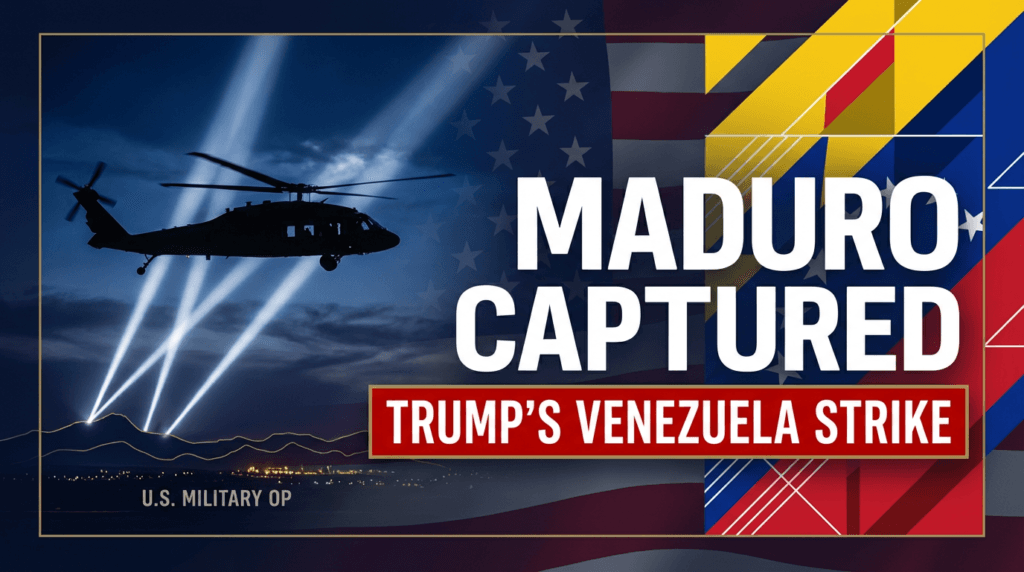
In the early morning hours of January 3, 2026, President Donald Trump authorized a military operation that will be remembered as one of the most decisive actions in recent American foreign policy. U.S. forces struck the Venezuelan capital of Caracas, capturing President Nicolás Maduro and his wife, Cilia Flores, before flying them out of the country to face federal charges in the United States.
The operation, dubbed “Operation Absolute,” represents more than just a military success—it’s a statement about American resolve, the rule of law, and the willingness to confront threats to our national security head-on. While critics have been quick to condemn the action as “interventionist” or “illegal,” a closer examination of the facts reveals why this operation was not only justified but necessary.
The Case Against Maduro: A Narco-Terrorist in Presidential Clothing
Nicolás Maduro isn’t simply an authoritarian leader who has mismanaged his country’s economy. According to a superseding indictment unsealed by the U.S. Department of Justice, Maduro stands accused of leading a 25-year narco-terrorism conspiracy that has flooded American streets with cocaine and enriched terrorist organizations.
Support Independent Local Journalism
TheTownHall.News is a non-profit reader-supported journalism. Just $5 helps us hire local reporters, investigate important issues, and hold public officials accountable across Alameda County. If you believe our community deserves strong, independent journalism, please consider donating $5 today to support our work.The charges are serious and extensive: narco-terrorism, conspiracy to import cocaine into the United States, weapons trafficking, and corruption. The Justice Department alleges that Maduro personally oversaw a drug trafficking operation in partnership with narco-terrorist groups, including the Revolutionary Armed Forces of Colombia (FARC), which the U.S. has designated as a foreign terrorist organization.
This isn’t political persecution—it’s accountability. The U.S. had placed a $50 million bounty on Maduro’s head, reflecting the severity of his alleged crimes against American citizens. When a foreign leader actively facilitates the trafficking of illegal drugs into our communities, destroying families and fueling addiction crises across the nation, the question isn’t whether we should act—it’s how long we can afford to wait.
From a conservative standpoint rooted in law and order, allowing Maduro to operate with impunity would have sent a dangerous message: that powerful criminals can hide behind political office while American lives are destroyed by the drugs they traffic.
A Humanitarian Catastrophe That Demanded Action
Beyond the direct threat to American security, Maduro’s regime has presided over one of the worst humanitarian disasters in modern Latin American history. According to the United Nations High Commissioner for Refugees (UNHCR), nearly 7.9 million Venezuelans have fled their country—making it the largest displacement crisis in the Western Hemisphere and one of the largest refugee crises globally.

Think about that number: approximately one-quarter of Venezuela’s population has been forced to leave their homeland, seeking food, safety, and basic human dignity elsewhere. Human Rights Watch reports that roughly 8 million Venezuelans have left since 2014, with about 6.5 million relocating within Latin America and the Caribbean.
This mass exodus hasn’t just devastated Venezuela—it has strained resources in neighboring countries and contributed to the migration pressures facing the United States. Conservatives understand that addressing root causes of migration is far more effective than managing endless waves of refugees at our border. By removing the regime responsible for this catastrophe, the Trump administration has taken direct action to address one of the primary drivers of regional instability.
The humanitarian argument here aligns perfectly with conservative principles: we believe in human dignity, we oppose tyranny, and we recognize that sometimes decisive action is necessary to prevent greater suffering. Maduro’s socialist policies destroyed Venezuela’s once-prosperous economy, turning a nation with the world’s largest proven oil reserves into a place where people scavenge for food.
Presidential Authority and National Security
Critics have raised questions about the legality of the operation, particularly noting that Congress was not notified in advance. However, the President’s constitutional authority as Commander-in-Chief to protect American national security interests is well-established.
When American lives are threatened—whether by terrorist organizations, drug cartels, or foreign leaders who enable them—the President has both the authority and the responsibility to act. The operation targeted a wanted fugitive with an active U.S. indictment, not a legitimate head of state conducting normal diplomatic relations.
Support Independent Local Journalism
TheTownHall.News is a non-profit reader-supported journalism. Just $5 helps us hire local reporters, investigate important issues, and hold public officials accountable across Alameda County. If you believe our community deserves strong, independent journalism, please consider donating $5 today to support our work.Conservatives have long championed a strong national defense and the principle that America should not apologize for protecting its citizens. The Trump administration’s willingness to use military force against a narco-terrorist regime demonstrates the kind of resolve that keeps America safe. This isn’t about nation-building or endless foreign entanglements—it’s about targeted action against a specific threat.
Moreover, the operation was surgical and successful. U.S. forces achieved their objective with minimal collateral damage, demonstrating both military competence and restraint. This is precisely the kind of decisive, effective action that conservatives believe government should take: focused, purposeful, and in defense of American interests.
The Hypocrisy of the Left’s Response
Predictably, progressive critics have condemned the operation as “unilateral aggression” and a “violation of international law.” Yet these same voices were largely silent as Maduro’s regime murdered political dissidents, rigged elections, and starved his own people while enriching himself through drug trafficking.
The left’s selective outrage reveals a troubling pattern: they’re more concerned with procedural questions and international approval than with confronting evil and protecting American lives. They would rather see endless diplomatic “engagement” with dictators than take meaningful action to hold them accountable.
Conservatives understand that sometimes moral clarity requires bold action. We don’t need permission from the United Nations or approval from European allies to defend our nation against narco-terrorists. American sovereignty means making decisions based on American interests, not waiting for international consensus from bodies that often include the very dictators we’re confronting.
What Comes Next: A Conservative Vision for Venezuela
President Trump has stated that the United States will oversee Venezuela “until a safe, proper and judicious transition” can occur. This approach reflects conservative principles of limited but decisive intervention—not permanent occupation, but ensuring stability and the opportunity for the Venezuelan people to reclaim their freedom.
The goal should be clear: facilitate free and fair elections, help restore basic institutions, and then allow Venezuelans to govern themselves. This isn’t about imposing American values—it’s about removing the obstacles preventing Venezuelans from exercising their own.
Conservatives believe in self-determination and limited government, which means our role should be temporary and focused. Help restore order, ensure the drug trafficking networks are dismantled, and create conditions for democracy to flourish—then step back. This is the opposite of the nation-building projects that conservatives rightly criticized in Iraq and Afghanistan.
A Message to America’s Enemies
Perhaps most importantly, the Venezuela operation sends an unmistakable message to hostile actors worldwide: the United States under President Trump will not tolerate direct threats to American security, regardless of who makes them or what title they hold.
For too long, America’s adversaries have calculated that they could act with impunity, hiding behind sovereignty claims while attacking American interests. Those days are over. Whether you’re a narco-terrorist in Venezuela, a cartel leader in Mexico, or a hostile regime anywhere in the world, if you threaten American lives, you will be held accountable.
This is what peace through strength looks like. It’s not warmongering—it’s deterrence. When America demonstrates resolve, adversaries think twice before acting against us. When we show weakness or endless patience with those who harm us, we invite further aggression.
Conclusion: Leadership in Action
The capture of Nicolás Maduro represents a defining moment for the Trump administration and for American foreign policy. It demonstrates that conservative principles—law and order, national security, human dignity, and American sovereignty—aren’t just talking points but guides for action.
Critics will continue to debate the operation’s legality and wisdom, but the facts speak for themselves: a wanted narco-terrorist who destroyed his country and threatened American lives has been brought to justice. Millions of Venezuelan refugees may finally have hope of returning home. And America’s enemies have been reminded that we will defend our interests decisively.
This is the kind of leadership that conservatives have long called for: bold, principled, and unapologetic in defense of American values and security.
Call to Action
Stay informed. The mainstream media will spin this story in countless ways, but the facts matter. Read the actual indictment, understand the charges against Maduro, and make up your own mind.
Get involved. Contact your representatives in Congress and let them know you support decisive action against narco-terrorists who threaten American lives.
Share this article. If you believe in law and order, national security, and American leadership, make sure others understand what’s really at stake in Venezuela. The narrative matters, and conservative voices need to be heard.
The Venezuela operation isn’t the end of a story—it’s the beginning of a new chapter in American foreign policy. Let’s ensure it’s written with the clarity and conviction that our principles demand.