Armed Militias Hunt Americans at Roadblocks as U.S. Orders Emergency Exit from Venezuela
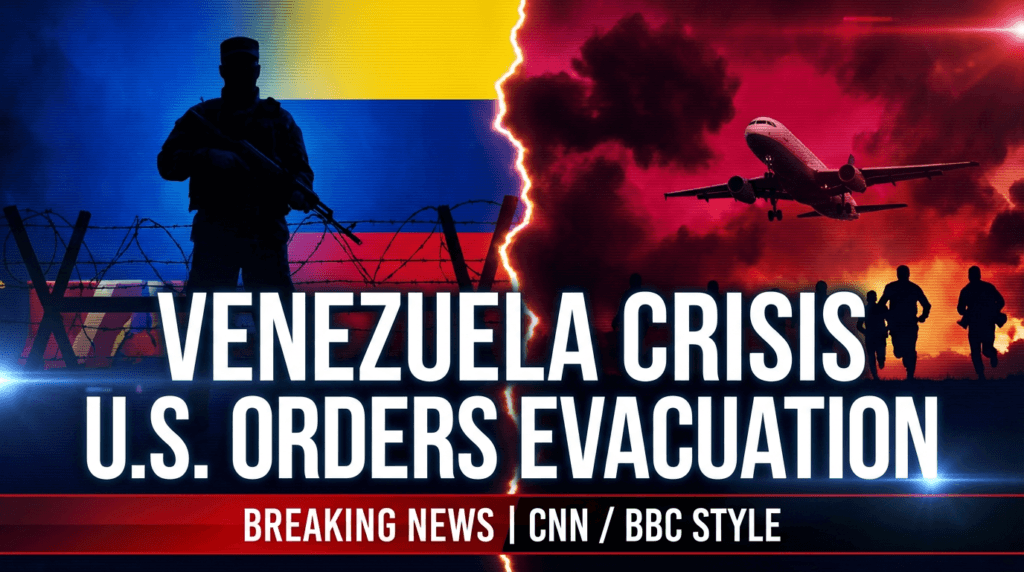
State Department warns citizens to flee immediately as pro-government groups search vehicles for evidence of U.S. ties—”Leave as soon as you feel it is safe”
CARACAS — The United States government issued its most urgent warning in years on Friday, ordering Americans to evacuate Venezuela immediately as armed militia groups set up roadblocks across the country to hunt for U.S. citizens.
The security alert, posted by the U.S. Embassy operating from Bogota, Colombia, warns that groups known as colectivos—pro-government militias—are stopping vehicles and searching for “evidence of U.S. citizenship or support for the United States.”
The directive marks a dramatic escalation from warnings issued just four days earlier. Americans are now being told to leave “as soon as they feel it is safe to do so” after commercial flights resumed to the country.
Support Independent Local Journalism
TheTownHall.News is a non-profit reader-supported journalism. Just $5 helps us hire local reporters, investigate important issues, and hold public officials accountable across Alameda County. If you believe our community deserves strong, independent journalism, please consider donating $5 today to support our work.No rescue coming
The U.S. has no diplomatic presence in Venezuela to help Americans in danger. Embassy operations were suspended in March 2019, and all consular services—routine and emergency—remain closed.
“The U.S. government continues to be unable to provide emergency services to U.S. citizens in Venezuela,” the alert states bluntly.
That means Americans facing detention, kidnapping, or violence have no official channel for help inside the country. They must contact the embassy in neighboring Colombia—if they can.
The absence of diplomatic infrastructure leaves an estimated several thousand American citizens stranded without the safety net typically available in crisis situations. Unlike evacuations from other conflict zones where embassy staff coordinate departures, Americans in Venezuela are entirely on their own.

The colectivo threat
The colectivos represent one of Venezuela’s most unpredictable security threats. These loosely organized paramilitary groups have operated for years as enforcers for the government, often acting with impunity.
Armed with military-grade weapons and motorcycles, they’ve been documented carrying out violent crackdowns on opposition protests. Human rights organizations have accused them of extrajudicial killings, torture, and intimidation campaigns.
Now, according to the State Department alert, they’re actively hunting for Americans. The roadblock searches represent a systematic effort to identify U.S. citizens—a development that marks a dangerous new phase in Venezuela’s treatment of Americans.
The groups are reportedly checking identification documents, searching vehicles for American passports, and looking for any evidence of U.S. connections. What happens to those identified as Americans remains unclear, adding to the urgency of the evacuation order.
Power outages and fluid threats
Intermittent power and utility outages continue throughout Venezuela, compounding the security crisis. The blackouts, which can last hours or days, have crippled basic services including water pumps, hospitals, and communication networks.
Support Independent Local Journalism
TheTownHall.News is a non-profit reader-supported journalism. Just $5 helps us hire local reporters, investigate important issues, and hold public officials accountable across Alameda County. If you believe our community deserves strong, independent journalism, please consider donating $5 today to support our work.The State Department describes the situation as “fluid,” with risks changing rapidly. That unpredictability makes planning an exit strategy particularly treacherous for Americans trying to reach airports or border crossings.
Venezuela holds the highest U.S. travel advisory level—Level 4: Do Not Travel. The designation cites wrongful detention, torture, terrorism, kidnapping, arbitrary law enforcement, crime, civil unrest, and collapsing health infrastructure.
The embassy specifically warned Americans to “remain vigilant and exercise caution when traveling by road” due to the militia checkpoints. But with roadblocks appearing unpredictably, even cautious travel carries significant risk.
Flight tickets scarce
While some commercial airlines have resumed operations from Venezuela, tickets face “high demand and limited availability,” according to the alert. Americans are urged to monitor airline communications and websites constantly for updated departure information.
The sudden rush to exit has created a bottleneck at Simón Bolívar International Airport in Caracas and other departure points. Ticket prices have reportedly surged, and available seats are being snapped up within minutes of becoming available.
Several major international carriers suspended service to Venezuela years ago due to security concerns and the country’s economic collapse. The airlines that continue operating—primarily from Colombia, Panama, and Mexico—now face overwhelming demand from Americans desperate to leave.
Those who choose not to leave are advised to establish multiple communication methods with contacts outside Venezuela and prepare contingency plans for emergencies they’ll have to handle alone.
A pattern of wrongful detention
The State Department’s warning about wrongful detention isn’t theoretical. Venezuela has a documented history of arresting Americans on dubious charges and holding them for extended periods.
In recent years, multiple American citizens have been detained, sometimes for years, on allegations of espionage or conspiracy. These cases typically involve little evidence and limited due process, with detainees held in harsh conditions.
The threat of torture in detention, explicitly mentioned in the travel advisory, reflects credible reports from former prisoners and human rights monitors. Venezuela’s prison system ranks among the most dangerous in Latin America, with violence, overcrowding, and abuse widespread.
For Americans, the risk is compounded by the lack of consular access. Without embassy staff to monitor conditions, advocate for prisoners, or pressure for release, detained Americans have virtually no recourse.

Escalating tensions
The timing of the alert comes amid heightened political tensions in Venezuela, though the State Department has not specified what triggered the sudden urgency or the militia mobilization.
Venezuela has been locked in political crisis for years, with disputed elections, international sanctions, and economic collapse fueling instability. The relationship between the U.S. and Venezuela’s government has remained deeply antagonistic, with each side viewing the other as a threat.
Recent developments may have intensified the danger for Americans. Political rhetoric from Venezuelan officials has grown increasingly hostile toward the United States, and nationalist sentiment has been weaponized to deflect from domestic problems.
The mobilization of colectivos to actively search for Americans suggests a coordinated effort rather than random violence. Whether this represents official government policy or the actions of loosely controlled militias remains unclear—but for Americans on the ground, the distinction matters little.
Who’s still there
The exact number of American citizens currently in Venezuela is unknown. The State Department doesn’t release precise figures, but estimates suggest several thousand Americans live or work in the country.
Some are dual citizens with family ties to Venezuela. Others are missionaries, aid workers, or business professionals who’ve remained despite years of warnings. A smaller number are journalists, researchers, or others with professional reasons for staying.
Many have already left in previous waves of departures as the security situation deteriorated. But those who remain now face the most explicit danger yet: armed groups actively looking for them.
The warning applies to all U.S. citizens in Venezuela, regardless of location. While Caracas and other major cities face the most visible threats, rural areas offer no safety. The colectivos operate throughout the country, and the lack of rule of law means danger can materialize anywhere.
Limited options for help
Americans are encouraged to enroll in the Smart Traveler Enrollment Program (STEP) to receive security updates. But enrollment provides only information, not protection or evacuation assistance.
For assistance, U.S. citizens must contact the U.S. Embassy in Bogota, Colombia, at +57-601-275-2000 or, from the U.S. or Canada, 1-888-407-4747. But reaching the embassy requires international phone service, which may be unavailable during power outages or if detained.
The embassy can provide limited guidance on exit routes and flight options, but cannot arrange transportation, provide security escorts, or intervene if Americans are stopped at checkpoints. The message is clear: you’re on your own.
For family members in the United States trying to reach loved ones in Venezuela, the options are equally limited. The State Department can attempt to relay messages through third parties, but has no reliable way to verify the safety or whereabouts of Americans in the country.
A dangerous journey out
Even for those who secure flight tickets, reaching the airport means navigating the roadblocks. The journey from residential areas to Simón Bolívar International Airport requires traveling major highways where colectivos are reportedly operating.
Americans must weigh the risk of being identified at a checkpoint against the danger of staying. Some may attempt to hide their U.S. citizenship by traveling without passports, but that creates complications at airport security and immigration.
Others may try to reach land borders with Colombia or Brazil, but those routes involve even longer road journeys through areas with limited security. Border crossings can be chaotic, corrupt, and dangerous, with armed groups operating in frontier regions.
The State Department’s advice to leave “as soon as they feel it is safe to do so” places an impossible burden on Americans: determining when the risk of leaving is lower than the risk of staying.
Historical precedent
The current crisis echoes previous emergency evacuations from hostile territories, but with a critical difference: no organized U.S. government support.
During evacuations from Afghanistan, Iraq, or other conflict zones, military or diplomatic personnel coordinated departures, provided security, and ensured citizens reached safety. In Venezuela, Americans must navigate the crisis individually, with only remote guidance from an embassy in another country.
The March 2019 closure of the Caracas embassy was itself a dramatic moment, with all U.S. diplomatic personnel withdrawn due to security threats. At the time, the State Department warned that Americans remaining in Venezuela would have no access to emergency services.
That warning has now materialized into the worst-case scenario: Americans actively targeted, with no U.S. presence to help them.
What happens next
The State Department has not indicated whether it’s considering any measures beyond the advisory—such as coordinating charter flights, establishing safe corridors, or working with third countries to assist Americans.
Congressional leaders have not yet commented publicly on the crisis, though pressure is likely to mount if Americans are detained or harmed. But with no diplomatic ties and limited leverage, the U.S. government’s options for intervention are severely constrained.
For now, the message remains stark and simple: get out now, while you still can.
The coming days will reveal whether Americans can successfully navigate the roadblocks, secure flights, and escape before the window closes. For those who don’t make it out, the consequences could be severe—and the U.S. government has made clear it cannot save them.