Trump Threatens Insurrection Act in Minnesota: When Federal Law Enforcement Comes Under Attack
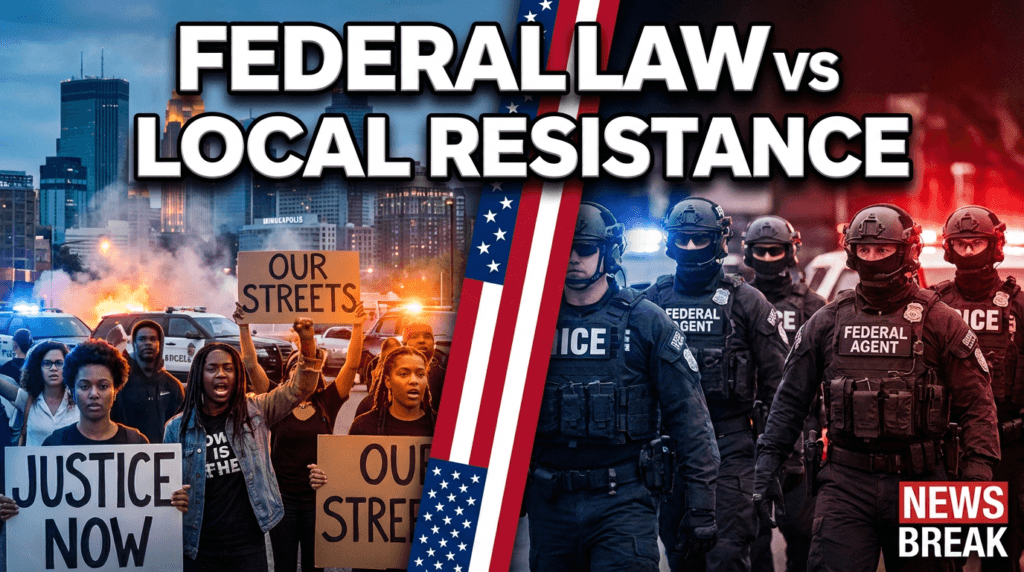
The streets of Minneapolis have erupted into chaos once again, but this time the violence isn’t directed at local businesses or police precincts—it’s aimed squarely at federal immigration agents attempting to enforce the law of the land. After two shootings involving Immigration and Customs Enforcement (ICE) officers in the span of a week, President Donald Trump issued a stark warning on Thursday: invoke the Insurrection Act if state and local officials fail to restore order and protect federal agents doing their jobs.
The escalating crisis in Minnesota represents far more than a local disturbance. It’s a fundamental test of whether the federal government can execute its constitutional duties without interference from hostile local populations and complicit state officials. For Americans who believe in the rule of law, limited but effective government, and the sovereignty of our borders, what’s happening in Minneapolis should be a wake-up call.
The Timeline of Violence
The current crisis began on January 7, 2026, when ICE Agent Jonathan Ross shot and killed Renee Nicole Good, a 37-year-old American citizen and mother of three, during what authorities describe as a violent confrontation. According to the Department of Homeland Security, Good’s vehicle struck Agent Ross during an immigration enforcement operation, causing him internal injuries that required hospitalization. The Minnesota Bureau of Criminal Apprehension is investigating the incident, but federal officials maintain Ross acted in self-defense when his life was threatened.
Support Independent Local Journalism
TheTownHall.News is a non-profit reader-supported journalism. Just $5 helps us hire local reporters, investigate important issues, and hold public officials accountable across Alameda County. If you believe our community deserves strong, independent journalism, please consider donating $5 today to support our work.One week later, on January 14, another ICE agent shot a Venezuelan man in the leg during a traffic stop in north Minneapolis. Federal authorities report the man, who was in the country illegally, physically assaulted the officer and resisted arrest. The agent discharged his weapon to protect himself from further attack.
Both incidents sparked immediate protests that quickly turned violent. Demonstrators clashed with law enforcement, faced tear gas and flash bangs, and created what President Trump described as conditions of “insurrection” that state officials have failed to control. By Thursday morning, the president had seen enough, threatening to invoke the 1807 Insurrection Act—a law that empowers the commander-in-chief to deploy U.S. military forces domestically to suppress rebellion or domestic violence.
Federal Authority Under Attack
At the heart of this crisis lies a question that should concern every American regardless of political affiliation: Can federal law enforcement officers execute their lawful duties without being physically attacked and without facing violent mob retaliation?
Immigration enforcement is not a local matter subject to the whims of city councils or state legislatures. Article I, Section 8 of the U.S. Constitution explicitly grants Congress the power to “establish a uniform Rule of Naturalization.” Federal immigration law, passed by elected representatives and signed by presidents, represents the supreme law of the land under the Supremacy Clause. When ICE agents conduct enforcement operations, they’re not engaged in some rogue activity—they’re executing the will of the American people as expressed through their elected representatives.

Yet in Minneapolis and cities across the country, a dangerous precedent is being set. Local officials openly declare themselves “sanctuary cities,” refusing to cooperate with federal immigration authorities. Prosecutors resign rather than pursue cases against those who assault federal agents. City councils pass resolutions condemning ICE operations on municipal property. And when federal agents are forced to defend themselves against physical attack, protesters take to the streets demanding they be charged with murder.
This isn’t resistance—it’s obstruction of justice. And it cannot stand.
The Insurrection Act: Constitutional Authority, Not Overreach
Critics have immediately denounced President Trump’s Insurrection Act threat as authoritarian overreach. Minnesota Governor Tim Walz asked the president to “turn the temperature down.” Congressional Democrats called it an assault on states’ rights. But the historical and legal reality tells a different story.
The Insurrection Act, originally passed in 1807 and amended several times since, grants the president clear authority to deploy military forces or federalize National Guard units when insurrection, domestic violence, or unlawful obstructions prevent the execution of federal law. The law has been invoked dozens of times throughout American history—by presidents of both parties—to restore order when local authorities either couldn’t or wouldn’t do so themselves.
President Dwight Eisenhower used it to enforce school desegregation in Little Rock, Arkansas, in 1957. President John F. Kennedy invoked it during the integration of the University of Mississippi in 1962. President Lyndon Johnson deployed federal troops to Detroit during the 1967 riots. President George H.W. Bush sent military forces to Los Angeles after the 1992 Rodney King riots overwhelmed local police.
Support Independent Local Journalism
TheTownHall.News is a non-profit reader-supported journalism. Just $5 helps us hire local reporters, investigate important issues, and hold public officials accountable across Alameda County. If you believe our community deserves strong, independent journalism, please consider donating $5 today to support our work.In each case, the president acted not out of dictatorial impulse but out of constitutional duty—to ensure that federal law is faithfully executed and that American citizens and federal officers are protected from mob violence.
The situation in Minneapolis meets the statutory threshold for Insurrection Act deployment. Federal officers conducting lawful operations have been attacked. Violent protests have erupted. Local prosecutors are resigning rather than enforcing the law. And state officials, while calling for calm, have failed to take decisive action to protect federal agents or restore order.
Law and Order: The Foundation of Civil Society
For conservatives who value ordered liberty, the Minneapolis crisis illustrates why law enforcement—and respect for those who enforce the law—remains non-negotiable. Without the rule of law, consistently applied and vigorously defended, civil society collapses into chaos where the loudest mob and the most violent actors dictate outcomes.
The two ICE shootings must be investigated thoroughly and transparently. If agents used excessive force or violated protocols, they should face appropriate consequences. That’s how accountability works in a nation of laws. But the default assumption cannot be that federal agents are guilty of murder simply because they defended themselves against attack during the lawful execution of their duties.
Consider what we know: In both incidents, federal authorities report their agents were physically attacked. In the first case, Agent Ross was struck by a vehicle hard enough to cause internal bleeding requiring hospitalization. In the second case, an officer was assaulted during an arrest of someone in the country illegally. These aren’t cases of agents opening fire on peaceful individuals going about their business—they’re cases of law enforcement officers responding to immediate physical threats.
Yet the narrative being pushed by activists and amplified by sympathetic media outlets treats these agents as murderers and the individuals who attacked them as innocent victims. This inversion of reality is dangerous. It tells law enforcement officers that they cannot defend themselves. It tells violent criminals that attacking federal agents carries no consequences. And it tells the American people that enforcing immigration law is somehow illegitimate.
The Immigration Enforcement Imperative
The broader context of these incidents cannot be ignored. President Trump was elected on a mandate to secure America’s borders and enforce immigration law—a mandate reaffirmed by voters who watched for years as millions entered the country illegally while politicians offered nothing but excuses and empty promises.
ICE agents are on the streets of Minneapolis and cities across America because the federal government is finally, after years of neglect, doing its job. According to recent data, ICE arrests have increased to approximately 1,200 per day—the highest levels since the Obama administration. The Trump administration has also expanded the 287(g) program, which allows state and local law enforcement to assist with immigration enforcement, with 1,318 agreements now covering 40 states.
These enforcement operations are targeting individuals who entered the country illegally, violated the terms of their visas, or committed crimes after arrival. In the January 14 Minneapolis shooting, the individual shot was a Venezuelan national in the country illegally who physically assaulted a federal officer. This is exactly the type of case that immigration enforcement exists to address.
Yet local officials in Minneapolis and elsewhere treat immigration enforcement as if it were an occupying army rather than federal officers executing lawfully passed statutes. This attitude doesn’t just undermine immigration enforcement—it undermines the entire concept of federal supremacy and the rule of law.
The Path Forward: Supporting Those Who Keep Us Safe
Americans face a choice in how we respond to the Minneapolis crisis. We can side with the mob, assuming the worst about law enforcement officers and treating every use of force as presumptively criminal. Or we can stand with the men and women who put on the uniform, take an oath to uphold the Constitution, and risk their lives to enforce laws passed by our elected representatives.
The conservative position is clear: we stand with law enforcement. We demand thorough investigations when force is used, but we don’t presume guilt. We insist that those who attack federal officers face swift prosecution. And we support the president’s constitutional authority to deploy whatever resources are necessary to ensure federal law is executed and federal officers are protected.
If Governor Walz and Minneapolis officials cannot or will not restore order, protect federal agents, and prosecute those who assault law enforcement officers, then President Trump not only has the authority to invoke the Insurrection Act—he has the duty to do so. The alternative is to accept that federal law enforcement can be attacked with impunity in certain cities, that immigration law will only be enforced where local officials permit it, and that mob violence can override constitutional governance.
That’s not a precedent any American who values the rule of law can accept.
Conclusion: The Rule of Law Is Not Negotiable
The crisis in Minneapolis is about far more than two shootings or even immigration policy. It’s about whether we remain a nation of laws or descend into a patchwork of jurisdictions where federal authority applies only where local sentiment allows.
Federal immigration enforcement is constitutional, lawful, and necessary. ICE agents conducting these operations deserve our support, not our condemnation. And when they’re attacked while doing their jobs, they have every right to defend themselves—and we have every obligation to defend them.
President Trump’s threat to invoke the Insurrection Act isn’t authoritarian posturing. It’s a president fulfilling his constitutional oath to ensure that federal law is faithfully executed. If state and local officials won’t do their part to maintain order and protect federal officers, then the president must act.
The rule of law is the foundation of everything we value as Americans—our liberty, our prosperity, our security. When that foundation is attacked, it must be defended. In Minneapolis and across America, that defense begins with standing firmly behind those who enforce the law and making clear that violent resistance to lawful authority will not be tolerated.
Call to Action
The situation in Minnesota affects every American who believes in the rule of law and secure borders. Stay informed about developments in this crisis—don’t rely solely on mainstream outlets that may downplay attacks on federal officers or sympathize with those resisting lawful enforcement. Contact your elected representatives and demand they support federal immigration enforcement and protect ICE agents doing their jobs. Share this article with others who need to understand what’s really happening in Minneapolis and why it matters. And most importantly, stand with law enforcement officers who risk everything to keep our communities safe and our laws enforced. The rule of law depends on citizens who are willing to defend it.