Hayward’s Budget Is Counting Money That Is Not in the Bank Yet
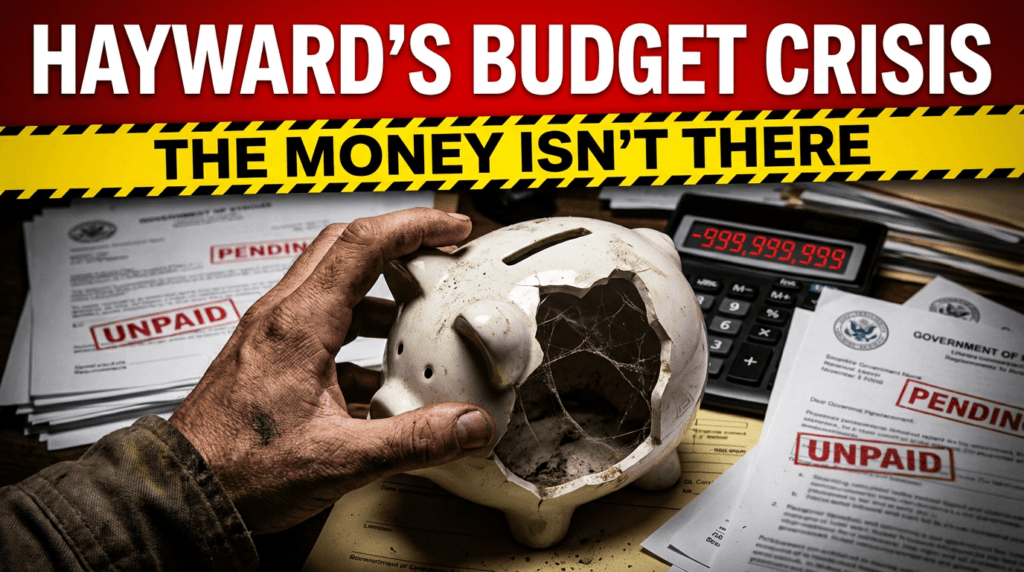
In Hayward, the most dangerous budget problem is not always the headline deficit number. It is the quieter habit that makes deficits come back like clockwork: counting revenue before it is fully in hand.
City leaders can call a budget “balanced,” but if that balance depends on revenue that is still uncertain, still pending, or still being chased down through audits and reviews, then taxpayers are not looking at stability. They are looking at a plan that can unravel mid-year, followed by the usual scramble: spending freezes, service cuts, and renewed pressure for tax increases.
What the presentations reveal: revenue assumptions with built-in risk
In the City’s own budget presentation materials, several revenue items are framed in ways that should immediately raise red flags for residents.
Support Independent Local Journalism
TheTownHall.News is a non-profit reader-supported journalism. Just $5 helps us hire local reporters, investigate important issues, and hold public officials accountable across Alameda County. If you believe our community deserves strong, independent journalism, please consider donating $5 today to support our work.One example is straightforward and blunt: Property Transfer Tax from Southland Mall is described as “not yet received.” That phrase matters. Because a budget is not a press release. A budget is supposed to be cash reality.
Other references in the presentations indicate revenue that is being pursued or refined, such as developer deposits under review and business tax audit work that is underway. These efforts may be reasonable, and the City may ultimately collect the money. But there is a serious difference between:
- Revenue already received and booked, versus
- Revenue anticipated, under review, or dependent on successful enforcement
When elected officials and top administrators lean too hard on the second category, they turn the budget into a gamble.
Why “not yet received” is not a technicality, it is the whole story
Let’s be honest about how this works in real life.

If you tell your family you have “balanced” your household budget because you expect a bonus, but the bonus has not arrived, your budget is not balanced. It is contingent. And if the bonus is late or smaller than promised, the bills still come due.
Cities are no different. Payroll still runs. Vendors still get paid. Pensions do not pause. If the City overestimates or prematurely counts revenue, then it has only a few options when reality hits:
- cut services quickly,
- drain reserves,
- defer maintenance and capital work, or
- come back to taxpayers demanding more money.
The predictable pattern: optimistic assumptions now, pain later
This is the cycle voters should watch for:
- City staff identifies an imbalance
- Leaders push for a “balanced” plan
- The plan assumes revenue that is not fully secured
- Mid-year, the revenue underperforms or comes in late
- The City announces an “unexpected” shortfall
- Residents are told cuts and fees are unavoidable
The public is supposed to believe the shortfall is bad luck. But when revenue is being counted early, the shortfall is often baked in.
The accountability question: who approved counting uncertain revenue?
Hayward residents deserve names and decisions, not generic reassurances.
Support Independent Local Journalism
TheTownHall.News is a non-profit reader-supported journalism. Just $5 helps us hire local reporters, investigate important issues, and hold public officials accountable across Alameda County. If you believe our community deserves strong, independent journalism, please consider donating $5 today to support our work.Here are the questions that should be asked at a public meeting, on camera, for the record:
- Which specific revenue lines are already received versus still pending?
- If a revenue item is “not yet received,” why is it included in the balancing plan at all?
- What is the conservative estimate if pending revenue arrives late or below forecast?
- What is the Plan B and what services get hit first if the money does not show up?
If officials cannot answer those clearly, then the City is not budgeting. It is hoping.
A simple reform that would force honesty: separate “cash in hand” from “projected recovery”
Hayward can fix this credibility problem without waiting years.
The City should be required to publish a public-facing table that breaks revenue into three buckets:
- Received (cash verified and posted)
- Legally owed but not received (timing risk)
- Under review or enforcement dependent (collection risk)
Then staff should present the budget under two scenarios:
- Base case: only bucket #1 plus conservative assumptions on #2
- Stress case: delayed #2 and partial #3
That is what responsible budgeting looks like. It makes the risk visible and stops politicians from hiding behind optimistic projections.
Why it matters: taxpayers pay the price for fantasy budgeting
When City Hall counts money early, the public pays later in one of two currencies:
- higher costs (fees, taxes, assessments), or
- lower quality of life (slower services, deferred maintenance, reduced staffing)
And once this becomes normal, it corrodes trust. Residents stop believing financial statements, stop believing “balanced budget” claims, and stop believing the next promise that taxes will “solve” the problem.
What happens next if residents push back
If this issue is exposed publicly and repeatedly, there are clear impact metrics that tend to follow:
- more residents showing up at meetings demanding line-item clarity,
- stronger social media engagement around transparency,
- and potential pressure for policy reversals, spending restraint, or leadership changes when the public realizes “balanced” was conditional.
Hayward can either tighten its revenue standards now, or it can keep playing the same game until the next shortfall forces chaos. Taxpayers should insist on the first option.