US Shoots Down Iranian Drone Near Aircraft Carrier as Tensions Escalate in Arabian Sea
Incident marks latest flashpoint between Washington and Tehran amid planned nuclear negotiations
February 4, 2026
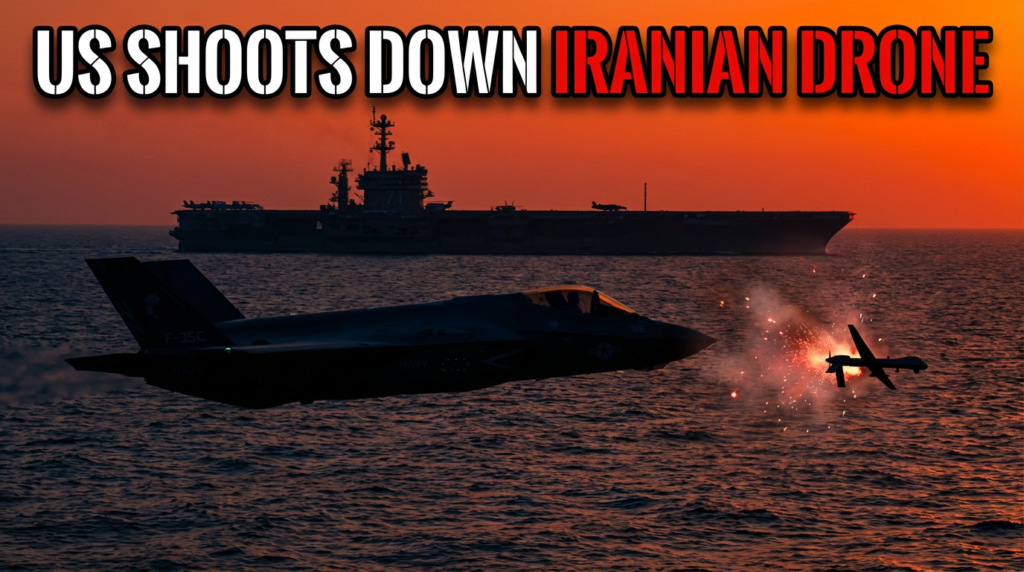
A U.S. Navy fighter jet shot down an Iranian drone that aggressively approached the aircraft carrier USS Abraham Lincoln in the Arabian Sea on Tuesday, marking a dangerous escalation in tensions between the longtime adversaries just days before planned diplomatic talks.
Support Independent Local Journalism
TheTownHall.News is a non-profit reader-supported journalism. Just $5 helps us hire local reporters, investigate important issues, and hold public officials accountable across Alameda County. If you believe our community deserves strong, independent journalism, please consider donating $5 today to support our work.The Iranian Shahed-139 drone was flying toward the carrier “with unclear intent” when it was destroyed by an F-35C fighter jet launched from the Lincoln, according to Navy Captain Tim Hawkins, spokesperson for U.S. Central Command. The incident occurred approximately 500 miles from Iran’s southern coast in international waters.
“The drone aggressively approached the aircraft carrier despite de-escalatory measures taken by U.S. forces,” Hawkins said in a statement. “An F-35C fighter jet from Abraham Lincoln shot down the Iranian drone in self-defense and to protect the aircraft carrier and personnel on board.”
No American service members were harmed during the incident, and no U.S. equipment was damaged.
Second Incident in the Strait of Hormuz
Hours after the drone shootdown, Iranian Revolutionary Guard Corps forces harassed a U.S.-flagged merchant vessel in the strategically vital Strait of Hormuz. Two IRGC boats and an Iranian Mohajer drone approached the M/V Stena Imperative at high speeds, threatening to board and seize the tanker.

The vessel’s crew refused orders to stop, instead increasing speed and continuing their voyage. The USS McFaul, a Navy destroyer operating nearby, quickly responded to escort the merchant ship with defensive air support from the U.S. Air Force. The situation de-escalated, and the tanker proceeded safely.
Diplomatic Talks Still On Track
Despite the confrontations, both the White House and Iranian officials confirmed that planned negotiations between U.S. special envoy Steve Witkoff and Iranian representatives remain scheduled. The talks, expected to focus on Iran’s nuclear program, could take place in the coming days, though the exact location is still being finalized.
Turkey and Oman have both offered to host the discussions, according to Iranian Foreign Ministry spokesman Esmail Baghaei. Turkish officials confirmed they are working behind the scenes to facilitate the meeting.
President Donald Trump told reporters Tuesday that “we are negotiating with them right now,” while also warning Iran about potential consequences. “I don’t think they want that happening again,” Trump said, referring to U.S. strikes on Iranian nuclear facilities in June 2025.
Iranian President Masoud Pezeshkian indicated his willingness to engage, instructing his foreign minister to “pursue fair and equitable negotiations” with the United States—one of the clearest signals yet from Tehran that it’s ready to talk.
Support Independent Local Journalism
TheTownHall.News is a non-profit reader-supported journalism. Just $5 helps us hire local reporters, investigate important issues, and hold public officials accountable across Alameda County. If you believe our community deserves strong, independent journalism, please consider donating $5 today to support our work.Growing U.S. Military Presence
The incidents come amid a significant U.S. military buildup in the Middle East. The Lincoln carrier strike group, which brought roughly 5,700 additional service members to the region last week, has joined three destroyers and three littoral combat ships already deployed there.
Flight-tracking data has also revealed dozens of U.S. military cargo planes heading to the region in recent weeks, bringing air defense systems and other hardware. The deployment mirrors last year’s preparations ahead of Iranian retaliation for U.S. strikes on nuclear sites.
Regional Context and Rising Tensions
Tensions between Washington and Tehran have been escalating since late December, when nationwide protests erupted in Iran over economic instability before broadening into a challenge against the country’s ruling theocracy. Iran’s bloody crackdown on demonstrators drew international condemnation and threats of intervention from President Trump.
The Trump administration has since shifted focus to pressuring Iran over its nuclear program, demanding a comprehensive deal while simultaneously threatening military action. The dual-track approach—combining military pressure with diplomatic overtures—has created an unpredictable dynamic in the volatile region.
Iran’s state media reported that the Revolutionary Guard is investigating the “interruption” of the drone, with the semi-official Tasnim news agency claiming the drone successfully transmitted images back to Iran before losing contact.
Oil Markets React
Oil futures prices rose more than $1 per barrel following news of the drone shootdown, reflecting market concerns about potential disruptions to shipping in the Arabian Sea and Strait of Hormuz, through which nearly one-third of the world’s seaborne oil passes.
As both nations prepare for negotiations, the incidents serve as a stark reminder of how quickly the situation could deteriorate. With U.S. warships positioned near Iranian waters and diplomatic channels still fragile, the coming days will prove critical in determining whether Washington and Tehran can find a path toward de-escalation—or if the region is headed for further confrontation.