Metoprolol Succinate Recall: 112,000 Bottles Pulled — And the FDA Has a Bigger Problem to Answer For
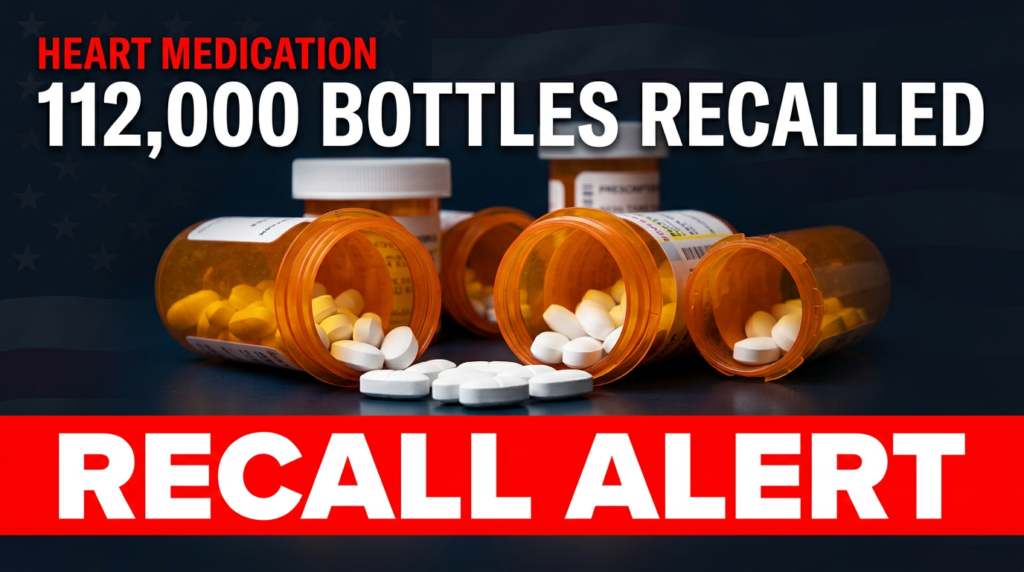
The Teva Pharmaceuticals metoprolol recall isn’t just a routine drug safety notice. It’s the latest sign that America’s pharmaceutical oversight system is failing the tens of millions of patients who trust it with their lives.
Every morning, millions of Americans reach for a small tablet to keep their heart beating safely. They trust that someone — a regulator, a manufacturer, a pharmacist — has verified that what’s in that bottle is what it claims to be, and that it works. The nationwide recall of over 112,000 bottles of metoprolol succinate extended-release tablets, manufactured by Teva Pharmaceuticals, is a jarring reminder that this trust is not always warranted.
The recall — classified by the FDA as a Class II action on February 27, 2026 — affects 25mg, 50mg, 100mg, and 200mg doses of one of the most prescribed medications in the United States. The reason? The drug may not dissolve properly in the body. In a medication designed to control blood pressure, prevent heart attacks, and manage heart failure in some of the country’s sickest patients, that’s not a paperwork error. That’s a potential threat to life.
Support Independent Local Journalism
TheTownHall.News is a non-profit reader-supported journalism. Just $5 helps us hire local reporters, investigate important issues, and hold public officials accountable across Alameda County. If you believe our community deserves strong, independent journalism, please consider donating $5 today to support our work.Why This Recall Is Bigger Than It Looks
Metoprolol succinate is not an obscure drug. According to drug database ClinCalc, it was the sixth-most prescribed medication in the United States in 2023, with more than 14.8 million estimated patients and nearly 59.5 million prescriptions filled that year. It is a beta-blocker — a class of drugs that reduces the heart’s workload — and is prescribed for high blood pressure, chronic heart failure, angina, and post-heart attack recovery.
When extended-release tablets fail to dissolve correctly, patients may receive too little of the drug, too quickly, or not at all. For someone managing a serious cardiac condition, this isn’t a minor inconvenience. It can mean dangerously uncontrolled blood pressure, a missed dose during a critical window of recovery, or a recurrence of symptoms that the medication was specifically prescribed to prevent.
The FDA’s Class II classification means the agency believes serious harm is “remote” — but that classification should not be read as reassurance. “Remote” is still possible. And when you’re talking about a drug taken daily by millions of heart patients, even a small probability of harm becomes a large public health concern.
A Pattern of Failures, Not a One-Time Mistake
Here is what makes this recall particularly difficult to dismiss as an isolated incident: it has happened before, with the same drug.

In 2025, the FDA recalled more than 33,000 bottles of metoprolol succinate manufactured by India-based Granules Pharmaceuticals Inc. — again citing failed dissolution specifications. Before that, recalls involving Dr. Reddy’s Laboratories, another India-based manufacturer, raised similar concerns about generic metoprolol quality.
This is a pattern, not an anomaly. And it is a pattern that points directly at a systemic failure in how the United States oversees its pharmaceutical supply chain.
Approximately 90% of American prescriptions are filled with generic drugs. Estimates suggest that roughly half of those generics are manufactured in India or China. The economic logic is straightforward: lower costs, broader access. But cost savings mean little when the product arriving at American pharmacies doesn’t meet the standards printed on its label.
FDA warning letters to Indian and Chinese drug manufacturers surged by an estimated 50% in fiscal year 2025, according to industry analyses. The FDA itself issued warning letters to multiple Indian pharmaceutical facilities in late 2025 and early 2026 for “significant violations of Current Good Manufacturing Practice (CGMP) regulations.” These are not minor technical citations. They represent fundamental breakdowns in the processes that are supposed to guarantee drug quality.
The Case for Pharmaceutical Accountability
There is a principle at the heart of American civic life that applies here as clearly as it does in any other arena: accountability must follow authority. The FDA has enormous power over what medicines reach American patients. With that power comes an obligation to use it rigorously — not to rubber-stamp approvals and issue quiet recalls after the fact.
Support Independent Local Journalism
TheTownHall.News is a non-profit reader-supported journalism. Just $5 helps us hire local reporters, investigate important issues, and hold public officials accountable across Alameda County. If you believe our community deserves strong, independent journalism, please consider donating $5 today to support our work.Critics of heavy-handed government regulation are right to be skeptical of bureaucratic overreach. But pharmaceutical oversight is precisely the kind of limited, targeted government function that serves a legitimate public interest — one that private markets alone cannot reliably deliver. When a company sells a defective product to a consumer, that consumer usually finds out quickly. When a drug fails to dissolve correctly inside someone’s body, they may never know — until they end up in an emergency room.
The question isn’t whether to regulate. It’s whether we’re regulating effectively — and right now, the answer appears to be no.
Teva Pharmaceuticals, notably, issued no public press release about this recall. The company initiated the recall on January 29, 2026, a full month before the FDA formally classified it. Patients whose medications were quietly pulled from shelves may not have been notified promptly, if at all. That silence is unacceptable for a company distributing medications to millions of Americans managing life-threatening conditions.
What Critics Get Wrong About This Issue
Some will argue that the system is working as intended — that recalls are proof of oversight, not its failure. If the FDA didn’t exist, the argument goes, bad drugs would simply stay on shelves indefinitely.
That is partially true, and the FDA’s recall mechanism does serve an important function. But it is not a sufficient defense. A fire department that lets houses burn before responding isn’t doing its job — it’s cleaning up after its failures. Pre-market manufacturing oversight, rigorous and consistent foreign facility inspections, and real consequences for companies that cut corners are far more protective than post-distribution recalls affecting over 100,000 bottles of a cardiac medication.
Moreover, the FDA’s own track record on foreign facility inspections has been questioned in recent years. Congressional oversight and independent journalism have documented cases where inspections of overseas drug facilities were announced in advance — giving manufacturers time to prepare — or occurred infrequently due to resource constraints. Reforms have been promised. The pattern of recalls suggests they haven’t yet arrived.
How This Affects Patients and Families
For patients currently taking metoprolol succinate, the most important immediate step is to check the lot number on their bottle against the FDA’s recall list. The affected lots are: 25mg (0715J251, 0716J251, 0717J251, 0715J252, 0716J252, 0717J252), 50mg (0486G251, 0487G251, 0488G251, 0486G252, 0487G253, 0488G252), 100mg (0718J251, 0729J251, 0730J251, 0718J252, 0729J252, 0730J252), and 200mg (0686H251, 0687H251, 10688H251).
Critically: do not stop taking this medication without speaking to a doctor first. Abrupt discontinuation of a beta-blocker can trigger dangerous rebound effects, including sharp increases in blood pressure or heart rate. Contact your pharmacist or physician — they can provide a replacement supply and guidance quickly.
This is also a moment for patients to exercise the kind of personal responsibility that the healthcare system too rarely encourages. Know your medications. Keep a record of lot numbers. Ask questions. The FDA’s full recall database is publicly accessible at FDA.gov, and pharmacists are an underutilized resource in exactly these situations.
The Real Cost of a Broken System
The broader cost of repeated pharmaceutical failures is difficult to quantify but impossible to ignore. Patient trust in the medical system — already strained after years of institutional missteps — erodes further with each quiet recall. Families managing chronic illness on tight budgets can’t afford to have their medications fail. Seniors on fixed incomes, who depend on generic drugs to make treatment affordable, deserve a supply chain they can trust.
A healthcare system that asks patients to bear personal responsibility for their health must, in turn, hold manufacturers and regulators to the same standard.
This recall should be a catalyst for serious reform: mandatory public notification from manufacturers at the time of recall initiation, more frequent and unannounced inspections of foreign pharmaceutical facilities, and stronger penalties for companies that repeatedly fail quality standards. Congress has the authority and the obligation to demand these changes.
What Must Come Next
The Teva metoprolol recall is ongoing as of this writing. There are no new public updates from the company, no timeline for resolution, and no formal statement to the millions of patients whose daily medication has been affected.
That silence is the story. It reflects a regulatory culture that treats patients as afterthoughts rather than the constituency the system was designed to serve. Americans who take personal responsibility for their health deserve a pharmaceutical system that takes equal responsibility for the products it puts in their hands.
Stay informed. Check the FDA’s recall database regularly. Talk to your doctor and pharmacist. Share this article with anyone you know who takes heart or blood pressure medication. And demand from your elected representatives the kind of rigorous, accountable pharmaceutical oversight that American patients have always deserved — and are still waiting to receive.
If you believe in transparent, independent journalism that holds institutions accountable, share this article and support the outlets doing the work. An informed public is the best check on a system that too often operates in the shadows.
📌 Key Takeaway
Over 112,000 bottles of a top cardiac medication have been recalled for failing to dissolve properly — the second such recall of the same drug in two years. This is not a glitch. It is a symptom of a pharmaceutical oversight system failing American patients, and it demands immediate accountability from manufacturers, regulators, and Congress alike.