When Government Fails: Berkeley’s SNAP Crisis Exposes the Dangers of Dependency Culture
How federal mismanagement and liberal policies have created a crisis that could have been prevented through conservative principles
The Unfolding Crisis in Liberal California
As November 2025 begins, residents of Berkeley and Oakland—two of California’s most progressive bastions—are facing a harsh reality check. The federal government shutdown has suspended Supplemental Nutrition Assistance Program (SNAP) benefits, leaving 179,000 people in Alameda County and 5.5 million Californians without their monthly food assistance payments. What’s unfolding is not just a temporary inconvenience, but a stark illustration of what happens when communities become overly dependent on government programs instead of fostering self-reliance and economic opportunity.
The situation has created panic among recipients like Lawrence Jeffries, a former auto painter living in subsidized housing in Oakland, who typically relies on SNAP benefits to stretch his limited income. Food banks are reporting 30% increases in demand, with Berkeley Food Network serving 700 households daily—up dramatically from previous months. Local officials are scrambling to allocate millions in emergency funding while residents face the prospect of going hungry during the holiday season.
Support Independent Local Journalism
TheTownHall.News is a non-profit reader-supported journalism. Just $5 helps us hire local reporters, investigate important issues, and hold public officials accountable across Alameda County. If you believe our community deserves strong, independent journalism, please consider donating $5 today to support our work.This crisis, while immediate and concerning for those affected, reveals deeper problems with America’s approach to poverty and food security that conservatives have long warned about.
The Dependency Trap: When Government Becomes a Crutch
The Berkeley SNAP crisis perfectly illustrates the fundamental flaw in liberal approaches to poverty: creating dependency rather than opportunity. When 40% of families with children in Alameda County rely on government food assistance, we’re not looking at a safety net—we’re looking at a way of life that has replaced personal initiative with government dependence.
Conservative principles have always emphasized that true compassion means helping people become self-sufficient, not creating permanent reliance on taxpayer-funded programs. The panic and “chaos” that Oakland resident Jeffries fears in his neighborhood when benefits are cut reveals how fragile communities become when they’re built on government dependency rather than economic opportunity and personal responsibility.
Consider the numbers: Berkeley Food Network now serves 700 households daily, a staggering increase that speaks to a community that has been conditioned to look to government and charity rather than developing the skills, education, and work opportunities that would provide lasting food security. This isn’t sustainable, and it isn’t compassionate—it’s a recipe for exactly the kind of crisis we’re seeing unfold.
Fiscal Irresponsibility Comes Home to Roost
The immediate response from liberal officials reveals another troubling pattern: throwing more taxpayer money at a problem created by poor fiscal management. Alameda County Supervisor Nikki Fortunato Bas, who spearheaded a $10 million emergency allocation, was quick to blame the “Trump administration” while ignoring the underlying issues that created this vulnerability.
But where was the planning? Where was the fiscal responsibility? Conservative governance principles emphasize building resilient systems that don’t collapse the moment federal funding is interrupted. Instead of creating sustainable pathways to economic independence, liberal policies have created a house of cards that tumbles at the first sign of federal budget constraints.
The fact that California officials declined National Guard assistance for food distribution, preferring to “resource from within our own community,” might sound noble, but it reveals the ideological blindness that prevents effective crisis management. When people are hungry, pride in progressive governance should take a backseat to practical solutions.
The Real Solution: Economic Opportunity, Not Endless Handouts
While immediate food assistance is necessary during this crisis, conservatives understand that the long-term solution isn’t expanding SNAP benefits—it’s creating the economic conditions where fewer people need them in the first place.
Berkeley and Oakland, despite being in one of America’s wealthiest regions, have some of the highest poverty rates in California. This isn’t because there’s no money in the Bay Area—it’s because liberal policies have made it nearly impossible for working-class families to build wealth and achieve economic independence.
Support Independent Local Journalism
TheTownHall.News is a non-profit reader-supported journalism. Just $5 helps us hire local reporters, investigate important issues, and hold public officials accountable across Alameda County. If you believe our community deserves strong, independent journalism, please consider donating $5 today to support our work.High taxes, excessive regulations, and hostility to business development have driven up the cost of living while limiting job opportunities for lower-skilled workers. The same progressive politicians now scrambling to fund emergency food assistance have consistently opposed policies that would create good-paying jobs and affordable housing.
Conservative economic principles—lower taxes, reduced regulation, support for small business development, and policies that encourage job creation—would address the root causes of food insecurity rather than just treating the symptoms.
Teaching Self-Reliance vs. Enabling Dependency
The Berkeley crisis also highlights the importance of teaching self-reliance and personal responsibility. When Maria Gutierrez from the Alameda County Community Food Bank reports that her department enrolls 125 households monthly in CalFresh, we should ask: what are we doing to help these families eventually graduate from needing assistance?
Conservative approaches to poverty focus on education, job training, mentorship, and creating pathways to economic independence. Instead of simply signing people up for more government programs, we should be asking how we can help them develop the skills and opportunities they need to provide for themselves and their families.
Faith-based organizations like CityTeam, mentioned in the Berkeley coverage, often do this better than government programs because they combine immediate assistance with personal development, job training, and spiritual support that addresses the whole person, not just their immediate material needs.
The Path Forward: Conservative Solutions for Real Change
The Berkeley SNAP crisis offers an opportunity to implement real conservative solutions that would prevent future crises while building stronger, more self-reliant communities:
Economic Development: Instead of expanding welfare programs, focus on creating business-friendly policies that attract employers and create good-paying jobs for residents at all skill levels.
Education and Training: Invest in vocational training and educational programs that give people marketable skills rather than just temporary assistance.
Community-Based Solutions: Support faith-based and community organizations that combine immediate aid with long-term development and personal responsibility.
Fiscal Responsibility: Build emergency reserves and sustainable funding mechanisms that don’t rely entirely on federal programs that can be interrupted by political disputes.
Regulatory Reform: Eliminate the excessive regulations and high costs that make it difficult for working families to achieve economic independence in places like Berkeley and Oakland.
A Wake-Up Call for America
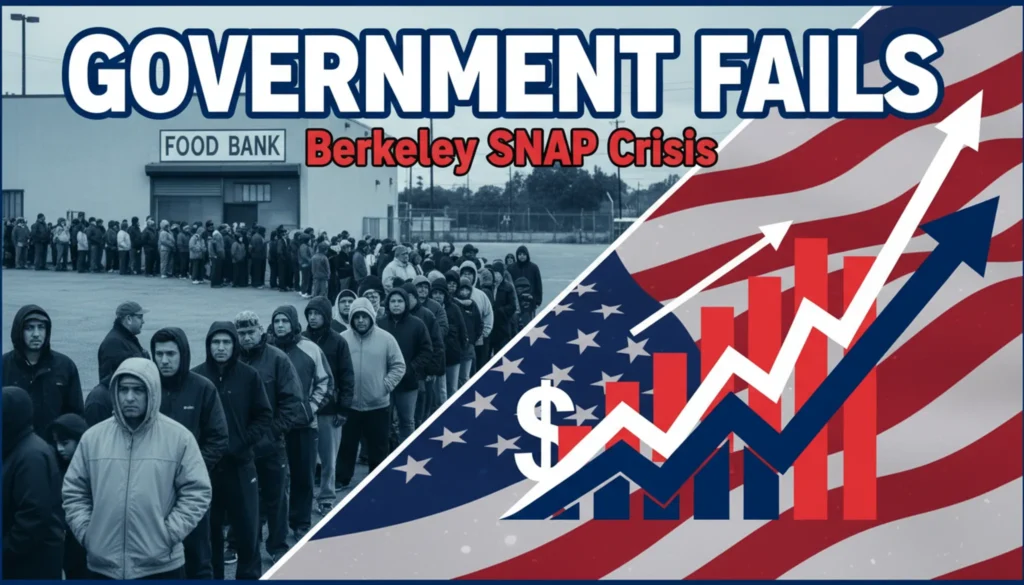
The scenes of long lines at food banks in one of America’s wealthiest regions should serve as a wake-up call. This isn’t just about a temporary government shutdown—it’s about the failure of liberal policies that create dependency rather than opportunity.
Conservative principles offer a better path: one that combines immediate compassion for those in need with long-term policies that help people build the skills, opportunities, and personal responsibility needed for lasting prosperity. The Berkeley crisis shows us what happens when we abandon these principles. It’s time to recommit to them.
Call to Action
Stay informed about how government dependency affects your community. Support local organizations that combine immediate assistance with job training and personal development. Contact your representatives to advocate for policies that create economic opportunity rather than just expanding welfare programs. Share this article to help others understand the real solutions to poverty and food insecurity.