When the System Fails Our Children: The David Allen Funston Parole Scandal
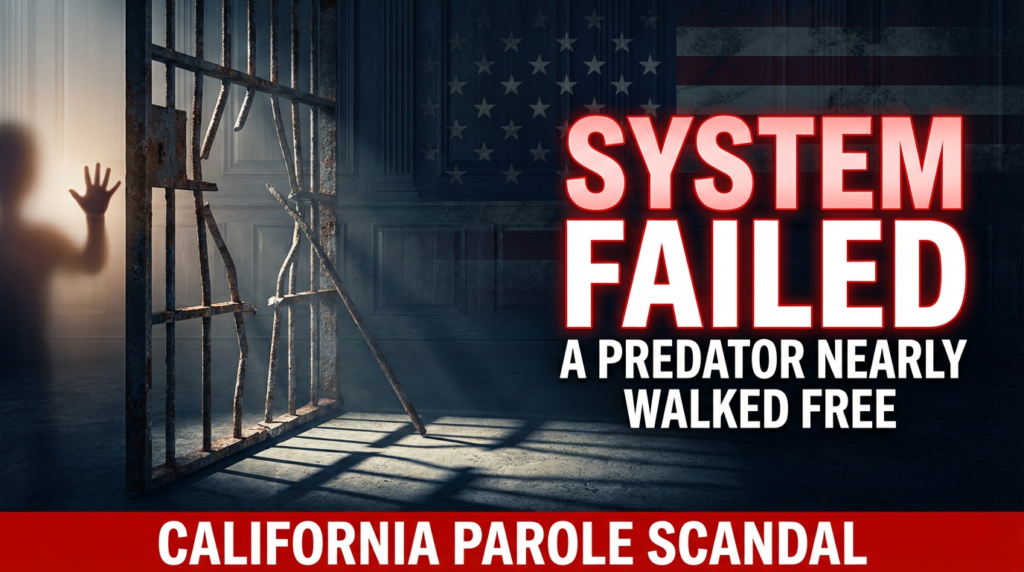
A Monster Nearly Walked Free — And the System Let It Happen
On the morning of February 26, 2026, California came within hours of releasing one of the most dangerous convicted child predators in its history back into the streets. David Allen Funston, 64 — a man sentenced in 1999 to three consecutive life terms plus over 20 additional years for kidnapping and sexually assaulting eight children as young as three years old — was cleared for parole by the California Board of Parole Hearings. Not once, but twice.
Only a last-minute legal intervention by the Placer County District Attorney’s Office, which filed new charges stemming from a previously untried 1996 case, prevented Funston from walking free. The California Department of Corrections and Rehabilitation (CDCR) transferred him directly into Placer County custody at 7:30 a.m. on the very day of his scheduled release.
Let that sink in. A man who lured children as young as three into his car with candy and Barbie dolls, raped them, beat them, and dumped them on roadsides — a man whose crimes were so heinous that a Superior Court judge specifically crafted his sentence to ensure he would never receive a parole hearing — was nearly set free. Not because the evidence was insufficient. Not because justice had been served. But because a bureaucratic parole program, originally designed to reduce prison overcrowding, has been quietly expanded to apply to the most violent offenders in California’s prison system.
Support Independent Local Journalism
TheTownHall.News is reader-supported journalism. Just $5 helps us hire local reporters, investigate important issues, and hold public officials accountable across Alameda County. If you believe our community deserves strong, independent journalism, please consider donating $5 today to support our work.This is a story about what happens when government prioritizes institutional convenience over the safety of the most vulnerable members of society — our children.
The Crime: A Nightmare No Parent Should Imagine
Between 1995 and 1996, Funston carried out a predatory crime spree across Sacramento-area communities — North Highlands, Foothill Farms, Roseville, Rocklin, and beyond. He was 34 years old at the time. He was calculated, deliberate, and relentless.
Funston cruised residential streets in search of young children. He lured them with toys and sweets, kidnapped them, and sexually assaulted them before abandoning them along roadsides — sometimes miles from where they were taken. One five-year-old girl was abducted from her apartment complex in North Highlands and found hours later in Pollock Pines, 50 miles away. His eight known victims ranged in age from three to seven years old — seven girls and one boy. Detectives linked him through eyewitness accounts and DNA evidence.
In March 1999, a Sacramento County jury convicted Funston on 16 counts of kidnapping and child molestation. Superior Court Judge Jack Sapunor sentenced him to three consecutive sentences of 25 years to life, plus an additional 20 years and eight months — a sentence specifically designed, at the time, so that Funston would never see the outside of a prison cell again.
The community exhaled. Justice had been done. Or so they thought.
The Loophole That Nearly Let Him Go
California’s Elderly Parole Program was not born out of a desire to protect communities. It was born out of a federal court order in the long-running Plata v. Brown prison overcrowding case. In 2014, a three-judge federal panel directed California to create a parole process for inmates aged 60 or older who had served at least 25 years. Lawmakers codified the program into state law in 2018.
Then, in 2021, they made it worse. Legislators expanded the program, lowering the eligibility age to 50 and the time-served threshold to 20 continuous years. Critically, the program does not automatically exclude violent sex offenders, serial child predators, or those serving multiple life terms — only those sentenced to death or life without the possibility of parole are categorically excluded.
Under this expanded law, Funston — who had served 27 years — became eligible. In September 2025, a parole board panel found him “suitable for release,” citing his participation in therapy and sex offender treatment, expressions of remorse, and his good behavior behind bars. The board determined he did not pose “an unreasonable risk to public safety.”
When Governor Gavin Newsom referred the case back to the board for an “en banc” full-panel review in January 2026, the board reaffirmed its decision on February 18, 2026. The governor, despite his public disagreement, had no legal authority to overturn the ruling.
This is what a broken system looks like. A man sentenced to effectively die in prison walks toward the exit — not because justice demands it, but because a law designed to manage prison budgets was written without adequate protections for the public.
The Victims Speak — And the Government Looked Away
The voices that matter most in this case are the voices that California’s parole board apparently found easiest to ignore: the victims themselves.
One woman, who was three years old when Funston sexually assaulted her and who later testified against him at trial, spoke plainly: “He is a very horrible person. He took innocence from myself and others. The years he’s done are not enough. He deserves to spend the rest of his life in prison.”
Another victim — kidnapped at age four and assaulted at knifepoint — described how Funston used a Barbie doll to lure her, held a knife to her throat, and threatened to kill her if she told her family. “That man did horrible things,” she said. “Despite him being old, he’s still who he is.”
Sacramento County Sheriff Jim Cooper was direct: “He lured them with candy and Barbie dolls. He stole their childhoods. I’ve seen the reports. They’re horrific. To let him out? It doesn’t make sense.” Retired detective Rafael Rodriguez, who worked the original case, summed it up simply: “The victims here? They get a life sentence.”
Parental rights don’t end when a predator enters a courtroom. Parents — and victims — have a fundamental right to expect that the government will honor the sentences it hands down. When bureaucracies quietly rewrite those commitments through administrative loopholes, that is a betrayal of the social contract.
A DA Steps Up Where the Parole Board Failed
In the absence of leadership from California’s parole system, it was local law enforcement — smaller, more accountable, and closer to the community — that stepped into the breach.
Placer County DA Morgan Gire’s office filed new charges against Funston based on a 1996 sexual assault case involving a Roseville child that had never been prosecuted, because Funston’s original sentences had seemed sufficient at the time. The victim, now an adult, agreed to cooperate. A warrant was issued. Funston was rearrested on the morning of his scheduled release and booked without bail.
“When changes in the law put our communities at risk, it is our duty to re-evaluate those cases and act accordingly,” DA Gire said.
This is government accountability at its best — local, responsive, and unapologetic about putting public safety first. It is also a damning indictment of the state-level bureaucracy that made this intervention necessary in the first place.
Reform Is Coming — But Must It Always Take a Near-Catastrophe?
The Funston case has lit a fire under California’s legislature, and rightly so:
- SB 286 (Mary Bella’s Law, Sen. Jones) would exclude from the Elderly Parole Program anyone convicted of serious sexual offenses — including rape, sodomy, and lewd acts against children — and applies retroactively to all persons currently incarcerated as of January 1, 2026.
- SB 1278 (Sen. Roger Niello, R-Fair Oaks) would exclude all sex offenders from elderly parole eligibility outright.
- Assemblywoman Heather Hadwick and colleagues have written directly to Governor Newsom demanding permanent exclusions for violent sexual offenders — noting this was the second serial child predator nearly released in their region within three months.
These efforts are long overdue. The troubling question is why it took a near-miss of this magnitude to generate legislative urgency. The original elderly parole law was driven by federal court pressure rooted in prison overcrowding — a fiscal and administrative concern. Somewhere along the way, that concern was allowed to override a more fundamental obligation: keeping convicted child predators locked away for as long as courts determined they must be.
The Bigger Lesson: Government Must Be Held Accountable
The David Allen Funston case is not just about one man. It is about what happens when government agencies operate without sufficient checks, when bureaucratic programs designed for one purpose are silently expanded to cover situations they were never meant to address, and when the voices of victims and their families are drowned out by institutional process.
Every parent in California — indeed, every parent in America — should be paying attention. The principle is straightforward: courts impose sentences, and those sentences must mean what they say. A jury of peers convicted David Allen Funston. A judge sentenced him to die in prison. A government agency nearly undid that in a closed-door hearing, citing his therapy attendance.
The Placer County DA, local law enforcement, and courageous victims held the line this time. But they should not have had to.
What You Can Do
Stay informed. Follow the progress of SB 286 (Mary Bella’s Law) and SB 1278 through the California Legislature — these bills need public support to cross the finish line.
Contact your representatives. Call or write to your state assemblymember and senator and demand they vote to permanently exclude violent sex offenders and child predators from California’s Elderly Parole Program.
Share this article. Every parent, grandparent, neighbor, and community member deserves to know what nearly happened — and what must change. The strongest pressure for reform comes not from Sacramento hallways, but from an informed and engaged public that refuses to be silent.
Our children cannot advocate for themselves. That responsibility falls to us.
Sources: California Department of Corrections and Rehabilitation (CDCR); The Sacramento Bee; Los Angeles Times; ABC10 Sacramento; Placer Sentinel; California Legislature (SB 286, SB 1278); Placer County District Attorney’s Office.