Court Overturns Dublin Voters’ Will: When Judicial Activism Trumps Democracy and Fiscal Responsibility
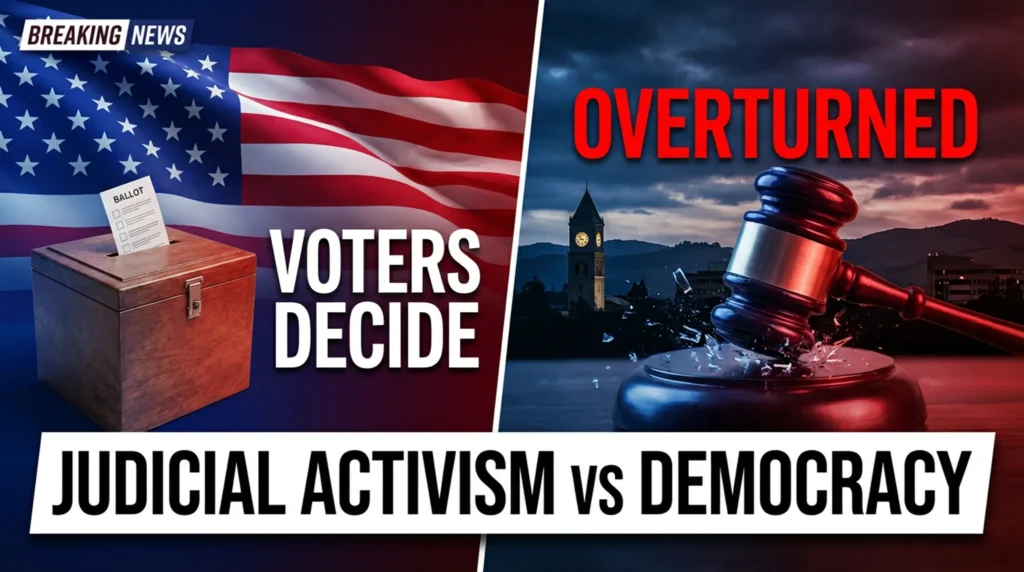
In a decision that should alarm anyone who values democratic principles and local control, Alameda County Superior Court Judge Michael Markman ruled on November 19 that Dublin must repeal Measure II—a ballot initiative that 53% of voters approved just one year ago. The ruling represents yet another example of unelected judges substituting their judgment for that of the people, while potentially costing taxpayers millions in lost revenue and economic opportunity.
The Will of the People, Dismissed
Measure II wasn’t some backroom deal cooked up by city officials. It was a democratic exercise where Dublin residents went to the polls and made their voices heard. Over 53% voted to grant their elected city council the authority to pursue commercial development on 80 acres of land in the Doolan Canyon area, east of the city’s urban limit line.
The measure promised tangible benefits: a 1.5-mile Dublin Boulevard extension with bike lanes and improved pedestrian infrastructure, better emergency response times, and an estimated $16 million in one-time construction revenues plus $1.1 million annually in ongoing tax revenue. For a city managing tight budgets and growing infrastructure needs, these aren’t trivial numbers—they represent real resources for schools, public safety, and community services.
Support Independent Local Journalism
TheTownHall.News is a non-profit reader-supported journalism. Just $5 helps us hire local reporters, investigate important issues, and hold public officials accountable across Alameda County. If you believe our community deserves strong, independent journalism, please consider donating $5 today to support our work.Yet Judge Markman, siding with environmental activist groups Save Mount Diablo and Friends of Livermore, determined that voters didn’t have the right information to make this decision. The court ruled that the city should have conducted an environmental impact review before placing the measure on the ballot, despite the fact that no specific development plans existed.
This is judicial overreach masquerading as environmental protection.
The Dangerous Precedent of Speculative Review
The city’s legal team made a compelling argument: How can you conduct a meaningful environmental review when no concrete development proposal exists? As Dublin’s attorneys from Redwood Public Law noted, such a review “would require the city to speculate as to what types of land-use decisions could be made by city decisionmakers in the future and their associated environmental impacts—even though no such decisions have been made, applied for, or even proposed.”
This is a reasonable position grounded in common sense. The California Environmental Quality Act (CEQA) was designed to assess real projects with defined parameters, not hypothetical scenarios that may never materialize. Requiring cities to conduct environmental reviews on abstract possibilities transforms CEQA from a tool for informed decision-making into a weapon for obstructing any change whatsoever.
Judge Markman acknowledged this was “an unusual situation,” yet proceeded to expand CEQA’s reach anyway. This sets a troubling precedent: activist groups can now challenge any ballot measure that might, potentially, someday, lead to development—forcing cities into expensive, time-consuming reviews of scenarios that exist only in imagination.
Fiscal Responsibility Takes a Back Seat
Let’s talk about what this ruling really costs Dublin taxpayers. The proposed Dublin Boulevard extension carries a preliminary price tag exceeding $150 million. The city has identified $76 million in funding, leaving a significant gap. The commercial development enabled by Measure II could have helped bridge that gap through construction revenues and ongoing tax income.
Now, if Dublin chooses to appeal—which it has 60 days to decide—taxpayers will foot the bill for extended litigation. If the city instead opts to repeal Measure II and conduct the environmental review the court demands, that’s more taxpayer money spent on bureaucratic processes for a measure voters already approved.
Meanwhile, the infrastructure needs don’t disappear. Emergency response times don’t improve themselves. The fiscal realities facing Dublin remain unchanged—except now the city has fewer tools to address them.
This is the hidden cost of judicial activism: not just the immediate legal expenses, but the long-term economic opportunities foreclosed and the infrastructure improvements delayed or abandoned entirely.
Support Independent Local Journalism
TheTownHall.News is a non-profit reader-supported journalism. Just $5 helps us hire local reporters, investigate important issues, and hold public officials accountable across Alameda County. If you believe our community deserves strong, independent journalism, please consider donating $5 today to support our work.Property Rights and Local Control Under Siege
At its core, this case is about who gets to decide how land is used: the people who live in a community and their elected representatives, or environmental activist groups backed by sympathetic judges.
In 2014, Dublin voters rejected a similar measure with 84% voting against development in Doolan Canyon. The city council responded by establishing the Open Space Initiative, preserving the area. But a decade brings change—new residents, evolving needs, different priorities. When voters reconsidered the issue in 2024, a majority concluded that limited, commercial development made sense for their community’s future.
That’s democracy working as intended. Communities should have the right to adapt their policies as circumstances change, especially when they do so through the ballot box rather than bureaucratic fiat.
Yet the court’s ruling effectively says: once land is designated as “open space,” that decision becomes nearly permanent, regardless of what future voters want. This isn’t environmental protection; it’s the entrenchment of a particular ideology over the democratic process.
The Environmental Activist Playbook
Seth Adams from Save Mount Diablo celebrated the ruling as a victory against “bullies,” claiming that “you really can stand up to big, well-funded development interests.” But who are the real bullies here?
The voters of Dublin aren’t “big, well-funded development interests.” They’re ordinary citizens who weighed the trade-offs and made a decision about their community’s future. The actual well-funded interests in this case are the activist organizations that can afford to wage 18 months of litigation to overturn an election result they didn’t like.
This is the modern environmental activist playbook: when you can’t win at the ballot box, win in court. Use CEQA and other regulatory tools not as they were intended—to ensure informed decision-making—but as blunt instruments to block any development whatsoever. Dress it up in the language of protecting nature, but the real goal is to impose your vision regardless of what the community wants.
What Measure II Actually Proposed
It’s worth examining what voters actually approved. Measure II didn’t authorize bulldozers to start clearing land the next day. It simply returned discretionary authority to the city council—elected officials accountable to voters—to consider commercial development proposals in a specific 80-acre area.
Any actual development would still require:
- Detailed project proposals
- Comprehensive environmental reviews at that stage
- Public hearings
- City council approval
- Compliance with all applicable regulations
Measure II was about process and local control, not about circumventing environmental protections. Yet the court treated it as if voters had approved specific construction plans, which they hadn’t.
The Broader Implications
This ruling should concern anyone who values limited government and democratic accountability, regardless of their views on this particular development. If courts can overturn ballot measures on the grounds that voters needed more speculative information about hypothetical future scenarios, what ballot measure is safe?
Could a tax reduction measure be overturned because the court decides voters needed more analysis of potential future service impacts? Could a school bond be invalidated because the environmental review didn’t adequately explore every possible configuration of new buildings?
The logic of this ruling, taken to its conclusion, gives unelected judges veto power over the democratic process whenever they determine—based on their own subjective assessment—that voters weren’t sufficiently informed.
A Question of Priorities
California faces a housing crisis, an infrastructure crisis, and a fiscal crisis. Cities need flexibility to generate revenue, attract businesses, and build the infrastructure their residents need. They need the ability to make pragmatic decisions that balance environmental concerns with economic realities.
Dublin’s voters understood this. They approved a measure that could generate significant revenue for their city while enabling important infrastructure improvements. They did so after a public debate where both sides made their arguments. That’s how democracy is supposed to work.
But in California’s current regulatory environment, environmental review requirements have become so expansive and litigation so easy that even voter-approved measures can be tied up in courts for years. This isn’t about protecting the environment; it’s about empowering a particular ideological faction to override democratic decisions they don’t like.
The Path Forward
Dublin now faces a choice: appeal the ruling or comply and start over. An appeal could take years and cost taxpayers considerably more. Compliance means repeating the ballot measure process after conducting an environmental review that may cost hundreds of thousands of dollars—for a measure voters already approved.
Neither option serves the interests of fiscal responsibility or democratic accountability.
What Dublin really needs—what all California cities need—is reform of CEQA and other regulatory tools that have been weaponized against local control and economic development. These laws should facilitate informed decision-making, not provide endless opportunities for litigation by groups that simply want to block any change.
Conclusion: Democracy Delayed is Democracy Denied
Judge Markman’s ruling may be legally defensible under California’s expansive interpretation of environmental law, but that doesn’t make it right. When courts can overturn the expressed will of voters on the grounds that hypothetical future scenarios weren’t adequately analyzed, democracy becomes a facade.
The voters of Dublin deserve better. They deserve to have their votes count. They deserve elected officials with the authority to govern. They deserve a legal system that respects democratic outcomes rather than providing endless opportunities for activist groups to relitigate decisions they lost at the ballot box.
This case is about more than 80 acres in Dublin. It’s about whether we still believe in government of, by, and for the people—or whether we’ve accepted that unelected judges and activist organizations should have the final say on local decisions, regardless of what voters want.
Call to Action
Stay informed and get involved. This ruling affects not just Dublin, but every community in California that values local control and fiscal responsibility. Contact your state representatives and demand CEQA reform that respects democratic decision-making. Attend Dublin City Council meetings and make your voice heard on whether the city should appeal this overreach. Share this article with friends and neighbors who care about preserving democracy and limiting judicial activism.
The fight for local control and voter sovereignty doesn’t end with one court ruling—but it requires citizens who are willing to stand up and demand that their votes matter.