January 2026 Jobs Report: Private Sector Proves Free Markets Work When Government Gets Out of the Way
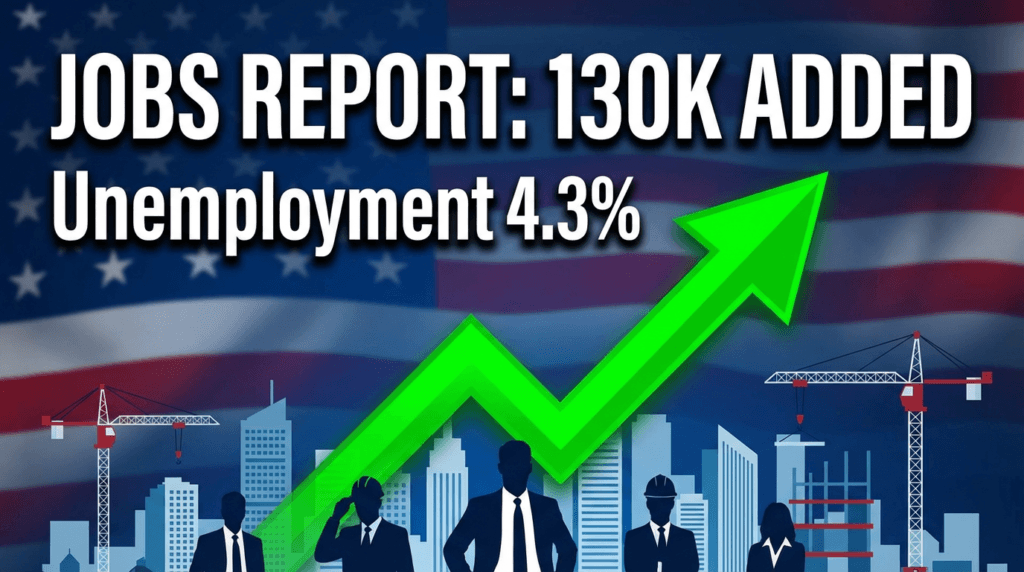
The January 2026 jobs report delivered a powerful reminder that the American economy thrives not because of government intervention, but in spite of it. With 130,000 jobs added and unemployment dropping to 4.3%, the data reveals what conservatives have long understood: when the private sector is allowed to operate with minimal interference, prosperity follows.
Released on February 11 after a week-long delay caused by yet another government shutdown—a stark reminder of Washington’s dysfunction—the Bureau of Labor Statistics report exceeded economists’ expectations by more than double. The Dow Jones consensus had predicted a mere 55,000 jobs, but the American economy delivered 130,000, demonstrating the resilience of free enterprise even amid regulatory uncertainty and government chaos.
This isn’t just good news; it’s validation of fundamental conservative principles. While bureaucrats bicker and politicians posture, American businesses continue doing what they do best: creating opportunity, generating wealth, and providing for families. The question isn’t whether free markets work—January’s numbers prove they do. The question is whether policymakers will finally learn to trust the entrepreneurial spirit that built this nation.
The Numbers Tell a Story of Private Sector Strength
Let’s examine the facts without the spin that typically accompanies economic reporting. January’s job creation wasn’t driven by government programs or stimulus packages—it came from sectors where private enterprise dominates.
Healthcare led the charge with 82,000 new positions, followed by social assistance with 42,000 jobs and construction adding 33,000. These aren’t make-work government jobs; these are real positions in industries responding to genuine market demand. Healthcare providers expanded to meet patient needs. Construction companies built homes and infrastructure because customers wanted to buy. Social assistance grew because communities recognized needs and organizations stepped up to fill them.
Meanwhile, the federal government shed 34,000 jobs as Department of Government Efficiency cuts took effect. This is fiscal accountability in action. Every unnecessary government position eliminated represents tax dollars saved and resources returned to the private sector where they can be invested productively.
The unemployment rate dropping from 4.4% to 4.3% might seem modest, but context matters. The broader U-6 unemployment measure—which includes discouraged workers and those in part-time positions for economic reasons—fell by 0.4 percentage points to 8%. This suggests people aren’t just finding jobs; they’re finding better jobs with more hours and greater stability.
Perhaps most encouraging, the household survey showed 528,000 workers joining the labor force, while the labor force participation rate edged up to 62.5%. Americans want to work. When opportunities exist, they take them. This is the essence of personal responsibility that conservatives champion.
The Inconvenient Truth About 2025’s Revisions
However, the January report came with a sobering reality check that the mainstream media has largely ignored: benchmark revisions revealed that 2025 was far weaker than initially reported. The Bureau of Labor Statistics revised job numbers downward by 898,000 positions for the period between April 2024 and March 2025.
This isn’t a minor statistical adjustment—it represents nearly 900,000 jobs that government statisticians claimed existed but didn’t. Every month in 2025 saw negative revisions. The final tally shows just 181,000 jobs created in all of 2025, compared to initial reports suggesting far more robust growth.
Why does this matter? Because it exposes the danger of trusting government data at face value and making policy decisions based on preliminary numbers that later prove wildly inaccurate. It’s a cautionary tale about the limitations of central planning and the hubris of believing bureaucrats can effectively manage an economy as complex as America’s.
For conservatives who value limited government and skepticism of federal overreach, these revisions are instructive. They remind us that government agencies—even ones tasked with objective data collection—can get things spectacularly wrong. Imagine if policymakers had implemented massive stimulus programs based on the inflated 2025 numbers. We’d be saddled with additional debt for problems that didn’t exist as reported.
Wage Growth and the Path Forward
Average hourly earnings increased 0.4% in January and 3.7% year-over-year, slightly above expectations. This represents real wage growth that puts more money in workers’ pockets—not through government mandates or artificial minimum wage hikes, but through genuine economic expansion and competition for talent.
This is how prosperity should work: employers compete for skilled workers by offering better compensation, and employees can negotiate from a position of strength. No bureaucrat in Washington mandated these raises. No politician took credit for them. The market delivered them because that’s what free markets do when allowed to function.
Yet wage growth remains uneven. Bank of America Institute data reveals that higher-income households saw 3.7% year-over-year after-tax wage growth, while lower-income households experienced just 0.9%. This disparity should concern anyone who values opportunity and upward mobility—core conservative principles.
The solution, however, isn’t more government redistribution or price controls. It’s removing barriers that prevent lower-income workers from accessing better opportunities: occupational licensing requirements that protect incumbents rather than consumers, zoning restrictions that inflate housing costs, and tax policies that punish work and savings.
Immigration Policy and Labor Market Dynamics
The report arrived amid ongoing debate about immigration policy and its impact on the labor market. The White House’s crackdown on illegal immigration has undoubtedly affected labor supply in certain sectors, and businesses have responded by adjusting hiring plans and wage offerings.
This is precisely how immigration policy should work. Legal immigration serves the national interest when it fills genuine labor shortages while protecting American workers from wage suppression. The rule of law isn’t negotiable—it’s foundational to a functioning society.
Conservatives have long argued that illegal immigration undermines both the rule of law and the economic prospects of working-class Americans. When businesses can hire workers who entered the country illegally at below-market wages, it depresses compensation for everyone and creates a two-tiered system that benefits employers at workers’ expense.
The January jobs report suggests the labor market is adjusting to a more lawful immigration system. Some sectors face tighter labor supplies, which should prompt businesses to invest in automation, improve working conditions, or raise wages—all positive outcomes that strengthen the economy long-term rather than relying on a steady flow of illegal labor.
Federal Reserve Policy and Economic Freedom
The January jobs data likely solidifies the Federal Reserve’s decision to hold interest rates steady at its March meeting, though futures markets still anticipate a potential cut by June. This is welcome news for conservatives who believe monetary policy should be predictable and restrained rather than reactive and interventionist.
For too long, the Federal Reserve has functioned as an economic puppeteer, manipulating interest rates to achieve political goals rather than maintaining stable money. While the Fed’s mandate includes maximum employment and price stability, its track record suggests humility would serve better than hubris.
The January jobs report demonstrates that the economy can grow without artificial stimulus or emergency monetary intervention. When the Fed steps back and allows market forces to determine interest rates, capital flows to its most productive uses rather than being distorted by central planners’ guesses about optimal policy.
The Path Forward: Trust Markets, Not Mandates
January’s jobs report offers important lessons for policymakers willing to learn them. First, the private sector remains the engine of American prosperity. Government’s role should be limited to establishing clear rules, protecting property rights, and then getting out of the way.
Second, preliminary government data should be treated with appropriate skepticism. The 898,000-job downward revision for 2025 reminds us that even supposedly objective agencies make significant errors. Policy should be based on principles and long-term thinking rather than reacting to monthly data that may later prove inaccurate.
Third, free markets work. Despite regulatory uncertainty, tariff debates, inflation concerns, and government dysfunction, American businesses created 130,000 jobs in January. Imagine what they could accomplish with genuine regulatory relief, tax reform that rewards investment and work, and a commitment from Washington to stable, predictable policy.
The healthcare sector didn’t need government mandates to create 82,000 jobs—it responded to market demand. Construction companies didn’t require federal grants to add 33,000 positions—they built what customers wanted to buy. This is capitalism functioning as it should: identifying needs, taking risks, and creating value.
Conclusion: Economic Freedom Works
The January 2026 jobs report provides concrete evidence that economic freedom delivers results. When government shrinks—as evidenced by the 34,000 federal job reduction—the private sector expands. When businesses operate with minimal interference, they create opportunity. When workers take personal responsibility for their careers, they find employment and advancement.
Conservatives have always understood that prosperity comes not from government programs but from the creativity, initiative, and hard work of individual Americans pursuing their own interests in free markets. January’s jobs numbers validate that worldview.
The path forward is clear: reduce regulatory burdens that stifle entrepreneurship, reform tax policy to reward work and investment rather than punish success, maintain the rule of law in immigration policy, and trust American businesses and workers to build prosperity without government micromanagement.
The alternative—more regulation, higher taxes, open borders, and government intervention—has been tried repeatedly and consistently fails. January’s jobs report reminds us that when we trust freedom, freedom delivers.
Call to Action
The January 2026 jobs report proves that conservative economic principles work in the real world. But data alone won’t change policy—engaged citizens will.
Stay informed. Don’t rely on mainstream media spin about economic news. Dig into the actual data, understand the revisions, and recognize when you’re being sold a narrative rather than given facts.
Get involved. Contact your representatives and demand they support policies that empower the private sector rather than expanding government. Fiscal accountability, regulatory relief, and tax reform don’t happen by accident—they require constituent pressure.
Share this article. Help others understand that January’s jobs success came from free markets, not government intervention. The more Americans who grasp this fundamental truth, the harder it becomes for politicians to justify expanding federal power.
Economic freedom isn’t just a theory—it’s a proven path to prosperity. The January jobs report provides fresh evidence. Now it’s up to us to ensure policymakers learn the lesson.