Thailand Fuel Crisis 2026: When Panic Fills the Pump and Government Scrambles to Catch Up
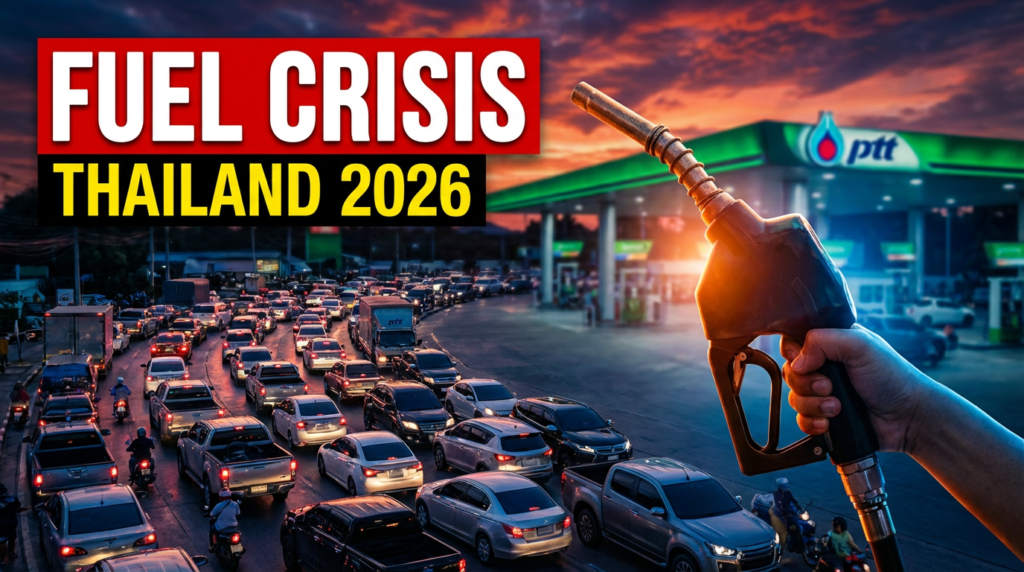
The images coming out of Thailand this week are striking — and sobering. Mile-long queues of cars and motorcycles stretching from petrol stations into city streets. Residents hauling containers to fill with diesel before supplies run dry. Station owners rationing fuel by the litre. In Mae Hong Son, PTT’s largest station ran out of diesel entirely. In Chiang Mai, queues brought traffic to a standstill. In Pai, the fuel shortage began disrupting tourism and agricultural work.
This is not a failed state. This is Thailand — one of Southeast Asia’s most dynamic economies — brought to its knees in days by a combination of geopolitical instability, inadequate strategic planning, and a public that, understandably, no longer trusts official assurances.
The lesson here is not just about fuel. It is about the price a nation pays when energy policy prioritises short-term politics over long-term security — and when governments tell citizens “don’t worry” right up until the moment they very clearly should.
The Spark: A War Half a World Away, Felt at Every Pump
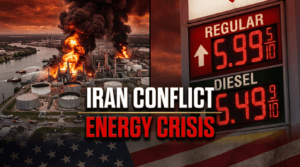
The crisis has its roots in the Middle East. On February 28, 2026, the escalating conflict involving the United States, Israel, and Iran prompted Iran to close the Strait of Hormuz — one of the world’s most critical energy chokepoints, through which approximately 20% of global oil and LNG supplies flow. Ship-tracking data from March 1 showed LNG shipments through the strait had nearly ground to a halt, and global crude prices surged immediately.
Thailand is acutely exposed. The country sources a substantial portion of its imported crude from Middle Eastern producers — the UAE, Qatar, Saudi Arabia, and Kuwait — all routed through the Persian Gulf and the Strait of Hormuz. According to the Nation Thailand, roughly one-third of Thailand’s energy relies on this supply corridor.
By Tuesday, March 3, Shell Thailand had raised its diesel price by 4.20 baht per litre. Caltex followed. Within hours, panic had taken hold nationwide.
A Government Scrambling, Not Leading
To be fair, the Thai government’s response has not been without substance. Prime Minister Anutin Charnvirakul froze diesel prices, pressured Shell and Caltex to roll back their hikes to match PTT’s retail price of 29.94 baht per litre, and on March 6 issued Prime Ministerial Order No. 2/2026 — formally suspending the export of gasoline, gasohol, high-speed diesel, Jet A-1 aviation fuel, and LPG, under powers granted by the 1973 Fuel Shortage Prevention Act. The Energy Ministry confirmed that Thailand held approximately 61 days’ worth of oil reserves as of late February, with a stated goal of extending this to 95 days.
These are not trivial steps. But they are reactive, not proactive.
If Thailand’s energy security framework were truly robust, why did a single price announcement from Shell trigger a nationwide panic? Why were rural stations running dry within 24 hours if reserves were genuinely sufficient? Why did the government need to invoke a 53-year-old emergency statute to stop fuel from leaving the country?
The hard answer: because good crisis management is not the same as good governance. Real leadership is building the structures that prevent crises from becoming catastrophes — before the queues form.
The Real Cost of Energy Dependence
Here is an economic truth that never goes out of style: nations that depend heavily on foreign energy sources without diversified supply chains are inherently vulnerable. Every barrel of cheap imported oil also represents a degree of leverage surrendered to forces beyond your control.
According to energy economist Praipol Koomsup, former dean of the Faculty of Economics at Thammasat University, every $10 increase in global crude prices translates to approximately 2 baht per litre at the Thai pump — hitting not just transport costs, but electricity bills, food prices, and the cost of nearly every manufactured good. With diesel potentially breaching $100 per barrel, the downstream impact on ordinary families could be severe and sustained.
This is the hidden tax of poor energy planning. It doesn’t appear in any government budget. It shows up in grocery bills, school transport, and the gas canister used to cook dinner. The people bearing it most heavily are those in border provinces and rural areas — furthest from Bangkok, with the fewest options, and the last to be thought of when policy is made in air-conditioned ministries.
Personal Responsibility and the Limits of Panic
It would be easy to mock the Thai public for the panic-buying scenes. That would miss the point entirely. When citizens doubt that their government has adequately prepared for foreseeable crises, they act as rational people always do under uncertainty — they look out for themselves and their families.
PM Anutin was right to warn that hoarding fuel at home is dangerous: fire hazards and legal risks are real. But personal responsibility runs both ways. It means individuals making measured decisions rather than emptying the pump. And it means elected officials fulfilling their duty — building reserves that hold, diversifying supply before a crisis hits, and treating citizens as adults capable of handling honest information.
The government’s message that “there is enough fuel, do not panic” would carry far more weight if it were backed by a track record of genuine preparation. Trust is not declared — it is earned, through consistent and accountable governance.
Fiscal Accountability: Subsidies Are Not a Strategy
Thailand’s government is now weighing use of its Oil Fuel Fund to subsidise pump prices. On the surface, this sounds responsible. In practice, fuel subsidies are one of the most fiscally corrosive tools a government can reach for.
They blunt the price signal that drives conservation and behavioural change. They reward consumption over efficiency. And they create budget dependencies that are brutally difficult to unwind — especially when energy prices stay elevated. The more fiscally sound path is investment in strategic reserves ahead of crises, accelerated domestic production, and structural diversification that reduces external dependency over time. The government has already ordered increased natural gas extraction from the Gulf of Thailand and directed coal-fired and hydropower plants to operate at full capacity — pragmatic emergency responses, but ones that underscore how exposed Thailand is when even one supply route is threatened.
What Must Come Next
The Thai government deserves credit for moving quickly: freezing prices, banning exports, invoking emergency powers. But credit is truly earned for what comes after the crisis — the structural reforms and honest public communication that prevent the next panic before the next conflict ignites.
Governments that govern well are not those that manage crises most theatrically. They are those who create conditions in which crises cause the least possible harm to ordinary people. That means stronger strategic reserves built during calm periods, genuine energy diversification, market mechanisms that reward efficiency — and above all, treating citizens as partners in national resilience, not a crowd to be managed with reassurances.
Thailand’s fuel crisis of March 2026 is not a story about one bad week at the pump. It is a story about the compounding cost of complacency — and a reminder that in energy policy, as in life, preparation is not optional. The bill always comes due. The only question is whether you are ready when it does.
Call to Action
Stay informed — and stay engaged. Energy security touches every part of daily life, from the price of food to the cost of getting your children to school. Share this article, follow credible reporting on the Middle East conflict and its impact on global energy markets, and hold your elected officials accountable for building long-term energy resilience that protects families before the crisis hits — not after the queues form.
The time to demand better planning is not when the pumps run dry. It is right now.