Global Oil Crisis 2026: How the US-Iran War Lit the World’s Energy Fuse — and Why India Must Never Be This Vulnerable Again
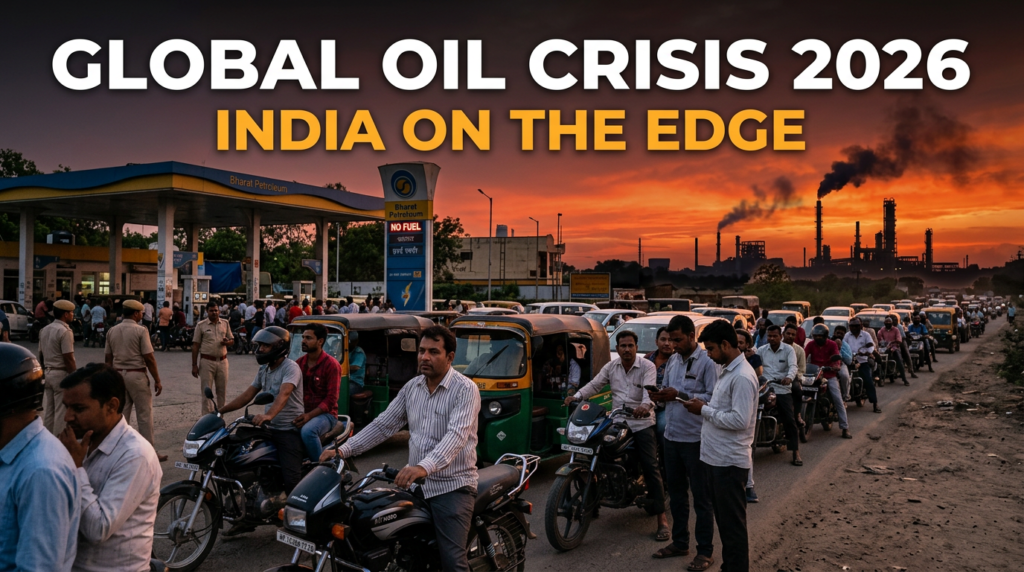
The queues at India’s petrol pumps are not just a logistical inconvenience. They are the consequence of decades of misplaced energy policy, dangerous dependency, and a refusal to take national resilience seriously.
The Scenes No Government Should Allow
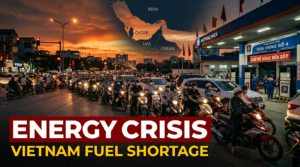
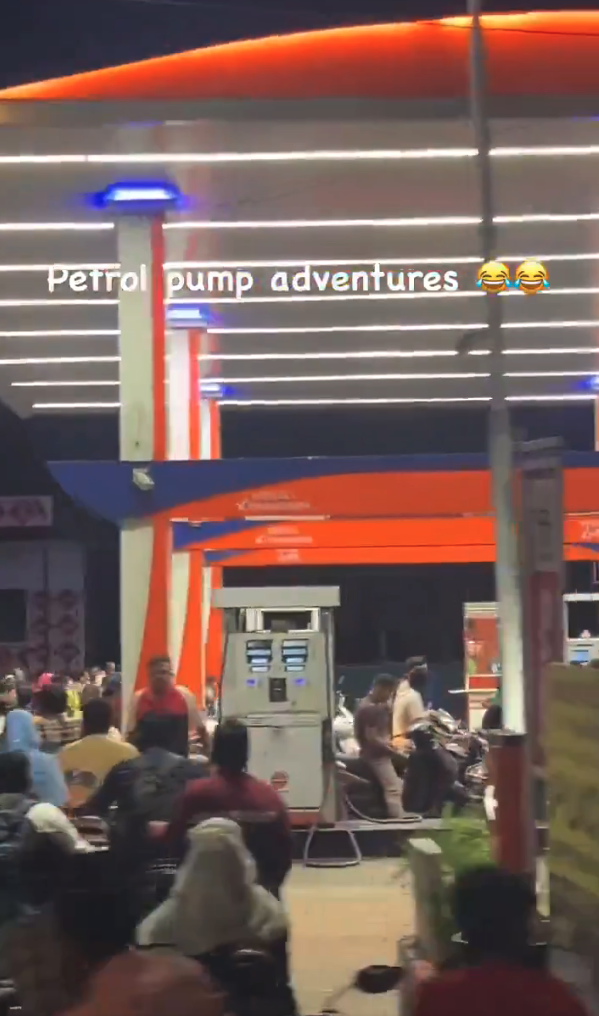
Across India in March 2026, something deeply unsettling is unfolding at ordinary petrol pumps. Long lines of frustrated citizens — motorists, farmers, small business owners — waiting for fuel that may or may not arrive. Police deployed not to fight crime, but to manage queues. Restaurants shutting their doors. Factories going silent. And in homes across the country, families wondering whether the gas cylinder for tonight’s dinner will be their last for a while.
This is not a natural disaster. This is a policy failure — one compounded by geopolitical naivety, fiscal complacency, and a decades-long reluctance by governments around the world to build the kind of energy independence that protects ordinary citizens from exactly this kind of shock.
Support Independent Local Journalism
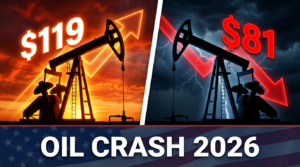
TheTownHall.News is a non-profit reader-supported journalism. Just $5 helps us hire local reporters, investigate important issues, and hold public officials accountable across Alameda County. If you believe our community deserves strong, independent journalism, please consider donating $5 today to support our work.The trigger: the US-Israel war on Iran, which has led to the closure of the Strait of Hormuz — the narrow maritime corridor through which roughly one-fifth of the world’s oil and gas supply travels every single day. The consequence: a global energy system suddenly missing 20 million barrels of oil per day, prices surging over 40%, and nations from Thailand to Australia to France to Japan scrambling for answers they don’t have.
India, which imports 90% of its crude oil and roughly 50% of its natural gas, finds itself dangerously exposed.
The Price of Dependency: A Warning Long Ignored
The hard truth that conservatives have long argued — and that this crisis now proves — is that energy dependency is not just an economic risk; it is a national security risk. When a nation cannot fuel its own factories, feed its own restaurants, or fill the tanks of its own citizens without relying on foreign supply chains running through conflict zones, it has surrendered a fundamental element of sovereignty.
India’s Manufacturing PMI dropped to a 4.5-year low of 53.8 in March 2026. The Composite PMI fell to 56.5, the weakest in over three years. GDP growth, which had been a respectable 8.4% the previous quarter, has now moderated to 7.8% — and that number will likely deteriorate further. Input costs, including oil, energy, food, aluminium, and chemicals, are rising at their fastest pace since June 2022. Inflation, already emerging from a manageable 3.21%, is heading upward.

These are not abstract numbers. They represent real businesses closing, real workers losing income, real families tightening household budgets — all because policymakers failed to take energy resilience seriously when the times were good.

A Global System Caught Flat-Footed
The response from global institutions has been telling. The International Energy Agency (IEA) coordinated an emergency release of 400 million barrels from strategic reserves. The United States waived sanctions on Iranian and Russian oil. Japan, which holds roughly three weeks of gas storage, pledged 80 million barrels. Saudi Arabia and the UAE scrambled to reroute pipeline exports that bypass the Strait of Hormuz.
And yet, as Kuwait Petroleum Corporation CEO Sheikh Nawaf Al-Sabah bluntly stated at CERAWeek in Houston: “These are not even stopgap measures.” Shell’s CEO Wael Sawan admitted: “We are more in reaction mode.” ConocoPhillips CEO Ryan Lance warned that the US cannot meaningfully lift output until 2027. LNG exporters confirmed they are already operating at maximum capacity.
In short: the West’s energy establishment, for all its decades of planning and its trillions in investment, was completely unprepared. And the countries that suffer most are those — like India, the Philippines, which declared a national energy emergency, and much of Southeast Asia — that had the least margin for error.
This is what happens when governments prioritise short-term fiscal convenience over long-term strategic investment. This is what happens when energy policy is driven by political optics rather than national interest.
Support Independent Local Journalism
TheTownHall.News is a non-profit reader-supported journalism. Just $5 helps us hire local reporters, investigate important issues, and hold public officials accountable across Alameda County. If you believe our community deserves strong, independent journalism, please consider donating $5 today to support our work.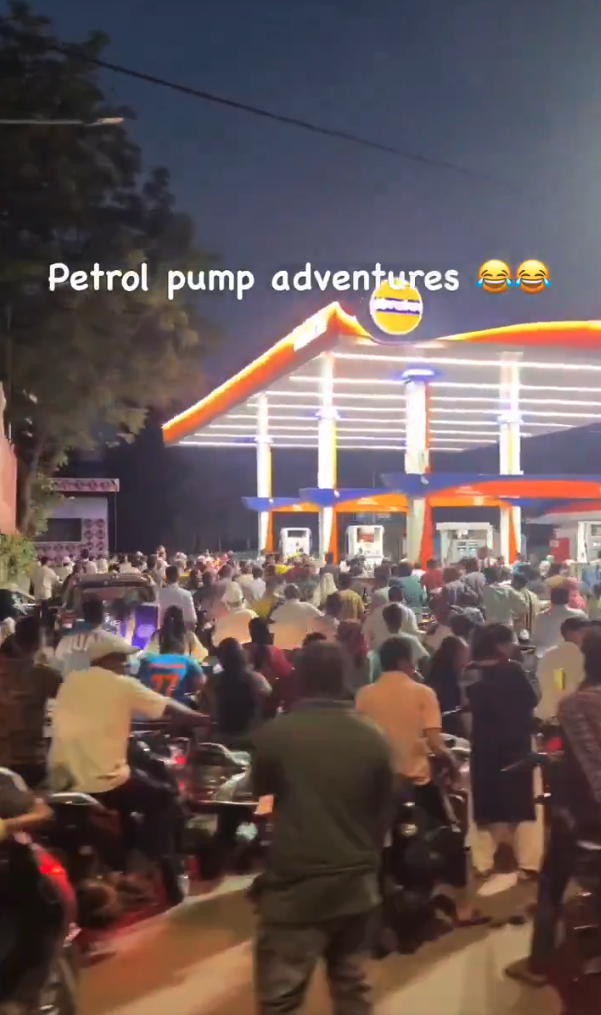
Fiscal Accountability: Who Pays When the System Breaks Down?
Here is the question that every taxpayer deserves to ask their government: Where did the emergency preparedness go?
India has long had the opportunity — and the fiscal capacity — to build more robust strategic petroleum reserves, diversify import partnerships, accelerate domestic refining, and invest seriously in indigenous energy production. Instead, successive governments have opted for subsidies that distort the market without building resilience, and infrastructure spending that too often serves political constituencies rather than strategic priorities.
Conservatives have always held that government’s first duty is to protect its citizens — their safety, their livelihoods, their ability to live and work freely. An energy strategy that leaves 1.4 billion people at the mercy of a single maritime chokepoint is a fundamental failure of that duty.
The fiscal accountability principle is simple: when governments spend public money, that money must build real national strength — not dependency, not bureaucratic overhead, not vote-bank economics. Strategic energy reserves, domestic refining capacity, and supply chain diversification are not luxuries. They are the infrastructure of national sovereignty.
The Path Forward: Responsibility, Resilience, and Real Reform
The conservative answer to this crisis is not panic, protectionism, or populist blame. It is a return to first principles.
First, energy independence must be treated as a national security imperative. India must accelerate domestic oil and gas exploration, build deeper strategic petroleum reserves, and aggressively diversify its import base — including fast-tracking long-discussed supply agreements with countries outside the Persian Gulf region.
Second, the market must be allowed to work. Price signals — however uncomfortable — communicate scarcity and drive the innovation and investment that shortages demand. Governments that artificially suppress fuel prices through subsidies delay investment in alternatives and leave themselves more exposed in the next crisis.
Third, citizens must be told the truth. One of the most important conservative values is respect for the public’s right to know. Governments must communicate honestly about the scale of the crisis, the timeline for resolution, and the long-term strategy — rather than managing perceptions until the situation becomes unmanageable.
Fourth, institutions must be held accountable. The IEA, national energy ministries, and state oil companies that failed to build adequate buffers must face serious scrutiny. Accountability is not about blame — it is about ensuring the same failure does not happen again.
Conclusion: The Queue at the Petrol Pump Is a Mirror
The long lines at India’s petrol pumps are a mirror — a reflection of what happens when nations trade long-term resilience for short-term comfort, when strategic thinking is replaced by political convenience, and when dependency is allowed to masquerade as global integration.
The citizens standing in those queues did not create this crisis. They deserve better from the governments they elect and the institutions they fund. Energy security is not a technocratic detail. It is a moral obligation — to every family that depends on cooking gas, every farmer that needs diesel, every worker whose job relies on a factory that can keep its lights on.
The world is learning a hard lesson in 2026. The question is whether governments — including India’s — have the discipline, the honesty, and the political will to learn it properly.
Call to Action
This crisis is far from over — and the decisions made in the next few months will shape energy policy for a generation. Stay informed. Share this article with friends, colleagues, and anyone who cares about national resilience and responsible governance. Follow The Town Hall News for continued, fact-based coverage of the global oil crisis and its impact on India and the world. And demand answers from your elected representatives — because the citizens in those petrol pump queues deserve them.