Are Democrats Already Setting Up Excuses for 2026? Schiff Claims Trump Will ‘Subvert’ Midterms
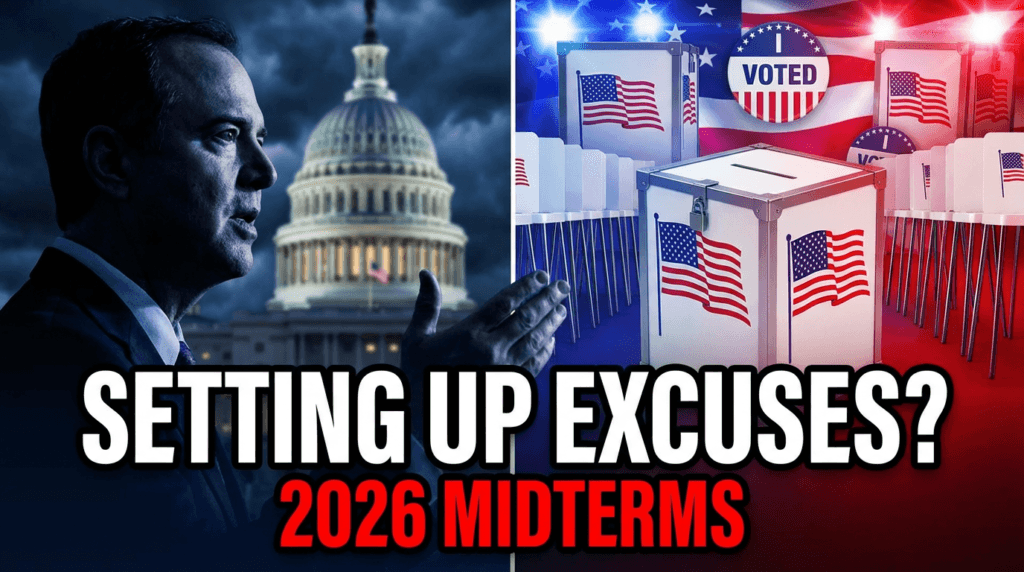
February 9, 2026 — Before a single ballot has been cast in the 2026 midterm elections, Senator Adam Schiff is already claiming the results can’t be trusted. The California Democrat went on national television Sunday to declare that President Trump intends to “subvert” the upcoming elections—a stunning accusation that reveals more about Democratic strategy than about any actual threat to election integrity.
It’s a familiar playbook: preemptively question the legitimacy of elections, accuse your opponents of the very tactics you employ, and position yourself as democracy’s defender while undermining confidence in our electoral system. The American people have seen this movie before, and they’re tired of the reruns.
But this time, there’s a twist. As Democrats cry wolf about election interference, actual questions about election integrity—questions they’ve spent years dismissing—are finally being investigated. And that’s what really has them worried.
Support Independent Local Journalism
TheTownHall.News is a non-profit reader-supported journalism. Just $5 helps us hire local reporters, investigate important issues, and hold public officials accountable across Alameda County. If you believe our community deserves strong, independent journalism, please consider donating $5 today to support our work.The Accusation: Schiff’s Sunday Morning Alarm
During an appearance on ABC’s “This Week,” Senator Schiff made a series of explosive claims. Trump, he insisted, “intends to interfere in the upcoming election” and will “do everything possible to suppress the vote.” If Trump loses, Schiff warned, he is “prepared to take action to overturn the result.”
“This should not be questioned,” Schiff declared with characteristic certainty—a phrase that should immediately raise questions for anyone who values free inquiry and open debate.
Schiff’s evidence? An FBI investigation into election records in Fulton County, Georgia, and Trump’s calls for Republicans to ensure election integrity in states with documented irregularities. According to Schiff’s logic, investigating potential election problems equals trying to steal elections. It’s a remarkable argument from a senator who spent years investigating Trump based on far flimsier evidence.
House Democratic Leader Hakeem Jeffries echoed these concerns, telling CNN that Democrats “will not let” Trump “steal” the 2026 midterms. The message is clear: Democrats are already preparing their narrative for November, and it doesn’t include accepting responsibility for their own policies or performance.

The Real Story: Investigating Actual Irregularities
While Democrats manufacture outrage, actual election integrity investigations are proceeding—and that’s what has them truly alarmed.
On January 28, the FBI executed a search warrant at a Fulton County, Georgia, election warehouse, seizing approximately 700 boxes containing ballots and records from the 2020 presidential election. The warrant, issued by Magistrate Judge Catherine Salinas, authorized agents to collect all physical ballots, ballot images, tabulator tapes, and voter rolls.
The investigation centers on two federal statutes: laws prohibiting voting fraud in federal elections and requirements that ballots be preserved for 22 months after Election Day. Director of National Intelligence Tulsi Gabbard was photographed on site during the operation, underscoring the seriousness of the inquiry.
Fulton County officials immediately filed a lawsuit demanding return of the seized materials, claiming the FBI showed “callous disregard” for constitutional rights. County Attorney Y. Soo Jo argued that “claims that the 2020 election results were fraudulent or otherwise invalid have been exhaustively reviewed and, without exception, refuted.”
But here’s what the county attorney didn’t mention: Republicans have documented that Fulton County computer files are missing images corresponding to thousands of physical ballots. County officials claim the law at the time didn’t require keeping computer scans—a convenient excuse that raises more questions than it answers.
Support Independent Local Journalism
TheTownHall.News is a non-profit reader-supported journalism. Just $5 helps us hire local reporters, investigate important issues, and hold public officials accountable across Alameda County. If you believe our community deserves strong, independent journalism, please consider donating $5 today to support our work.If everything was above board, why the missing records? If the election was thoroughly verified, why can’t the county account for its own inventory? And if there’s nothing to hide, why the immediate legal resistance to a federal investigation?
The Pattern: Investigating Investigations
This isn’t the first time Democrats have panicked when election integrity questions arise. The FBI also conducted operations in Puerto Rico, seizing voting machines with Gabbard again present on site. Trump has called for Republicans to “take over” voting procedures in more than a dozen states where irregularities have been documented.
Democrats characterize these efforts as attempts to “nationalize” elections—a misleading description that ignores constitutional reality. The Constitution grants Congress explicit authority to regulate federal elections. Article I, Section 4 states: “The Times, Places and Manner of holding Elections for Senators and Representatives, shall be prescribed in each State by the Legislature thereof; but the Congress may at any time by Law make or alter such Regulations.”
When Trump calls for federal oversight of election administration in jurisdictions with documented problems, he’s not overturning the Constitution—he’s exercising authority the Constitution explicitly grants. The question isn’t whether the federal government can ensure election integrity; it’s whether it will.
Democrats spent four years insisting that questioning election results was an attack on democracy itself. Now they’re questioning election results before they happen. The hypocrisy is breathtaking, but the strategy is transparent: create a preemptive narrative that any Republican victory is illegitimate.
The Real Warning Signs: Why Democrats Are Worried
Perhaps Democrats are setting up excuses because they see the same warning signs everyone else does—not of election theft, but of electoral defeat.
Trump’s approval ratings have dipped. The latest NPR/PBS News/Marist poll shows Trump with a 39% job approval rating. His policies on immigration enforcement, tariffs, and foreign policy have generated controversy, and his coalition is showing some strain.
The economy remains a top concern. A Pew Research Center survey found 72% of Americans rated the economy as “fair” or “poor,” with 38% expecting it to worsen. Only 36% approved of Trump’s handling of the economy.
Democrats are overperforming in special elections. A recent Texas state Senate race saw a Democrat win a district Trump carried by 17 points in 2024—a 31-point swing. Across various special elections, Democrats have overperformed 2024 margins by an average of nearly 16 points.
Republicans face more retirements. Currently, 30 House Republicans are retiring compared to 21 Democrats—often a sign of concern about electoral prospects.
Generic ballot tests favor Democrats. On average, Democrats hold about a 5-point advantage in polls asking which party people prefer to control Congress.
These are legitimate political challenges for Republicans—the kind that happen in every midterm election, particularly for the president’s party. History shows the party in power typically loses an average of 27 House seats in midterm elections.
But here’s the difference: These challenges call for better policies, clearer messaging, and effective campaigning. They don’t call for preemptive claims that elections will be “subverted” or “stolen.”
The Conservative Response: Confidence, Not Conspiracy
Republicans should respond to these challenges with confidence, not conspiracy theories. The answer to political headwinds isn’t to question election legitimacy—it’s to make a better case to voters.
On the economy: Articulate how conservative policies—lower taxes, reduced regulation, energy independence—create prosperity. If tariffs are causing economic anxiety, explain the long-term strategy or adjust course.
On governance: Demonstrate that limited government and fiscal responsibility deliver results. Show voters what you’re cutting, why you’re cutting it, and how it benefits them.
On election integrity: Continue investigating legitimate irregularities, but focus on prevention, not excuses. Support voter ID laws, clean voter rolls, transparent counting procedures, and paper ballot trails. Make elections so secure that no one can credibly question them.
On messaging: Stop letting Democrats frame the debate. When they cry “voter suppression” over common-sense ID requirements, point out that Americans need ID to fly, buy alcohol, rent a car, and open a bank account. When they claim investigating election irregularities equals stealing elections, ask why they’re afraid of transparency.
The Principle at Stake: Election Integrity for Everyone
Here’s what gets lost in the partisan warfare: election integrity should be a bipartisan concern. Every American—regardless of party—should want elections that are secure, transparent, and trustworthy.
That means:
- Voter ID requirements to ensure only eligible citizens vote
- Clean voter rolls that remove deceased individuals and those who’ve moved
- Transparent counting procedures with observers from both parties
- Paper ballot trails that allow verification and audits
- Secure ballot custody that prevents tampering
- Timely results that don’t stretch on for days or weeks
- Accountability for officials who fail to follow election law
When Republicans push for these measures, Democrats call it voter suppression. When Democrats question election results, they call it defending democracy. The double standard is glaring.
The truth is simpler: secure elections protect everyone. They ensure that when you win, your victory is legitimate, and when you lose, you accept the result with confidence that the process was fair.
The Bottom Line: Actions Speak Louder Than Accusations
Senator Schiff’s preemptive claims about election subversion say more about Democratic strategy than about any actual threat. By crying foul before any foul has occurred, Democrats are doing exactly what they accuse Republicans of doing: undermining confidence in our electoral system.
But Americans are smarter than that. They understand the difference between investigating irregularities and inventing conspiracies. They recognize the difference between ensuring election security and suppressing votes. And they can see through transparent attempts to excuse poor performance by blaming a rigged system.
The 2026 midterm elections will be decided by voters making judgments about policies, leadership, and results. Republicans face real challenges—as any party in power does during midterms. The answer is to govern well, communicate clearly, and trust the American people.
And if Democrats want to spend the next nine months explaining why they can’t win a fair election, Republicans should let them. It’s not a message that resonates with voters who believe in their own agency and intelligence.
Conclusion: Trust the Process, Earn the Victory
The 2026 midterms will test both parties. For Republicans, the test is whether they can deliver on their promises and make a compelling case for continued support. For Democrats, the test is whether they can offer a positive vision rather than simply claiming the other side is stealing elections.
Election integrity matters—not as a political weapon, but as a foundational principle of self-government. Americans deserve elections they can trust, with results they can accept regardless of who wins.
That means investigating legitimate concerns, implementing security measures, and ensuring transparency. It also means accepting results, winning or losing, with grace and confidence in the process.
Senator Schiff’s preemptive accusations fail that test. They undermine the very democracy he claims to defend. And they reveal a party more interested in excuses than excellence, more focused on blame than on earning voters’ trust.
The American people deserve better. And in November, they’ll have the chance to demand it.
Call to Action
Stay informed. The 2026 midterm elections are nine months away. Don’t let preemptive narratives shape your understanding. Follow the actual investigations, examine the evidence, and make up your own mind.
Demand election integrity. Contact your state and local election officials. Ask about voter ID requirements, ballot custody procedures, and counting transparency. Support measures that make elections more secure, not less.
Get involved. Volunteer as a poll watcher. Work with your local party to ensure fair procedures. The best defense against election problems—real or imagined—is citizen engagement.
Share this article. The more Americans who understand what’s really happening, the harder it becomes for either party to manipulate the narrative. Election integrity isn’t a partisan issue—it’s an American value.
Vote. Ultimately, the answer to political challenges isn’t conspiracy theories or preemptive excuses. It’s participation. Show up, make your voice heard, and trust your fellow citizens to do the same.
The integrity of our elections depends on all of us. Let’s defend it together.