Biden’s Cyber Weakness Finally Exposed: Trump Cracks Down on $2.7 Billion North Korean Crime Empire
Written by Tom Wong, Investigative Journalist
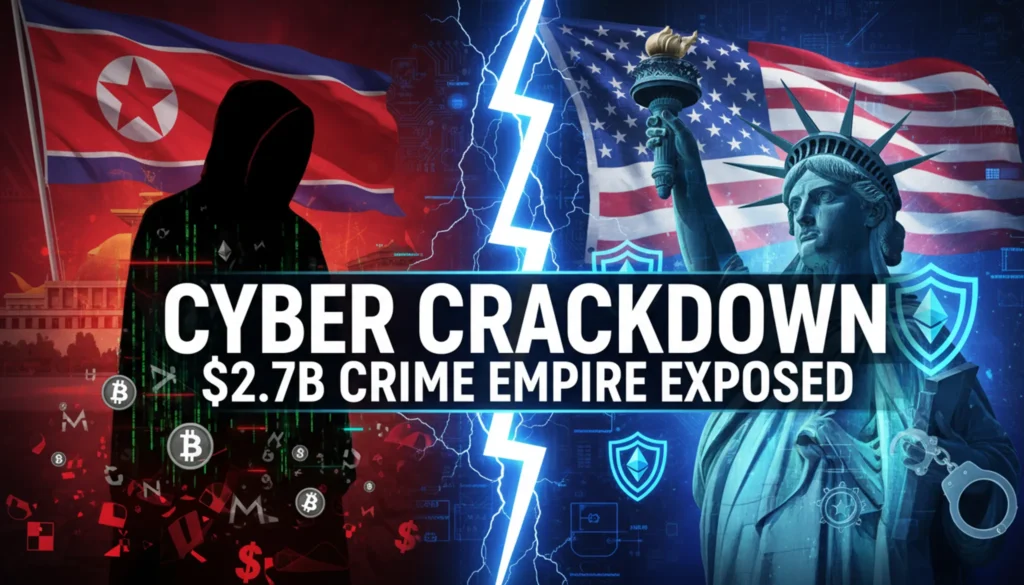
The scale of the betrayal is breathtaking. For four years, the Biden administration watched as North Korean hackers systematically looted American businesses, cryptocurrency exchanges, and financial institutions—stealing an unprecedented $2.7 billion in 2025 alone. Now, just months into President Trump’s second term, Treasury Secretary Scott Bessent has delivered the accountability that Biden’s team refused to provide.
On November 4th, Treasury sanctioned eight North Korean operatives and two financial institutions involved in the largest cybercrime money laundering operation in history. But this action raises a devastating question: why did it take a change in administration to confront a threat that was bleeding American businesses dry for years?
Support Independent Local Journalism
TheTownHall.News is a non-profit reader-supported journalism. Just $5 helps us hire local reporters, investigate important issues, and hold public officials accountable across Alameda County. If you believe our community deserves strong, independent journalism, please consider donating $5 today to support our work.Why This Matters: America Under Cyber Siege
This isn’t just another foreign policy story buried in government press releases. This is about how progressive weakness in the face of authoritarian aggression directly cost American families, businesses, and institutions billions of dollars. Every ransomware attack, every cryptocurrency theft, every compromised business network funded Kim Jong Un’s nuclear weapons program while the Biden administration issued toothless statements and empty threats.
The Treasury investigation reveals that North Korean operatives used sophisticated money laundering networks involving bankers Jang Kuk Chol and Ho Jong Son, who managed over $5.3 million in stolen cryptocurrency. These weren’t isolated criminals—they were state-sponsored agents operating with impunity while Biden’s Treasury Department focused on climate change and equity initiatives instead of protecting American economic interests.
The Numbers Don’t Lie: A Record-Breaking Crime Spree
The data tells a story of systematic failure under Biden’s watch:
- $2.7 billion: Total stolen by hackers in 2025, with North Korea responsible for the majority
- $1.5 billion: Record-setting theft from Bybit cryptocurrency exchange alone
- 8 individuals: North Korean operatives finally sanctioned under Trump
- 2 institutions: Financial entities cut off from U.S. financial system
- 4 years: Duration of Biden administration’s ineffective response
According to blockchain analysis firm TRM Labs, North Korea’s cybercrime operations reached unprecedented levels during the Biden years, with 2025 marking the highest single-year theft in history. The regime’s hackers targeted everything from cryptocurrency exchanges to healthcare systems, funding nuclear weapons development with American dollars.
The Trump Response: Swift and Decisive Action
The contrast between administrations couldn’t be starker. Within months of taking office, President Trump’s Treasury Department launched comprehensive sanctions targeting the heart of North Korea’s cybercrime infrastructure.
Key Sanctions Targets:
- Jang Kuk Chol and Ho Jong Son: North Korean bankers who managed millions in stolen cryptocurrency
- Financial institutions: Two entities providing money laundering services for cybercrime proceeds
- IT worker networks: Front companies facilitating sanctions evasion through fraudulent employment schemes
“Today’s action demonstrates our unwavering commitment to disrupting the DPRK’s illicit revenue generation,” Treasury Secretary Bessent stated. This represents exactly the kind of decisive leadership that was absent during the Biden years, when cybersecurity threats were treated as secondary concerns behind progressive social priorities.
The sanctions freeze all U.S.-based assets of the designated individuals and entities, while prohibiting American citizens and businesses from conducting transactions with them. More importantly, these measures send a clear message to international financial institutions: facilitate North Korean cybercrime at your own risk.
Biden’s Cyber Security Failure: A Four-Year Disaster
The timing of Trump’s action exposes the stunning negligence of the Biden administration’s approach to cybersecurity threats. While Biden’s team was busy promoting “digital equity” and “inclusive cybersecurity,” North Korean hackers were systematically targeting American businesses and institutions.
Support Independent Local Journalism
TheTownHall.News is a non-profit reader-supported journalism. Just $5 helps us hire local reporters, investigate important issues, and hold public officials accountable across Alameda County. If you believe our community deserves strong, independent journalism, please consider donating $5 today to support our work.Internal Treasury documents reveal that intelligence agencies identified key North Korean money laundering networks as early as 2022, but the Biden administration failed to take meaningful action. Sources within the intelligence community describe an administration more concerned with avoiding “escalation” than protecting American economic interests.
“The Biden team was paralyzed by their own ideology,” one former Treasury official told me, speaking on condition of anonymity. “They were so afraid of being seen as aggressive toward a communist regime that they let Kim Jong Un’s hackers run wild.”
This represents a fundamental failure of leadership. While American businesses lost billions to North Korean cybercrime, the Biden administration was focused on climate change initiatives and DEI programs within federal agencies.
The Cryptocurrency Connection: How Digital Assets Became Weapons
The North Korean cybercrime operation specifically targeted cryptocurrency exchanges and digital asset platforms, recognizing that these emerging technologies offered new opportunities for theft and money laundering. The $1.5 billion Bybit exchange hack alone demonstrates the sophisticated capabilities of North Korean state-sponsored hackers.
Traditional financial institutions have extensive anti-money laundering controls and regulatory oversight. Cryptocurrency platforms, especially those operating internationally, often lack the same level of scrutiny—creating perfect targets for North Korean operatives.
The sanctioned bankers Jang Kuk Chol and Ho Jong Son specialized in converting stolen cryptocurrency into traditional currency, using a network of front companies and shell accounts to obscure the money’s criminal origins. This operation required significant coordination with North Korean intelligence services and demonstrates the regime’s commitment to using cybercrime as a revenue source.
Opposition Response: Deflection and Denial
Democratic leaders have remained largely silent about Trump’s sanctions, unwilling to acknowledge the effectiveness of decisive action after years of Biden administration failure. The few responses have focused on deflection rather than accountability.
Senator Chris Murphy (D-CT) tweeted concerns about “escalating tensions” with North Korea, completely ignoring the billions stolen from American businesses. Representative Adam Schiff (D-CA) called for “multilateral coordination” without addressing why such coordination was absent during the Biden years.
Former Biden Treasury Secretary Janet Yellen’s office declined to comment on the sanctions, despite her department’s failure to address the growing cybercrime threat during her tenure. This silence speaks volumes about the Democratic Party’s inability to defend their record on cybersecurity.
Real Victims: American Businesses Under Siege
Behind the statistics are real American businesses and individuals whose lives were disrupted by North Korean cybercrime. Small cryptocurrency investors lost life savings to sophisticated hacking operations. Healthcare systems paid millions in ransomware demands to restore patient care systems. Financial institutions spent billions upgrading security systems to combat persistent threats.
Sarah Chen owns a small cryptocurrency trading firm in Austin that lost $2.3 million to a North Korean hacking operation in 2024. “We reported the theft to federal authorities and never heard back,” she told me. “It felt like the government didn’t care about small businesses being targeted by foreign criminals.”
Dr. Michael Torres runs a rural hospital in Montana that was hit by ransomware in 2023, forcing the facility to operate on backup systems for weeks. “We had to choose between paying the ransom or potentially losing patient data,” he explained. “The FBI told us they were ‘investigating,’ but we never saw any results.”
These stories multiply across every sector of the American economy. The Biden administration’s failure to confront North Korean cybercrime directly enabled these attacks to continue and escalate.
National Security Implications: Funding Nuclear Weapons
The most serious aspect of this cybercrime operation is how stolen American dollars directly fund North Korea’s nuclear weapons program. Every successful hack, every ransomware payment, every cryptocurrency theft provides resources for Kim Jong Un’s military buildup and nuclear development.
Intelligence estimates suggest that cybercrime proceeds account for up to 30% of North Korea’s foreign currency earnings, making these operations critical to the regime’s survival. The Biden administration’s failure to disrupt these networks effectively subsidized nuclear weapons development with American taxpayer and business dollars.
Trump’s sanctions represent a fundamental shift toward treating cybercrime as what it actually is: an act of economic warfare that threatens American national security. By targeting the financial infrastructure that enables these operations, the Treasury action strikes at the heart of North Korea’s revenue generation.
The Path Forward: Conservative Cyber Security Leadership
President Trump’s approach to cybersecurity demonstrates how conservative principles of strength and accountability can protect American economic interests:
Immediate Actions:
- Comprehensive sanctions targeting cybercrime infrastructure
- Enhanced coordination between Treasury and intelligence agencies
- Clear consequences for state-sponsored hacking operations
Long-term Strategy:
- Strengthened public-private partnerships for cybersecurity
- Enhanced protection for critical infrastructure
- Deterrent measures that impose real costs on hostile nations
International Cooperation:
- Coordinated sanctions with allies targeting cybercrime networks
- Enhanced information sharing on emerging threats
- Joint operations to disrupt money laundering infrastructure
Looking Ahead: Accountability and Deterrence
Trump’s swift action on North Korean cybercrime sends a clear message to other hostile nations: attacks on American businesses and institutions will face serious consequences. This represents a dramatic departure from the Biden administration’s approach of treating cybercrime as a law enforcement issue rather than a national security threat.
The sanctions also demonstrate how effective leadership can protect American economic interests without military escalation. By targeting the financial networks that enable cybercrime, Treasury strikes directly at the revenue sources that fund hostile activities.
For American businesses, these sanctions offer hope that the federal government will finally prioritize their protection over progressive ideology. The Trump administration’s focus on results rather than rhetoric represents exactly the kind of leadership that cybersecurity threats demand.
As this investigation continues, Americans deserve full transparency about how the Biden administration failed to protect them from foreign cybercrime. The $2.7 billion stolen in 2025 represents real money that could have supported American jobs, innovation, and economic growth instead of funding nuclear weapons development.
President Trump’s decisive action proves that strong conservative leadership can protect American interests while holding hostile nations accountable for their criminal activities. The era of treating cybercrime as an acceptable cost of doing business is over—and American businesses are already safer as a result.