Colorado Disaster Aid Denial Exposes the Problem with Federal Dependency
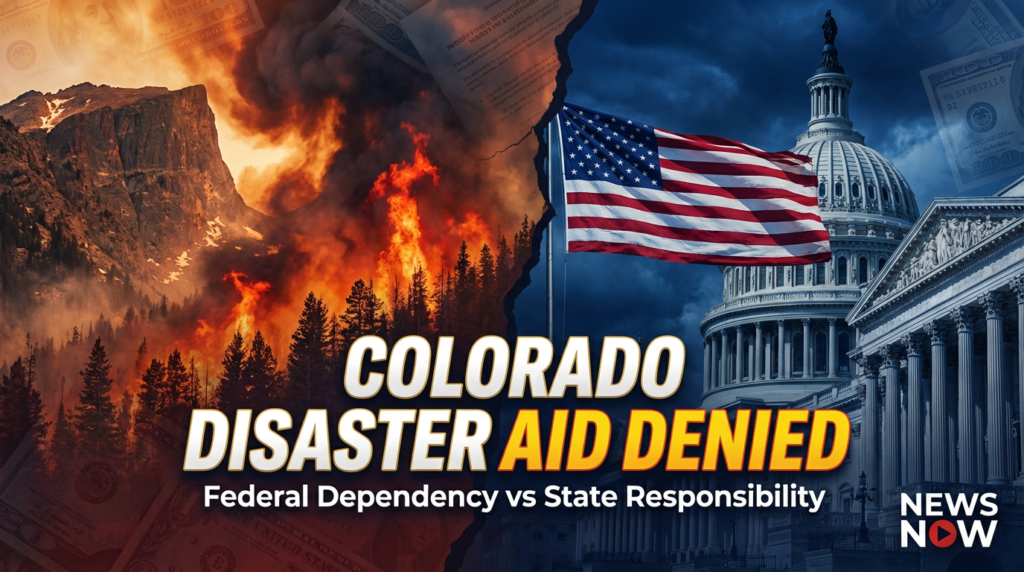
Why President Trump’s Decision Highlights the Need for State-Level Accountability and Fiscal Reform
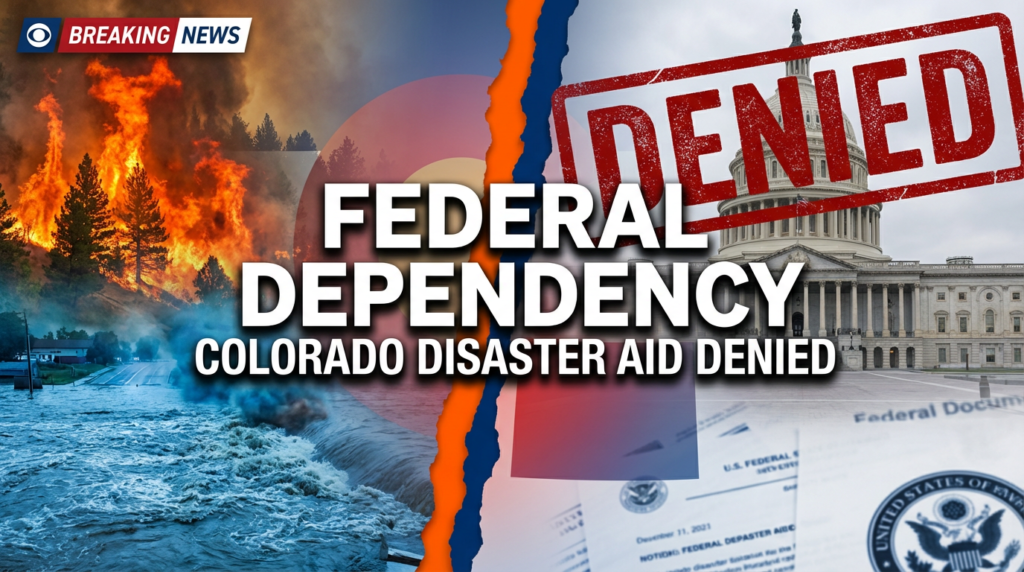
When President Donald Trump denied Colorado’s requests for federal disaster aid following the Elk and Lee wildfires and southwestern flooding, Democratic Governor Jared Polis immediately cried foul, accusing the administration of “playing political games.” Colorado’s Democratic congressional delegation joined the chorus, demanding the president reverse his decision and approve FEMA funding for the state’s recovery efforts.
But before we accept the narrative that Trump is heartlessly abandoning disaster victims, we need to examine the deeper questions this controversy raises: When did states become so dependent on federal bailouts for every natural disaster? What happened to state-level preparedness and fiscal responsibility? And why should taxpayers in other states foot the bill for disasters that fall well within Colorado’s capacity to handle?
The Colorado disaster aid denial isn’t about partisan politics—it’s about restoring proper boundaries between state and federal responsibilities, enforcing fiscal discipline, and ending the cycle of federal dependency that has made states complacent about disaster preparedness.
Support Independent Local Journalism
TheTownHall.News is a non-profit reader-supported journalism. Just $5 helps us hire local reporters, investigate important issues, and hold public officials accountable across Alameda County. If you believe our community deserves strong, independent journalism, please consider donating $5 today to support our work.The Facts Behind the Denial
Let’s start with what actually happened. In August 2025, the Elk and Lee fires burned through Rio Blanco County in western Colorado, causing an estimated $27 million in damages, primarily to electrical infrastructure owned by the White River Electric Association. In October, flooding hit La Plata, Archuleta, and Mineral counties, causing approximately $13 million in damage to roads, water systems, and public infrastructure.
Governor Polis requested federal disaster declarations for both events, which would have unlocked FEMA funding to help with recovery costs. The Trump administration reviewed both requests and denied them on December 21, 2025. Colorado officials immediately announced plans to appeal.
Here’s what’s important: Colorado acknowledged it had already invested over $57.5 million in disaster response and recovery since July 2024. The state activated its emergency operations, deployed the National Guard, and provided direct financial assistance to affected communities. In other words, Colorado’s government was functioning exactly as it should—responding to local emergencies with state resources.
The question isn’t whether these disasters caused real damage or affected real people. They did. The question is whether every disaster that exceeds a certain dollar threshold automatically qualifies as a federal responsibility, or whether states should be expected to manage disasters within their fiscal capacity.

The Federal Dependency Problem
For decades, states have become increasingly reliant on federal disaster declarations as a first resort rather than a last resort. Between 2000 and 2020, FEMA approved an average of 62 major disaster declarations per year. This represents a dramatic increase from previous decades and reflects a troubling trend: states expecting Washington to bail them out for increasingly routine weather events and natural disasters.
This dependency creates perverse incentives. When states know federal money will flow after every significant disaster, they have less motivation to invest in preparedness, maintain adequate insurance, build resilient infrastructure, or maintain sufficient rainy-day funds. Why spend state tax dollars on disaster preparedness when you can simply request a federal declaration and pass the cost to taxpayers nationwide?
Colorado provides a perfect example. Despite being a relatively wealthy state with a strong economy, Colorado receives only $0.90 in federal spending for every $1.00 its residents pay in federal taxes—making it a “donor state.” Yet when disaster strikes, Colorado expects those same federal dollars to flow back as disaster relief. The state’s own officials admit they “do not have the capacity to continue to provide assistance to local communities” without federal help, despite having already spent $57.5 million on disaster response.
This raises an obvious question: If Colorado doesn’t have the capacity to handle $40 million in disaster costs, why hasn’t the state prioritized building that capacity? Colorado’s fiscal year 2025-2026 budget totals $50.7 billion. The combined damage from these two disasters represents less than 0.1% of the state’s annual budget. This is well within Colorado’s financial capability to manage.
Fiscal Accountability Matters
Conservative principles demand fiscal responsibility at every level of government. This means states should maintain adequate reserves for emergencies, invest in infrastructure that can withstand predictable natural events, and not automatically turn to federal taxpayers for assistance when disasters occur.
Support Independent Local Journalism
TheTownHall.News is a non-profit reader-supported journalism. Just $5 helps us hire local reporters, investigate important issues, and hold public officials accountable across Alameda County. If you believe our community deserves strong, independent journalism, please consider donating $5 today to support our work.The FEMA disaster declaration process exists for truly catastrophic events that genuinely exceed state capacity—hurricanes that devastate entire regions, earthquakes that destroy major cities, or floods that affect multiple states. It was never intended to be an automatic subsidy program for every wildfire or flood that causes damage.
Colorado’s situation simply doesn’t meet that threshold. The state has the resources, the infrastructure, and the budget capacity to handle these recovery efforts. The fact that state officials would rather appeal to Washington than make tough budget decisions reflects a failure of leadership, not a failure of federal generosity.
Consider the specifics: The Elk and Lee fires primarily damaged electrical infrastructure owned by a utility company. While this is certainly problematic for the affected region, it’s not the type of widespread, catastrophic damage that justifies federal intervention. The White River Electric Association, which sustained most of the damage, is already exploring recovery options and has committed to maintaining reliable service for its customers. This is how the system should work—private utilities, local governments, and state resources working together to solve local problems.
The flooding in southwestern Colorado, while serious, affected three counties with damage totaling $13 million. Again, this is a manageable amount for a state with Colorado’s resources. The flooding damaged roads, water systems, and public infrastructure—exactly the type of assets that state and local governments are responsible for maintaining and repairing.
The Insurance Question
One aspect that receives insufficient attention in these debates is the role of insurance. Under federal law, facilities that receive FEMA Public Assistance funding are required to maintain adequate insurance coverage going forward. This requirement exists precisely because federal disaster aid should not replace proper insurance.
Yet many states, localities, and utilities have become lax about maintaining comprehensive insurance coverage, knowing they can request federal disaster declarations instead. This represents a moral hazard: when federal bailouts are readily available, the incentive to purchase adequate insurance diminishes.
Colorado officials should answer some straightforward questions: What insurance coverage did the White River Electric Association maintain? What insurance policies covered the public infrastructure damaged in the floods? And if insurance coverage was inadequate, why should federal taxpayers subsidize that decision?
State Sovereignty and Responsibility
Conservatives believe in federalism—the principle that powers not specifically granted to the federal government belong to the states. This principle applies to disaster response as much as any other government function. States have primary responsibility for protecting their citizens, maintaining infrastructure, and responding to emergencies within their borders.
When states automatically defer to Washington for disaster relief, they cede sovereignty and accountability. They transfer decision-making authority from elected state officials who understand local conditions to federal bureaucrats applying one-size-fits-all formulas. They make their citizens dependent on the political whims of whoever occupies the White House rather than the competence of their state government.
Governor Polis claims Trump is “playing political games,” but the real political game is the one governors play when they immediately blame Washington for not sending money rather than explaining to their constituents why state government should handle state problems.
Colorado voters elected state officials to manage state affairs. Those officials have access to a $50.7 billion budget and the authority to set priorities, reallocate funds, and make tough choices. If disaster recovery is a priority—and it should be—then state leaders should fund it from state resources and explain why other spending priorities must wait.
Breaking the Cycle
The Trump administration’s decision to deny Colorado’s disaster requests may seem harsh to those who’ve grown accustomed to automatic federal approval. But it represents an important step toward restoring fiscal sanity and proper federalism.
States need to understand that federal disaster declarations are not entitlements. They are extraordinary measures reserved for extraordinary circumstances. When states treat them as routine budget supplements, they abuse the system and burden taxpayers nationwide.
Colorado has the resources to handle these disasters. The state should use them. If that means delaying other spending priorities, making budget adjustments, or asking affected utilities and localities to shoulder more of the burden, so be it. That’s what state leadership entails.
This doesn’t mean abandoning disaster victims. It means ensuring that help comes from the appropriate level of government—the level closest to the people affected, most accountable to local voters, and most capable of understanding local needs.
The Path Forward
Rather than reflexively appealing Trump’s decision, Colorado leaders should take this opportunity to reassess their disaster preparedness and fiscal planning. Here are concrete steps the state should consider:
Build adequate reserves. The Government Finance Officers Association recommends states maintain reserves equal to at least two months of General Fund revenues—approximately 16.7%. Colorado should ensure its disaster relief reserves can handle predictable natural disasters without federal assistance.
Require comprehensive insurance. State law should mandate that utilities, local governments, and state facilities maintain insurance coverage adequate to handle foreseeable disasters. This transfers risk appropriately and reduces taxpayer exposure.
Invest in resilient infrastructure. Colorado faces predictable risks from wildfires, flooding, and severe weather. State infrastructure should be built to withstand these events, reducing both damage costs and recovery needs.
Reform emergency spending. Colorado’s $57.5 million in disaster spending since July 2024 demonstrates the state can mobilize resources when necessary. The state should formalize this capacity with dedicated disaster funding mechanisms that don’t depend on federal bailouts.
Lead by example. As a donor state that contributes more to federal coffers than it receives, Colorado should champion fiscal responsibility and limited federal government. That means handling state responsibilities with state resources.
Conclusion: Accountability Over Dependency
The Colorado disaster aid controversy highlights a fundamental choice facing American governance: Do we want states that take responsibility for their own affairs, or do we want states that automatically defer to Washington whenever challenges arise?
Conservatives believe in the former. We believe states should be sovereign, accountable, and fiscally responsible. We believe federal intervention should be the exception, not the rule. And we believe taxpayers in Tennessee shouldn’t automatically pay for disasters in Colorado any more than Colorado taxpayers should automatically pay for disasters in Tennessee.
President Trump’s decision to deny Colorado’s disaster requests wasn’t political retribution—it was fiscal accountability. It was a recognition that not every disaster justifies federal intervention and that states need to take responsibility for managing predictable risks.
Colorado officials who criticize this decision should look in the mirror and ask themselves: Why has our state become so dependent on federal bailouts? Why haven’t we built adequate reserves and resilience? And why are we asking taxpayers nationwide to fund disasters we have the capacity to handle ourselves?
These are uncomfortable questions, but they’re necessary ones. Breaking the cycle of federal dependency requires honest assessment and difficult choices. It requires leaders willing to prioritize fiscal responsibility over political convenience.
The path forward is clear: States must rebuild their capacity for self-governance, including disaster response. They must maintain adequate reserves, require comprehensive insurance, invest in resilient infrastructure, and stop treating federal disaster declarations as automatic entitlements.
Only then will we restore the proper balance between state and federal responsibilities. Only then will we ensure that disaster relief serves its intended purpose—helping communities facing truly catastrophic events—rather than subsidizing routine government functions that states should handle themselves.
Call to Action
The debate over Colorado disaster aid matters far beyond one state’s wildfire and flood recovery. It represents a fundamental question about American federalism, fiscal responsibility, and government accountability.
Stay informed. Follow how your state handles disaster preparedness and whether your elected officials are building resilience or building dependency on federal bailouts.
Demand accountability. Ask your state legislators what reserves exist for disaster response, what insurance requirements apply to public infrastructure, and what plans exist for handling predictable natural disasters.
Support fiscal responsibility. When leaders make tough choices to fund disaster recovery from state resources rather than requesting federal bailouts, recognize and support that leadership.
Share this article. The mainstream media narrative portrays disaster aid denials as heartless politics. The reality is more complex and more important. Share this perspective with others who value limited government and fiscal accountability.
The Colorado disaster aid denial isn’t the problem—it’s the beginning of a solution. It’s time to restore state responsibility, end federal dependency, and rebuild the federalist principles that made American governance resilient and accountable.
The question isn’t whether Colorado deserves help recovering from wildfires and floods. The question is who should provide that help—and the answer, for disasters within state capacity, should be the state itself.