Federal Charges Filed Against Individual Who Allegedly Used U-Haul Truck to Assault Coast Guard Personnel
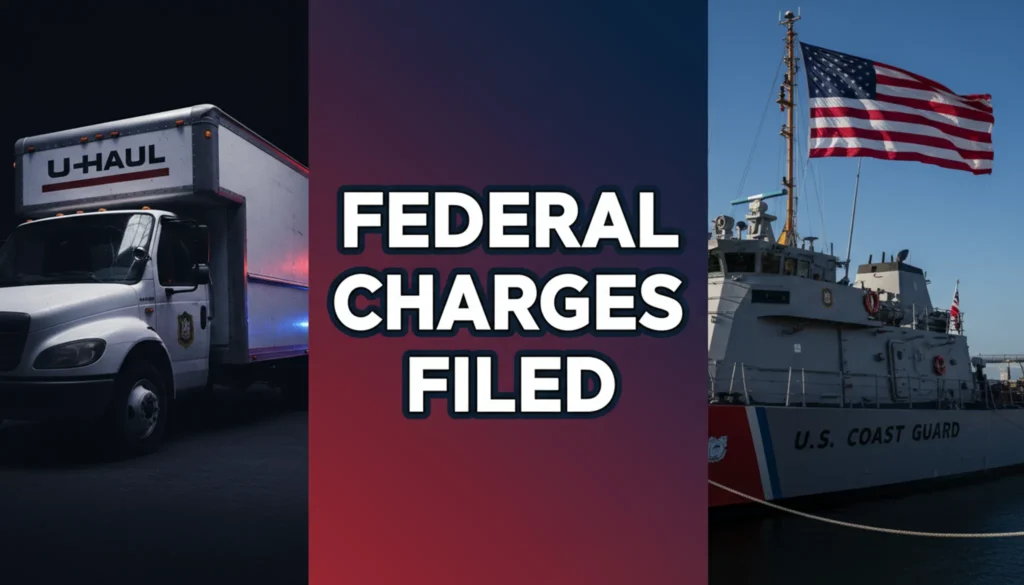
November 4, 2025 – The FBI’s San Francisco Field Office has announced federal charges against an individual accused of assaulting federal officers by deliberately accelerating a U-Haul truck toward United States Coast Guard personnel. This shocking incident represents a serious escalation in attacks on federal law enforcement and highlights the dangerous threats faced by uniformed service members in the line of duty.
The Vehicular Assault Incident
The alleged attack involved the deliberate use of a rental truck as a weapon against Coast Guard personnel, transforming what should have been routine law enforcement interaction into a life-threatening situation. The suspect’s decision to accelerate a U-Haul truck toward federal officers represents a calculated act of violence that could have resulted in serious injuries or fatalities among the targeted personnel.
Coast Guard members, who dedicate their lives to protecting America’s waterways and conducting search and rescue operations, found themselves facing an unexpected and dangerous threat from someone willing to use a commercial vehicle as an instrument of assault. The incident likely occurred during what may have been a routine enforcement action, inspection, or other official Coast Guard duties.
Support Independent Local Journalism
TheTownHall.News is a non-profit reader-supported journalism. Just $5 helps us hire local reporters, investigate important issues, and hold public officials accountable across Alameda County. If you believe our community deserves strong, independent journalism, please consider donating $5 today to support our work.The use of vehicles as weapons has become an increasingly concerning trend in attacks on law enforcement and civilians alike. The size and weight of commercial trucks like U-Hauls make them particularly dangerous when used with criminal intent, capable of causing devastating injuries and death even at relatively low speeds.
Coast Guard Operations and Vulnerabilities
The United States Coast Guard operates in a unique law enforcement environment that often requires personnel to work in exposed positions along waterfronts, ports, and coastal areas. Unlike some other federal agencies, Coast Guard members frequently conduct operations in locations where they may be vulnerable to vehicle-based attacks due to the nature of their maritime mission.
Coast Guard personnel regularly conduct vessel inspections, port security operations, and law enforcement activities that require them to work near roadways and areas accessible to civilian vehicles. This operational reality creates inherent vulnerabilities that criminal actors may attempt to exploit, as appears to have occurred in this case.
The incident highlights the challenges faced by federal law enforcement agencies whose missions require them to operate in public spaces where they may be exposed to various forms of attack. Coast Guard members must balance their law enforcement responsibilities with awareness of potential threats from individuals who may view them as targets.
Federal Assault Charges and Legal Framework
Assaulting federal officers represents one of the most serious categories of federal crimes, carrying substantial penalties that reflect both the severity of the offense and the need to protect those who serve in federal law enforcement capacities. The use of a vehicle to commit such an assault likely elevates the charges and potential penalties significantly.
Federal statutes governing assaults on federal officers recognize that attacks on law enforcement personnel threaten not only individual officers but the broader rule of law and the government’s ability to carry out its constitutional responsibilities. The deliberate nature of using a vehicle as a weapon demonstrates premeditation that prosecutors will likely emphasize in pursuing maximum penalties.
The specific charges filed against the suspect will probably include assault on federal officers with a dangerous weapon, given that the U-Haul truck was allegedly used as an instrument of attack. Additional charges might include attempted murder, terrorism-related offenses, or other federal crimes depending on the suspect’s motivations and the specific circumstances of the incident.
Investigative Response and Evidence
The FBI’s San Francisco Field Office took the lead in investigating this incident, working closely with Coast Guard investigators and other federal agencies to build a comprehensive case against the suspect. The investigation likely involved extensive evidence collection, including surveillance footage, witness interviews, and forensic analysis of the vehicle and incident scene.
Modern investigative techniques provide law enforcement with numerous tools for reconstructing vehicular assault incidents, including traffic cameras, cell phone data, vehicle telemetry, and physical evidence from the scene. The rental nature of the U-Haul truck probably provided investigators with additional documentation about the suspect’s identity and activities leading up to the incident.
Support Independent Local Journalism
TheTownHall.News is a non-profit reader-supported journalism. Just $5 helps us hire local reporters, investigate important issues, and hold public officials accountable across Alameda County. If you believe our community deserves strong, independent journalism, please consider donating $5 today to support our work.Federal investigators also likely examined the suspect’s background, social media presence, and any potential connections to anti-government movements or other criminal activities. Understanding the motivations behind such attacks helps law enforcement assess whether the incident represents an isolated criminal act or part of a broader pattern of threats against federal personnel.
Threat Environment for Federal Officers
This incident occurs within a broader context of increasing threats and attacks against federal law enforcement personnel across various agencies. From border patrol agents to FBI investigators, federal officers face evolving threats from individuals and groups who view the federal government as an enemy or target for violence.
The Coast Guard, while perhaps less visible than some other federal agencies, plays critical roles in national security, drug interdiction, search and rescue, and maritime law enforcement that can bring them into contact with criminal actors and hostile individuals. This incident demonstrates that even agencies focused primarily on safety and rescue missions can become targets for violence.
Federal agencies have been working to enhance officer safety training and protective measures in response to the evolving threat environment. However, the nature of many federal law enforcement missions requires personnel to operate in public spaces where they remain vulnerable to determined attackers willing to use vehicles or other weapons.
U-Haul Truck as Weapon Platform
The suspect’s choice to use a U-Haul rental truck in this alleged assault reflects a troubling trend of criminals and terrorists using readily available vehicles as weapons. Rental trucks are particularly concerning because they can be obtained relatively easily and provide significant mass and impact capability when used maliciously.
Law enforcement agencies have been working with rental companies to implement screening procedures and reporting mechanisms designed to identify suspicious rental activities. However, the legitimate commercial purposes of truck rentals make it challenging to prevent their misuse without impeding normal business operations.
The incident may prompt renewed discussions about additional security measures for vehicle rentals, particularly larger trucks that could cause significant damage if used as weapons. Balancing public safety concerns with commercial accessibility remains an ongoing challenge for policymakers and industry leaders.
Impact on Coast Guard Operations
This attack on Coast Guard personnel likely prompted immediate security reviews and enhanced protective measures for Coast Guard operations in the San Francisco area and potentially nationwide. The service must balance its mission requirements with the need to protect personnel from similar attacks.
Coast Guard members conducting port security, vessel inspections, and other duties may now need to implement additional safety protocols and maintain heightened awareness of potential vehicle-based threats. These operational changes, while necessary for personnel safety, may impact the efficiency and accessibility of Coast Guard services.
The incident also highlights the need for continued training and preparation for Coast Guard personnel who may face various forms of attack while conducting their duties. Unlike military personnel in combat zones, Coast Guard members operating domestically may not always anticipate facing deliberate attacks from civilians.
Broader Security Implications
The alleged use of a vehicle to assault federal officers represents part of a broader pattern of attacks on law enforcement that has security implications extending beyond the immediate incident. Such attacks can have deterrent effects on federal law enforcement activities and may embolden other individuals to attempt similar violence.
Federal agencies must continuously adapt their security procedures and threat assessments to address evolving attack methods and threat actors. The willingness of individuals to use vehicles as weapons requires law enforcement to consider new defensive measures and operational protocols.
This incident may also influence federal facility security planning and the positioning of personnel during various operations. Protecting federal officers while maintaining their ability to carry out essential missions requires careful balance and ongoing adaptation to emerging threats.
Legal Proceedings and Justice
The federal prosecution of this case will likely seek penalties that reflect both the seriousness of the assault and the need to deter similar attacks on federal personnel. Federal courts have generally imposed substantial sentences for assaults on law enforcement officers, particularly those involving weapons or potential for serious injury.
The suspect’s motivations for the alleged attack will be crucial factors in determining appropriate charges and sentencing recommendations. If the incident was motivated by anti-government sentiment or intended to intimidate federal law enforcement, prosecutors may pursue enhanced penalties or terrorism-related charges.
The case will also serve as an important precedent for how federal courts address vehicle-based attacks on law enforcement personnel. The legal proceedings may help establish clearer guidelines for prosecuting such cases and determining appropriate penalties for different circumstances.
Conclusion
The federal charges filed against an individual accused of using a U-Haul truck to assault Coast Guard personnel represent a serious criminal case that highlights the dangerous threats faced by federal law enforcement officers in their daily duties. This incident demonstrates the willingness of some individuals to use readily available vehicles as weapons against those who serve to protect public safety and national security.
The Coast Guard personnel targeted in this alleged attack exemplify the dedication and service of federal officers who put themselves at risk to protect American communities and interests. The fact that they faced a deliberate vehicle assault while conducting their duties underscores the challenges and dangers inherent in federal law enforcement work.
As this case proceeds through the federal court system, it will likely provide important insights into the motivations behind attacks on federal personnel and the most effective legal responses to such violence. The prosecution’s approach may influence how similar cases are handled and what deterrent effects can be achieved through appropriate penalties.
The broader implications of this incident extend to all federal agencies whose personnel operate in public spaces where they may be vulnerable to vehicle-based attacks. The ongoing challenge for federal law enforcement is maintaining operational effectiveness while implementing necessary protective measures to ensure officer safety in an increasingly complex threat environment.
This case serves as a stark reminder that those who choose to serve in federal law enforcement face real dangers from individuals willing to use violence against representatives of the federal government, and that society must support both the prosecution of such crimes and the protection of those who dedicate their lives to public service.