Foreign Meat Cartels Exposed: How Brazil and Big Ag Conspired to Bankrupt American Ranchers
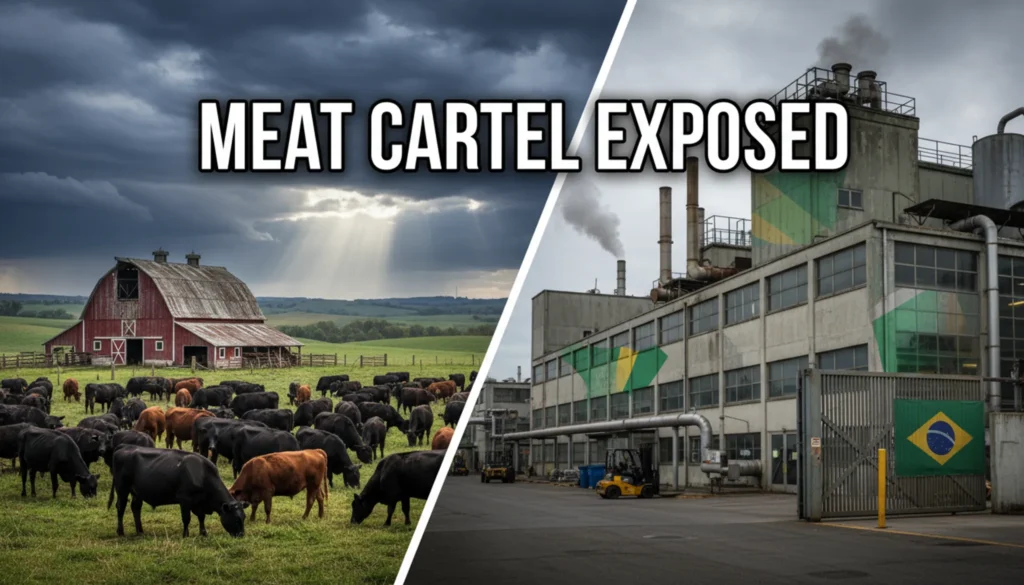
‘ve spent years investigating corporate corruption, but nothing prepared me for what President Trump’s latest crackdown reveals about America’s meat industry. On November 7th, the Trump administration launched a Department of Justice investigation that exposes a shocking truth: foreign-owned cartels have systematically destroyed American agriculture while robbing families at the grocery store.
The numbers don’t lie, and they should terrify every American who believes in food security and economic independence. Four companies—two of them foreign-controlled—now dominate 85% of our beef processing market. That’s not free market capitalism; that’s cartel-style monopolization that would make Venezuelan socialists proud.
The Brazilian Takeover Nobody Talks About
Here’s what the mainstream media won’t tell you: JBS, the world’s largest meat packer, is a Brazilian company that has systematically infiltrated and dominated American food production. This isn’t just about business competition—it’s about foreign economic warfare disguised as corporate consolidation.
Support Independent Local Journalism
TheTownHall.News is a non-profit reader-supported journalism. Just $5 helps us hire local reporters, investigate important issues, and hold public officials accountable across Alameda County. If you believe our community deserves strong, independent journalism, please consider donating $5 today to support our work.In 1980, American beef processing was competitive and decentralized, with the top four companies controlling just 36% of the market. Today, that same concentration has skyrocketed to 85%, with Brazilian-owned JBS leading the charge alongside Cargill, Tyson Foods, and National Beef. This represents the largest foreign takeover of American food production in our nation’s history.
The Trump administration’s investigation targets these “Big Four” for potential collusion, price fixing, and price manipulation—crimes that have devastated American ranchers while enriching foreign shareholders. Every dollar these cartels steal from American consumers flows directly to Brazil and other foreign interests that couldn’t care less about American families struggling to afford groceries.
The Systematic Destruction of American Agriculture
The data reveals a coordinated assault on American agriculture that spans decades. In the 1980s, the top four packers purchased one-third of all fed cattle. By the mid-1990s, that share had exploded to over 80% and continues growing today. This isn’t market evolution—it’s systematic monopolization designed to crush American ranchers.
Consider the devastating impact on American cattle producers:
- Reduced Competition: With only four buyers for most cattle, ranchers have no leverage in price negotiations
- Artificially Suppressed Prices: Monopoly buyers can dictate below-market rates to desperate sellers
- Herd Size Reduction: Unprofitable ranching forces producers to reduce cattle numbers
- Rural Economic Collapse: Family ranches that sustained rural communities for generations face bankruptcy
Meanwhile, these same cartels jack up consumer prices at the grocery store, creating massive profit margins that flow to foreign shareholders rather than American communities. They’re literally robbing both ends of the supply chain while destroying the middle.
The Foreign Influence Operation
What makes this crisis particularly dangerous is the foreign control element. JBS isn’t just any multinational corporation—it’s a Brazilian company with deep ties to corrupt South American political networks. In 2017, JBS executives admitted to bribing over 1,800 politicians across multiple countries, including massive corruption schemes in Brazil.
Now this same corrupt enterprise controls a significant portion of America’s meat supply, giving foreign interests unprecedented leverage over American food security. When Brazilian executives can manipulate American meat prices to benefit foreign shareholders, we’ve surrendered a critical element of national sovereignty.
The Trump administration’s investigation recognizes this threat to American independence. By targeting potential collusion and price manipulation, federal prosecutors can expose how foreign cartels have weaponized market concentration against American interests.
The Price Manipulation Scheme Exposed
Industry insiders have long suspected coordinated pricing schemes among the Big Four meat packers, but the Trump investigation will finally expose their methods. Evidence suggests these cartels use several tactics to artificially manipulate markets:
Support Independent Local Journalism
TheTownHall.News is a non-profit reader-supported journalism. Just $5 helps us hire local reporters, investigate important issues, and hold public officials accountable across Alameda County. If you believe our community deserves strong, independent journalism, please consider donating $5 today to support our work.Capacity Restrictions: Deliberately limiting processing capacity to create artificial scarcity and drive up prices
Information Sharing: Coordinating production schedules and pricing strategies through industry associations
Synchronized Shutdowns: Using “maintenance” or “safety” closures to manipulate supply and demand
Vertical Integration: Controlling multiple stages of production to eliminate competition
Each of these tactics violates federal antitrust laws, but previous administrations lacked the political will to challenge powerful agribusiness interests. President Trump’s investigation represents the first serious attempt to hold these cartels accountable for their crimes against American consumers and producers.
Rural America Under Siege
The human cost of this foreign cartel domination extends far beyond grocery store prices. Rural American communities built around cattle ranching have watched their economic foundations crumble as family operations become unprofitable under cartel pricing schemes.
Consider the ripple effects:
- Bank Failures: Rural banks collapse when ranching loans default
- Population Decline: Young people flee rural areas with no economic opportunities
- Infrastructure Decay: Reduced tax bases can’t maintain roads, schools, or hospitals
- Cultural Destruction: Generational ranching traditions disappear with family operations
This represents nothing less than the systematic destruction of rural American culture and economic independence. Foreign cartels aren’t just stealing profits—they’re destroying the communities that have fed America for generations.
The National Security Dimension
Food security is national security, and foreign control of our meat supply represents a critical vulnerability that hostile nations could exploit. During the COVID-19 pandemic, meat processing disruptions caused nationwide shortages and price spikes, revealing how concentrated control creates systemic risks.
Imagine if Brazilian-controlled JBS decided to halt American operations during a international crisis. Or if Chinese-influenced cartels manipulated food supplies to pressure American foreign policy decisions. The Trump investigation recognizes that allowing foreign cartels to dominate critical food infrastructure threatens American sovereignty.
Conservative Solutions Under Attack
President Trump’s antitrust investigation represents exactly the kind of principled conservative action that protects American interests against foreign manipulation. Yet progressive politicians and their corporate donors will likely oppose meaningful reform because it threatens their globalist agenda.
True conservative solutions must include:
Antitrust Enforcement: Breaking up foreign-dominated cartels to restore competition
American Ownership Requirements: Preventing foreign control of critical food infrastructure
Regional Processing Support: Investing in smaller, American-owned processing facilities
Rural Economic Development: Protecting family ranching operations through fair market access
Supply Chain Independence: Reducing dependence on foreign-controlled food systems
The Stakes Couldn’t Be Higher
The Trump administration’s investigation into meat packing cartels represents more than antitrust enforcement—it’s a battle for American economic independence and food security. Every dollar these foreign cartels steal from American ranchers and consumers represents wealth transferred from American communities to foreign shareholders.
The data is overwhelming: market concentration has destroyed competition, crushed American producers, and enriched foreign interests at the expense of American families. President Trump’s DOJ investigation finally provides the tools to expose and prosecute these crimes against American agriculture.
But investigations alone won’t solve the problem. Americans must demand that their representatives support aggressive antitrust enforcement, foreign ownership restrictions, and policies that prioritize American farmers over foreign cartels.
The choice is clear: we can continue allowing Brazilian executives to manipulate American food prices, or we can reclaim control of our food system and restore prosperity to rural America. President Trump has chosen to fight for American interests. The question is whether Congress and the American people will join that fight.
Our food security, rural communities, and economic independence hang in the balance. The foreign meat cartels have had their way for too long—it’s time to put America first.