Is Trump Crazy to Threaten Tariffs Over Greenland? Here’s What They’re Not Telling You
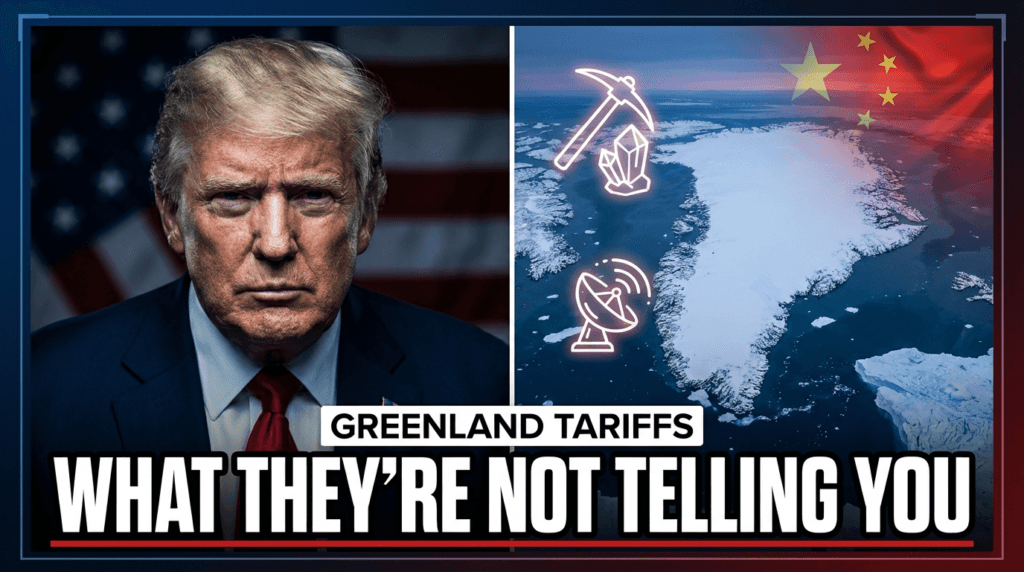
When Strength Looks Like Provocation
President Donald Trump’s announcement that he may impose tariffs on nations opposing U.S. control of Greenland has sparked predictable outrage from European capitals and the mainstream media. Critics are calling it “imperialistic,” “dangerous,” and even “the dumbest thing” they’ve ever heard. But beneath the headlines and hyperbole lies a fundamental question that conservatives understand instinctively: Should America apologize for protecting its national interests, or should we lead with the strength that has kept our nation secure for generations?
The answer is clear. Trump’s willingness to use economic leverage—specifically tariffs—to advance America’s strategic position in Greenland isn’t reckless saber-rattling. It’s precisely the kind of bold, America-first leadership that voters elected him to provide. While establishment politicians wring their hands about offending allies who often fail to meet their own defense commitments, Trump is focused on the hard realities of 21st-century geopolitics: Chinese expansionism, Arctic militarization, and the critical resources that will define economic and military power for decades to come.
The Strategic Imperative: Why Greenland Matters
Arctic Defense and Missile Detection
Greenland isn’t just a massive ice sheet—it’s America’s northern shield. Since 1951, the United States has maintained a military presence there through a defense agreement with Denmark. Today, Pituffik Space Base (formerly Thule Air Base) serves as the Department of Defense’s northernmost installation, housing critical early-warning radar systems that detect incoming missiles and track satellites.
Support Independent Local Journalism
TheTownHall.News is a non-profit reader-supported journalism. Just $5 helps us hire local reporters, investigate important issues, and hold public officials accountable across Alameda County. If you believe our community deserves strong, independent journalism, please consider donating $5 today to support our work.Located on Greenland’s northwest coast, Pituffik plays an indispensable role in America’s continental defense posture and NATO’s deterrence strategy. As Russia and China expand their Arctic military capabilities—building icebreakers, establishing bases, and testing hypersonic weapons—Greenland’s geographic position becomes even more vital. Control of Greenland means control of key shipping routes, airspace, and surveillance capabilities that no amount of technology can replicate from distant bases.
This isn’t theoretical. During the Cold War, Thule Air Base housed bombers, fighters, and nuclear missiles as part of America’s nuclear deterrent. The threats have evolved, but the strategic calculus hasn’t changed: whoever controls Greenland holds enormous leverage over North American security and Arctic dominance.
The Rare Earth Minerals China Covets
Beyond military positioning, Greenland possesses something even more valuable in the modern economy: vast reserves of rare earth elements and critical minerals. According to the Center for Strategic and International Studies, Greenland contains substantial deposits of rare earths, uranium, graphite, tungsten, palladium, zinc, gold, copper, and oil.
These aren’t luxury commodities—they’re the building blocks of everything from smartphones and electric vehicles to advanced weapons systems and renewable energy infrastructure. And here’s the problem: China currently dominates global rare earth production, controlling approximately 70% of mining and 90% of processing capacity. This gives Beijing enormous leverage over Western economies and defense industries.
Greenland represents one of the world’s largest untapped sources of these critical materials. Yet Chinese-backed companies have already shown interest in Greenlandic mining projects, threatening to consolidate China’s rare earth dominance even further. Allowing Beijing to gain economic control over Greenland’s resources while America stands by would be a catastrophic failure of strategic foresight—exactly the kind of weakness that emboldens adversaries.
The Tariff Tool: Economic Leverage in Service of Security
Why Tariffs Make Sense
Trump’s suggestion to use tariffs against nations opposing U.S. control of Greenland isn’t economic warfare—it’s smart statecraft. Tariffs are a legitimate policy tool that every nation uses to protect strategic interests. The question isn’t whether to use economic leverage, but whether to use it effectively or surrender that power to competitors who won’t hesitate to use theirs.
Consider the alternative: polite diplomacy that goes nowhere while China expands its influence, Russia militarizes the Arctic, and America’s allies free-ride on our security guarantees without contributing meaningfully to collective defense. That’s been the status quo for decades, and it has left America vulnerable, dependent on adversaries for critical resources, and footing the bill for European defense while being lectured about “international norms.”
Trump’s approach represents a refreshing departure from this failed consensus. By threatening tariffs, he’s signaling that America will use every tool in our economic arsenal to secure our national interests. This isn’t about bullying allies—it’s about recognizing that in a world where China weaponizes trade and Russia uses energy as coercion, America must be willing to leverage our economic power for strategic ends.
Fiscal Responsibility Through Strength
From a conservative fiscal perspective, Trump’s strategy also makes sense. American taxpayers have subsidized European defense for 75 years through NATO, spending trillions to protect allies who often fail to meet even the modest 2% GDP defense spending target. Meanwhile, those same allies lecture America about international law while benefiting from the security umbrella we provide.
Support Independent Local Journalism
TheTownHall.News is a non-profit reader-supported journalism. Just $5 helps us hire local reporters, investigate important issues, and hold public officials accountable across Alameda County. If you believe our community deserves strong, independent journalism, please consider donating $5 today to support our work.Securing greater control or influence over Greenland—whether through purchase, partnership, or enhanced defense agreements—would strengthen America’s strategic position without requiring massive new defense expenditures in vulnerable areas. It’s a force multiplier that reduces long-term costs while enhancing capabilities. And if tariffs can help achieve that goal while also addressing trade imbalances with countries that have long taken advantage of American markets, that’s sound fiscal policy serving national security.
Addressing the Critics: Sovereignty and Self-Determination
Respecting Greenland’s Voice
Critics argue that Trump’s approach disrespects Greenlandic sovereignty and self-determination. Greenland’s Prime Minister has stated clearly that Greenlanders “choose Denmark” and that the island is not for sale. These concerns deserve serious consideration—but they don’t end the conversation.
First, Greenland is not a fully independent nation. It remains part of the Kingdom of Denmark, with Copenhagen controlling foreign affairs and defense policy. While Greenland has significant autonomy, ultimate sovereignty rests with Denmark, not Greenlanders themselves. The question of Greenland’s future status is therefore legitimately a matter for negotiation between governments.
Second, self-determination is a principle conservatives strongly support—but it must be genuine. If Greenland truly seeks independence from Denmark, as many Greenlanders desire, then the United States can be a partner in that transition. American investment, security guarantees, and economic development could provide Greenland with viable independence that Denmark alone cannot offer. The alternative—remaining dependent on Denmark or falling into China’s economic orbit—may not serve Greenlandic interests any better than partnership with America.
Third, the United States has a long history of peaceful territorial expansion through purchase and negotiation—from the Louisiana Purchase to Alaska. These acquisitions strengthened America while providing economic benefits to the sellers and new opportunities for residents. There’s nothing inherently imperialistic about negotiating territorial arrangements when all parties benefit.
The Bigger Picture: American Leadership in a Dangerous World
Rejecting Weakness Disguised as Diplomacy
The establishment’s reaction to Trump’s Greenland strategy reveals everything wrong with conventional foreign policy thinking. For decades, American leaders have prioritized maintaining pleasant relationships over securing concrete national interests. They’ve confused niceness with effectiveness and mistaken restraint for wisdom.
This approach has failed spectacularly. While America played by rules that adversaries ignored, China built artificial islands in international waters, Russia annexed Crimea, and Iran spread terrorism across the Middle East. American restraint didn’t earn respect—it invited aggression.
Trump’s willingness to pursue American interests unapologetically represents a necessary correction. It recognizes that in a world of great power competition, strength and clarity are more valuable than consensus and accommodation. Our allies may complain, but they’ll adjust—just as they adjusted when Trump demanded they pay their fair share for NATO defense, resulting in billions in increased European defense spending.
Law, Order, and International Stability
Conservatives understand that true international stability comes not from endless negotiation and appeasement, but from clear rules backed by the willingness to enforce them. When America projects strength and defends its interests decisively, the world becomes more orderly, not less.
A strong American position in Greenland would enhance stability in the Arctic by preventing the region from becoming a contested gray zone where Chinese and Russian influence grows unchecked. It would secure critical supply chains that our economy and military depend on. And it would demonstrate to allies and adversaries alike that America remains committed to defending its interests and those of its partners.
Conclusion: Strength Over Sentiment
President Trump’s tariff strategy regarding Greenland will be judged not by the diplomatic niceties it violates, but by whether it secures American interests in an increasingly dangerous world. History suggests it will.
The critics calling this approach reckless are often the same voices who assured us that accommodating China would make it more democratic, that Russia could be reset, and that leading from behind would earn America global respect. They were wrong then, and they’re wrong now.
Conservatives understand that protecting American security, prosperity, and sovereignty sometimes requires bold action that makes comfortable elites uncomfortable. We understand that fiscal responsibility means using leverage wisely rather than spending endlessly to compensate for strategic weakness. And we understand that true leadership means making difficult decisions that serve the national interest, even when they provoke criticism.
Trump’s Greenland strategy embodies these principles. It recognizes that in the 21st century, control of strategic territories, critical resources, and key military positions will determine which nations thrive and which decline. It refuses to apologize for pursuing American interests with the full range of tools at our disposal. And it demonstrates the kind of strength-based leadership that has made America exceptional throughout our history.
Call to Action: Stay Informed and Engaged
The debate over Greenland and American strategic interests is just beginning. As this story develops, it’s crucial that informed citizens understand what’s really at stake—beyond the mainstream media’s reflexive criticism of anything Trump does.
Here’s how you can stay engaged:
- Share this article with friends and family who need the full context behind the headlines
- Follow developments in Arctic security and Chinese influence operations that threaten American interests
- Contact your representatives and urge them to support strong American leadership in strategic regions
- Educate yourself about critical mineral supply chains and why resource security matters for national defense
- Reject the narrative that American strength equals aggression—our security depends on leadership, not apology
The question isn’t whether America should pursue its interests in Greenland. The question is whether we’ll do so with the strength and clarity that the moment demands, or whether we’ll retreat into the failed consensus that has weakened our position for decades. President Trump has chosen strength. It’s time for Americans who value security, prosperity, and sovereignty to stand with him.