Kevin Warsh Fed Chair Nomination: A Return to Fiscal Discipline and Accountability
A Pivotal Moment for American Monetary Policy
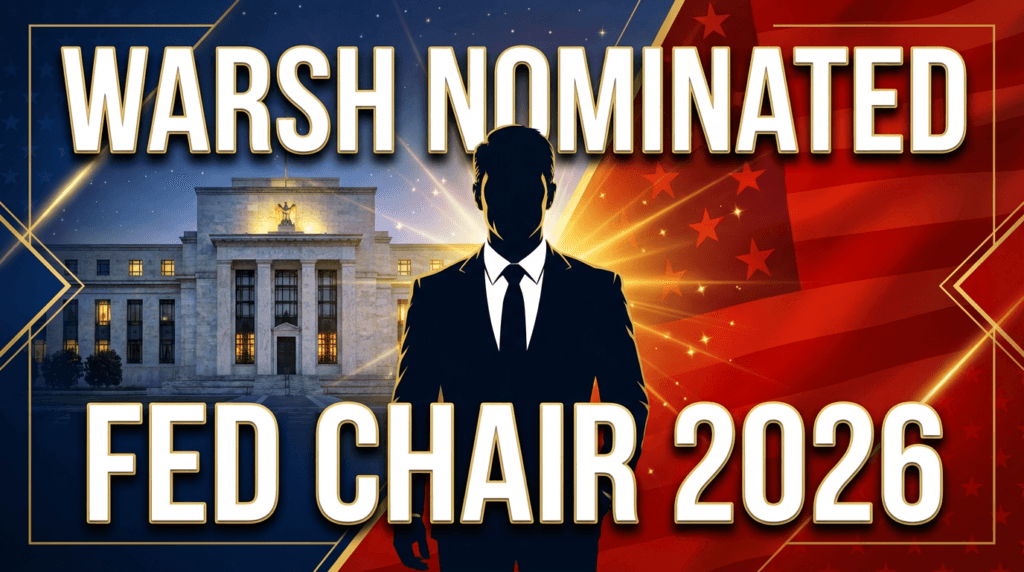
On January 30, 2026, President Donald Trump announced his nomination of Kevin Warsh to lead the Federal Reserve, marking what could be the most consequential shift in American monetary policy in decades. For conservatives who have watched with growing concern as the Federal Reserve expanded its role beyond its constitutional boundaries, Warsh’s nomination represents more than a personnel change—it signals a potential return to the principles of limited government, fiscal accountability, and sound money that built American prosperity.
At 55, Warsh brings battle-tested experience from the 2008 financial crisis, a distinguished academic career at Stanford’s Hoover Institution, and a track record that suggests he understands what many Americans instinctively know: the Federal Reserve has strayed too far from its core mission. As inflation continues to erode family purchasing power and government spending spirals out of control, the question isn’t whether change is needed at the Fed—it’s whether we have the courage to demand it.
The Case for Kevin Warsh: Experience Meets Principle
A Proven Crisis Manager
Kevin Warsh isn’t a theoretical economist detached from reality. He served as a Federal Reserve Governor from 2006 to 2011, navigating the treacherous waters of the 2008 financial crisis as the central bank’s primary liaison to Wall Street. During those critical years, Warsh worked alongside then-Chairman Ben Bernanke to prevent a complete collapse of the financial system—experience that cannot be taught in any classroom.
Support Independent Local Journalism
TheTownHall.News is a non-profit reader-supported journalism. Just $5 helps us hire local reporters, investigate important issues, and hold public officials accountable across Alameda County. If you believe our community deserves strong, independent journalism, please consider donating $5 today to support our work.His background combines practical Wall Street experience from Morgan Stanley’s mergers and acquisitions department with policy expertise gained in President George W. Bush’s White House. This blend of private sector knowledge and public service gives Warsh a rare perspective: he understands how markets actually work, not just how they function in academic models.
Since leaving the Fed in 2011, Warsh has served as the Shepard Family Distinguished Visiting Fellow in Economics at Stanford’s Hoover Institution, where he has conducted extensive research on monetary policy, financial regulation, and economic growth. His 2014 report to the Bank of England on transparency and accountability in central banking became a blueprint for reform—demonstrating his commitment to making these powerful institutions answerable to the people they serve.
A Philosophy Rooted in Accountability
What sets Warsh apart isn’t just his résumé—it’s his philosophy. Throughout his career, he has consistently argued that the Federal Reserve must return to its core mission: maintaining price stability and maximizing employment, the so-called “dual mandate” established by Congress in 1977. This isn’t a radical position; it’s a conservative one that recognizes the proper limits of government power.
In a revealing speech at the Hoover Institution titled “Inflation Is A Choice,” Warsh articulated what many Americans have felt but few policymakers have acknowledged: that the Fed has lost its way by expanding into areas far beyond its constitutional authority. He has criticized the central bank for mission creep, arguing that when the Fed involves itself in climate policy, social justice initiatives, and other political causes, it undermines its credibility on the core functions that actually matter to working families.

This commitment to institutional restraint aligns perfectly with conservative principles of limited government. The Federal Reserve should not be an unaccountable fourth branch of government pursuing progressive social agendas. It should be a focused, disciplined institution that maintains the value of the dollar and creates conditions for sustainable economic growth—nothing more, nothing less.
The Jerome Powell Problem: Why Change Was Necessary
To understand why Warsh’s nomination matters, we must first understand why Jerome Powell’s tenure has been so problematic from a conservative perspective.
The Independence Myth
Powell and his defenders have wrapped themselves in the banner of “Federal Reserve independence,” arguing that any criticism from elected officials threatens this sacred principle. But this argument fundamentally misunderstands both the Constitution and the proper role of democratic accountability.
The Federal Reserve was created by Congress and derives its authority from Congress. The American people, through their elected representatives, have every right to expect the Fed to serve the public interest—not the interests of Wall Street banks or progressive activists. When Powell kept interest rates too low for too long, fueling the inflation that has devastated family budgets, he wasn’t exercising independence—he was exercising poor judgment. And when he resisted calls to correct course more quickly, he wasn’t defending institutional integrity—he was defending his own mistakes.
True independence means independence from political pressure to make bad decisions. It doesn’t mean independence from accountability when those decisions harm millions of Americans.
Support Independent Local Journalism
TheTownHall.News is a non-profit reader-supported journalism. Just $5 helps us hire local reporters, investigate important issues, and hold public officials accountable across Alameda County. If you believe our community deserves strong, independent journalism, please consider donating $5 today to support our work.The Inflation Tax on Working Families
Powell’s Federal Reserve kept interest rates near zero for years, even as warning signs of inflation multiplied. The result? The worst inflation in four decades, with prices rising more than 20% cumulatively since 2020. This inflation acted as a hidden tax on every American family, eroding savings, reducing real wages, and making it harder for young people to buy homes or start families.
For conservatives who believe in personal responsibility and limited government, this failure is particularly galling. The Fed’s loose monetary policy enabled Congress to spend trillions of dollars without immediate consequences, fueling a dangerous expansion of government that threatens our children’s future. When money is cheap, fiscal discipline disappears—and we’re now living with the consequences.
What Warsh Means for America’s Economic Future
A Return to Sound Money Principles
Warsh’s nomination signals a potential return to sound money principles that conservatives have championed for generations. While his views on monetary policy have evolved—he was historically more hawkish on inflation but has recently argued for a more nuanced approach—his core commitment to price stability remains unwavering.
Importantly, Warsh understands that low interest rates aren’t inherently good or bad—they’re a tool that must be used wisely. Unlike Powell, who seemed wedded to a one-size-fits-all approach, Warsh has argued that monetary policy must adapt to changing economic conditions. In recent speeches, he has suggested that productivity-driven growth can coexist with lower rates without triggering inflation—a sophisticated understanding that recognizes how technology and innovation are transforming the economy.
This isn’t about blindly cutting rates to goose short-term growth. It’s about recognizing that the economy has changed and that the Fed’s models must change with it. For a central bank that has too often fought the last war, this adaptability could be revolutionary.
Transparency and Institutional Reform
Perhaps Warsh’s most important contribution could be bringing genuine transparency to the Federal Reserve. In his report to the Bank of England, Warsh argued that central banks must be more open about their decision-making processes, more accountable to the public, and more humble about the limits of their knowledge.
This commitment to transparency aligns with conservative principles of open government and institutional accountability. Americans deserve to know how the Fed makes decisions that affect their daily lives. They deserve to understand why interest rates rise or fall, how monetary policy impacts their savings and investments, and what trade-offs the central bank is making on their behalf.
Current proposals before Congress, including the Federal Reserve Transparency Act and the Federal Reserve Financial Accountability and Transparency Act, would increase oversight of the Fed’s operations. Warsh’s nomination suggests the Trump administration is serious about supporting these reforms—a welcome development for those who believe that sunlight is the best disinfectant.
Restraining Mission Creep
One of Warsh’s most important potential contributions is restraining the Fed’s tendency toward mission creep. In recent years, the Federal Reserve has increasingly involved itself in issues far beyond its mandate: climate change, racial equity, income inequality, and other politically charged topics.
While these issues may be important, they are not the Fed’s job. When the central bank ventures into these areas, it politicizes an institution that should be focused solely on its core economic mission. It also opens the door for future Fed chairs to pursue their own political agendas, undermining the very independence that Powell claims to defend.
Warsh has consistently argued that the Fed must stay in its lane. This disciplined approach recognizes that government works best when each institution focuses on its specific constitutional role—a fundamentally conservative principle that has been forgotten in an age of expansive government power.
Addressing the Critics
The “Trump’s Puppet” Narrative
Critics will inevitably claim that Warsh is simply Trump’s puppet, chosen to do the president’s bidding on interest rates. This narrative is both predictable and wrong.
Warsh’s record shows an independent thinker who has evolved his views based on evidence and analysis. During his time at the Fed, he never dissented from a single FOMC decision—not because he was a yes-man, but because he worked within the institution to build consensus. His recent shift toward supporting lower rates came not from political pressure but from a thoughtful analysis of how productivity growth and technological change are affecting the inflation dynamics.
Moreover, the idea that Trump would nominate someone who will simply rubber-stamp his preferences ignores the reality of how the Federal Reserve operates. The Fed Chair cannot unilaterally set policy—decisions are made by the Federal Open Market Committee, which includes regional Fed presidents and other governors. Even if Warsh wanted to simply do Trump’s bidding (and there’s no evidence he does), he couldn’t.
The Wall Street Connection
Some critics will point to Warsh’s Wall Street background and his family connections (he is married to Jane Lauder, heiress to the Estée Lauder fortune) as evidence that he will favor the wealthy over working Americans. This criticism misunderstands both Warsh’s record and the nature of sound monetary policy.
First, Warsh’s experience in financial markets is an asset, not a liability. Understanding how markets work is essential for anyone leading the Federal Reserve. The 2008 crisis demonstrated what happens when policymakers don’t understand the complex interconnections of modern finance.
Second, sound monetary policy benefits everyone, not just the wealthy. Stable prices protect the purchasing power of workers’ wages. Sustainable economic growth creates jobs and opportunities. A well-functioning financial system channels savings into productive investments that raise living standards. These aren’t Wall Street priorities—they’re Main Street necessities.
Finally, it’s worth noting that the current Fed leadership hasn’t exactly served working families well. Powell’s delayed response to inflation hurt ordinary Americans far more than it hurt wealthy investors with diversified portfolios. The question isn’t whether someone has Wall Street experience—it’s whether they have the judgment to make good decisions for all Americans.
The Path Forward: What Conservatives Should Demand
Warsh’s nomination is an opportunity, not a guarantee. Conservatives should support his confirmation while making clear what we expect from the next Fed Chair.
Restore Fiscal Discipline
The Federal Reserve cannot and should not enable endless government spending. By keeping interest rates artificially low, the Fed has made it too easy for Congress to borrow and spend without facing the consequences. Warsh must be willing to let interest rates reflect the true cost of capital, even if that makes it harder for politicians to finance their pet projects.
This doesn’t mean deliberately sabotaging the economy or causing unnecessary pain. It means honest monetary policy that recognizes trade-offs and refuses to paper over the consequences of fiscal irresponsibility.
Defend the Dollar’s Value
The U.S. dollar’s status as the world’s reserve currency is a precious asset that has served American interests for decades. But that status isn’t guaranteed—it must be earned through sound monetary policy that maintains the dollar’s value. Warsh must make clear that the Fed’s primary job is protecting the dollar’s purchasing power, both at home and abroad.
Reject Political Pressure from All Sides
Conservatives should expect Warsh to resist political pressure—including pressure from President Trump. The Fed Chair’s job is to make the right decisions for the American economy, not to serve any president’s short-term political interests. This is what genuine independence looks like, and it’s what the country needs.
Embrace Transparency
Warsh should follow through on his commitment to transparency by making the Fed’s decision-making processes more open and understandable. This includes supporting congressional efforts to audit the Fed’s operations, publishing more detailed explanations of policy decisions, and engaging with critics rather than dismissing them.
Conclusion: A Chance to Restore Sound Money
Kevin Warsh’s nomination as Federal Reserve Chair represents more than a change in leadership—it represents a potential inflection point in American monetary policy. For too long, the Fed has operated as an unaccountable technocracy, pursuing progressive social agendas while failing at its core economic mission. For too long, loose monetary policy has enabled fiscal irresponsibility and punished savers while enriching speculators.
Warsh brings the experience, intelligence, and philosophical grounding to change this trajectory. His commitment to institutional restraint, fiscal accountability, and sound money principles aligns with the conservative values that have always been essential to American prosperity. His understanding of both markets and policy gives him the tools to navigate the complex challenges ahead.
But nomination is not confirmation, and confirmation is not performance. Conservatives must remain vigilant, holding Warsh accountable to the principles he has articulated and the promises he will make during his confirmation hearings. We must demand a Federal Reserve that serves the American people—all of them—rather than Wall Street banks or progressive activists.
The stakes could not be higher. The Federal Reserve’s decisions affect every American’s daily life, from the price of groceries to the cost of a mortgage to the value of retirement savings. Getting monetary policy right is essential not just for economic prosperity but for preserving the personal responsibility, family stability, and opportunity that make America exceptional.
Kevin Warsh has the credentials and the philosophy to be a transformative Fed Chair. Now he must prove he has the courage to implement the reforms that America needs. The question for conservatives is simple: Will we demand nothing less?
Call to Action
The Senate confirmation process for Kevin Warsh will be crucial. This is your opportunity to make your voice heard:
Contact Your Senators: Call or email your senators to express your support for Warsh’s nomination and your expectations for his leadership. Demand that they ask tough questions during confirmation hearings about transparency, accountability, and the Fed’s proper role.
Stay Informed: Follow the confirmation process closely. Read Warsh’s testimony, watch the hearings, and hold him accountable to the principles he articulates.
Share This Article: Help spread the word about what’s at stake in this nomination. Share this article with friends, family, and fellow conservatives who care about sound money and limited government.
Get Involved: Support organizations and elected officials who are fighting for Federal Reserve reform, transparency, and accountability. The fight for sound monetary policy doesn’t end with one nomination—it requires sustained engagement from informed citizens.
The Federal Reserve has operated in the shadows for too long, making decisions that affect millions of lives without adequate accountability. Kevin Warsh’s nomination is a chance to change that. Don’t let it slip away.
The future of American monetary policy hangs in the balance. Will we return to the sound money principles that built prosperity, or continue down the path of inflation, debt, and institutional overreach? The choice is ours—but only if we make our voices heard.