Minneapolis ICE Shooting: What We Know About Renee Nicole Good, the Agent, and Rising Vehicle Attacks on Law Enforcement
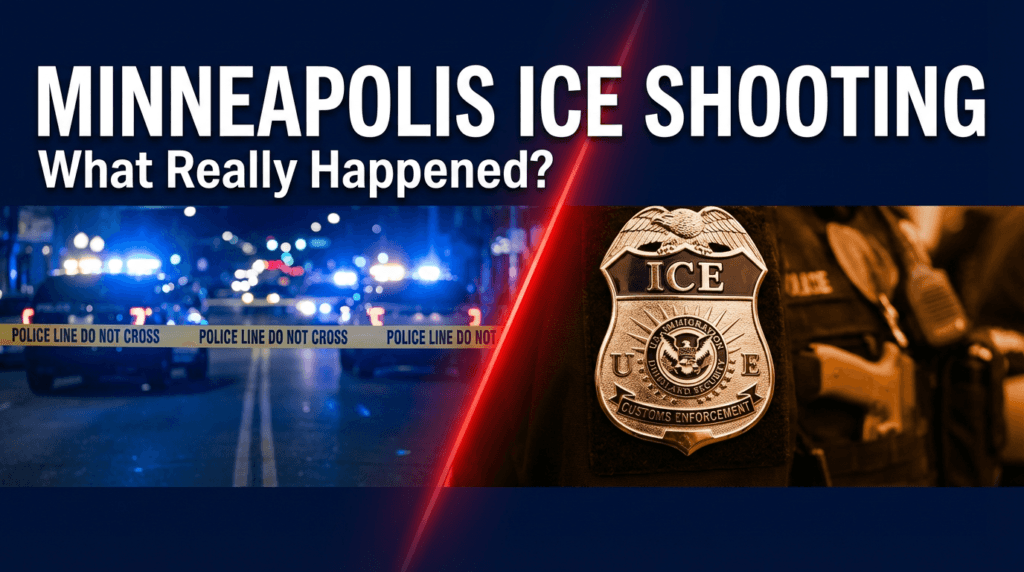
The fatal shooting of 37-year-old Renee Nicole Good by an Immigration and Customs Enforcement agent in Minneapolis on January 7, 2026, has become a flashpoint in national debates over immigration enforcement and the use of lethal force. As investigations continue, new details have emerged about Good’s involvement in anti-ICE activism, the agent’s prior experience with vehicle attacks, and a dramatic nationwide surge in assaults against federal immigration officers.
The incident occurred during what federal officials describe as the largest immigration operation in U.S. history, with approximately 2,000 federal agents deployed to the Minneapolis area. Good, who was not a target of immigration enforcement, died after an ICE agent fired three shots during a confrontation involving her vehicle.
Who Was Renee Nicole Good?
Renee Nicole Good moved to Minneapolis in 2025 with her wife, Rebecca, and their 6-year-old son after leaving Kansas City, Missouri. According to her mother, Donna Ganger, Good was “extremely compassionate” and devoted to caring for others throughout her life.
Support Independent Local Journalism
TheTownHall.News is a non-profit reader-supported journalism. Just $5 helps us hire local reporters, investigate important issues, and hold public officials accountable across Alameda County. If you believe our community deserves strong, independent journalism, please consider donating $5 today to support our work.Good was a poet and writer who graduated from Old Dominion University in December 2020 with a degree in English. She won the 2020 ODU College Poetry Prize for her work and had been published in literary journals. On her Instagram account, she described herself as a “poet and writer and wife and mom.”
Anti-ICE Activism
According to multiple reports, Good became involved with anti-ICE activism through her son’s charter school, Southside Family Charter, a K-5 academy that states on its website its mission includes “engaging children in critical thinking and problem solving” and “involving children in political and social activism.”
Through the school community, Good became active with “ICE Watch,” a loose coalition of activists dedicated to monitoring and disrupting ICE operations in Minneapolis, a sanctuary city for illegal immigrants. Similar coalitions have emerged across the country, with activists using phone apps, whistles, and car horns to warn neighborhoods when ICE agents arrive.
“[Renee Good] was trained against these ICE agents — what to do, what not to do, it’s a very thorough training,” a fellow parent named Leesa told the New York Post. “To listen to commands, to know your rights, to whistle when you see an ICE agent.”
Leesa described Good as a “warrior” who “died doing what was right,” adding that she believed Good was following her training during the encounter.
Good’s wife, Rebecca, was reportedly confronting ICE agents outside the vehicle at the time of the shooting. According to witnesses, after the shots were fired, Rebecca was filmed saying “it’s my fault” and “I made her come down here,” her face covered in blood after rushing to her partner’s aid.
Good’s mother, however, told The Minnesota Star Tribune that her daughter was not involved in protests against ICE agents and was “probably terrified” during the incident.
The Agent: Jonathan Ross and a History of Vehicle Attacks
The ICE agent involved in the shooting has been identified in multiple reports as Jonathan Ross, an Enforcement and Removal Operations officer. Ross was not wearing a body camera at the time of the incident, as ICE has been gradually rolling out body-worn cameras nationwide, but the team involved in this operation was not equipped with them.
Previous Vehicle Attack
In a detail that provides crucial context to the shooting, Ross was the victim of a serious vehicle attack just seven months earlier. On June 17, 2025, in Bloomington, Minnesota, Ross attempted to detain Roberto Carlos Munoz, a 40-year-old foreign national and convicted sex offender, on an immigration order.
Support Independent Local Journalism
TheTownHall.News is a non-profit reader-supported journalism. Just $5 helps us hire local reporters, investigate important issues, and hold public officials accountable across Alameda County. If you believe our community deserves strong, independent journalism, please consider donating $5 today to support our work.According to federal court records, when Ross broke the rear window of Munoz’s vehicle and tried to unlock it from inside, Munoz accelerated and sped away while Ross’s arm was trapped inside the car. The Department of Justice stated that Munoz “dragged the federal agent for more than 100 yards, while weaving back and forth in an attempt to shake the agent from the car.”
Ross suffered severe injuries requiring 20 stitches to his right arm and 13 stitches to his left hand. Court photographs showed a long, deep, jagged cut on his arm. Munoz was convicted in December 2025 of assault on a federal officer with a dangerous and deadly weapon and causing bodily injury.
This prior experience with a vehicle being used as a weapon against him provides important context for understanding Ross’s response during the January 7 incident with Good.
What Happened: The Shooting
The shooting occurred in a residential area of Minneapolis’s Central neighborhood just after 9:30 am on January 7. According to the Department of Homeland Security, ICE agents were conducting enforcement operations when one of their vehicles became stuck in the snow. As agents worked to free the vehicle, they encountered what DHS Secretary Kristi Noem described as a group of agitators who harassed and blocked them.
Federal Account
According to Noem, agents approached Good’s vehicle after she repeatedly blocked officers and impeded their work. Noem said ICE agents ordered Good to exit her vehicle and stop obstructing law enforcement, but she refused to comply.
“She then proceeded to weaponize her vehicle,” Noem said, adding that Good attempted to run over an officer. According to the federal account and corroborated by an independent video, the officer was struck by the vehicle, prompting him to fire in self-defense. The officer was transported to a hospital, treated, and released.
Noem characterized the incident as an act of domestic terrorism and said it was part of a pattern of escalating violence against federal officers.
Video Evidence
Video footage verified by Reuters shows a more complex sequence of events. The video shows Good’s maroon Honda SUV blocking a residential street. Good appears to gesture to an approaching ICE pickup truck to confront her. The truck stops, and two officers exit and approach Good’s vehicle on foot. From the video, Good seemed verbally combative to the approaching officers.
When one officer orders Good out of the SUV and grabs the door handle, the vehicle reverses to the left. A third agent who was standing by the passenger side is now positioned in front of the vehicle. The agent identified the danger from a previous incidnet attempted to get out of her way. Good then advances, steering to the right stricking the officer.
The critical moments remain subject to interpretation. It remains unclear from the video whether the vehicle made contact with the officer, and if so, how forceful that contact was. After the shots, Good’s car accelerated and crashed into parked cars and a utility pole. Good was struck in the head and pronounced dead at the scene.
The Broader Context: Surge in Vehicle Attacks on ICE Officers
The shooting occurred against a backdrop of dramatically increased violence against ICE officers nationwide. On January 8, the Department of Homeland Security released statistics showing unprecedented increases in assaults against federal immigration enforcement:
Alarming Statistics
- 1,347% increase in assaults: From January 20 to December 31, 2025, DHS reported 275 assaults against ICE officers compared to 19 during the same period in 2024.
- 3,200% increase in vehicular attacks: From January 21, 2025, to January 7, 2026, ICE officers experienced 66 vehicular attacks compared to only 2 during the same period the previous year.
- 8,000% increase in death threats: ICE officers faced a massive surge in threats to their lives.
Documented Vehicle Attacks
DHS provided numerous examples of vehicle attacks against ICE officers in 2025, including:
- A suspected Tren de Aragua gang member who rammed a law enforcement vehicle into a tree during a vehicle stop in December 2025.
- Two separate vehicular assaults against ICE officers during Operation Midway Blitz in the Chicago metro area in October 2025.
- An illegal alien who hit an ICE officer with a vehicle in September 2025, nearly crushing the officer.
- The June 2025 attack on Agent Ross, in which he was dragged more than 100 yards.
These statistics provide crucial context for understanding why ICE agents may feel their lives are increasingly at risk during enforcement operations, particularly when vehicles are involved.
Vehicles as Weapons: Legal and Law Enforcement Perspectives
The use of vehicles as weapons against law enforcement has become an increasingly recognized threat in recent years. Law enforcement training typically addresses vehicle threats as potentially deadly force situations.
Legal Standards for Use of Force
Under established use-of-force law, officers are generally justified in using deadly force when they have a reasonable belief that they or others face an imminent threat of death or serious bodily injury. The key legal question in such cases is whether the officer’s belief was objectively reasonable given the totality of circumstances known at the time.
When a vehicle is moving toward an officer, several factors are typically considered:
- The speed and direction of the vehicle
- The officer’s ability to move out of the way
- Whether the vehicle made contact with the officer
- The officer’s prior experiences with similar threats
- Whether alternative responses were available
Courts have recognized that vehicles can constitute deadly weapons when used to strike or attempt to strike officers. However, many police departments have also implemented policies restricting officers from shooting at moving vehicles, recognizing that such shootings are often ineffective and can endanger bystanders.
The “Moving Vehicle” Dilemma
Law enforcement experts note that shootings involving moving vehicles present particularly complex scenarios. An officer positioned in front of a vehicle that begins moving toward them faces a split-second decision: move out of the way, or use deadly force to stop the threat.
Critics argue that officers sometimes create dangerous situations by positioning themselves in front of vehicles, then claim self-defense when the vehicle moves. Supporters counter that officers cannot always predict when a driver will use their vehicle as a weapon, and that the dramatic increase in vehicle attacks documented by DHS shows this is a genuine and growing threat.
Agent Ross’s prior experience of being dragged 100 yards by a vehicle—an incident that left him with serious injuries requiring 33 stitches—would likely factor into any evaluation of whether his belief that he faced a deadly threat was objectively reasonable.
Investigations Underway
Multiple investigations are examining the shooting from different angles:
The FBI is conducting a federal investigation into what DHS characterized as potential domestic terrorism, examining whether Good’s actions constituted an assault on a federal officer.
Minnesota state officials have announced an independent investigation focusing on whether the use of lethal force was justified and whether proper protocols were followed.
The competing narratives—federal claims of self-defense versus local officials’ assertions that video evidence contradicts those claims—ensure that these investigations will face intense scrutiny from all sides.
The Question of Reasonable Belief
At the heart of this case is a legal question that investigators must answer: Did Agent Ross have a reasonable belief that his life was threatened when he fired his weapon?Several factors will likely be considered:In favor of reasonable belief:Ross’s prior experience being dragged 100 yards by a vehicle just seven months earlier, suffering injuries requiring 33 stitchesThe documented 3,200% increase in vehicle attacks against ICE officers nationwideGood’s known involvement with anti-ICE activism and her presence at the scene to monitor and potentially disrupt agent activitiesThe vehicle’s movement toward the officer’s positionIcy road conditions that would have made it difficult or impossible for the officer to quickly move out of the vehicle’s pathIcy conditions that could cause a vehicle to slide unpredictably, making the threat harder to assess and evadeAny contact between the vehicle and the officerThe confined nature of a residential street, with parked cars limiting escape routesAgainst reasonable belief:Video evidence that some officials say shows Good attempting to drive away rather than deliberately attacking the officerAt least one shot was fired after the vehicle’s bumper had passed the officerThe officer remained on his feet throughout the encounter, suggesting that contact (if any) was not forcefulQuestions about whether the officer could have moved out of the way or chose to position himself in the vehicle’s pathIcy conditions could also explain the vehicle’s movement as a loss of control rather than an intentional attackGood’s mother’s statement that her daughter was not confrontational and would not deliberately attack law enforcementGood appeared to be steering to the right, potentially attempting to go around the officer rather than strike him
The answers to these questions will determine not only potential legal consequences but also shape broader policy discussions about federal enforcement operations and use of force protocols.
Community Response and Protests
Thousands of protesters gathered at the shooting site on the evening of January 7 for a candlelight vigil. The shooting has prompted demonstrations in multiple American cities, with opponents of the Trump administration’s immigration policies viewing Good’s death as emblematic of excessive federal force.
President Trump defended the agent’s actions on social media, saying the video showed Good “violently, willfully, and viciously ran over the ICE Officer, who seems to have shot her in self-defense.”
The starkly different interpretations of the same events underscore deep divisions in how Americans view immigration enforcement and the appropriate use of force by federal agents.
Conclusion
The death of Renee Nicole Good represents a tragic intersection of several volatile elements: proactive federal crime enforcement, aggressive organized anti-ICE activism, a documented surge in vehicle attacks against federal officers, and an agent with recent traumatic experience being attacked with a vehicle.
As investigations proceed, Good’s family and community mourn a woman they describe as compassionate and devoted to caring for others. At the same time, federal officials point to alarming statistics showing ICE agents face unprecedented levels of violence, including a 3,200% increase in vehicle attacks.
Whether Agent Ross’s decision to fire was legally justified will ultimately depend on whether investigators conclude he had an objectively reasonable belief that his life was in danger—a determination complicated by his prior experience, the video evidence, and the broader context of increasing violence against federal officers.
The answers to these questions will have implications far beyond this single incident, potentially shaping how federal immigration enforcement is conducted, how officers are trained to respond to vehicle threats, and how communities and law enforcement interact during controversial enforcement operations.
Call to Action
This story continues to develop as multiple investigations proceed. Stay informed by following credible news sources for updates on the FBI and state investigations into Renee Nicole Good’s death. The findings will have significant implications for federal law enforcement protocols and immigration enforcement operations nationwide. If you have information about the incident, please contact the authorities and provide a statement for their investigation.