
More Casualties Are Likely”: Trump Iran War Escalation Warning and Why America Cannot Look Away
When a President Tells the Truth
There is something almost jarring about a President of the United States standing before the American people and saying, plainly, that more of our sons and daughters in uniform will likely come home in flag-draped coffins. No spin. No hedging. No carefully worded statement designed to protect political capital.
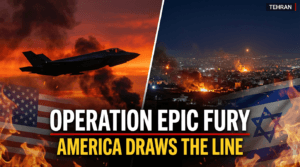
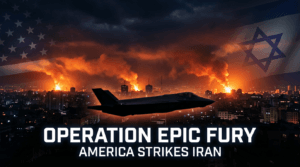
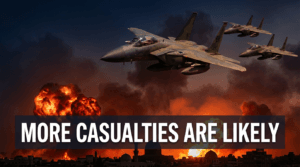
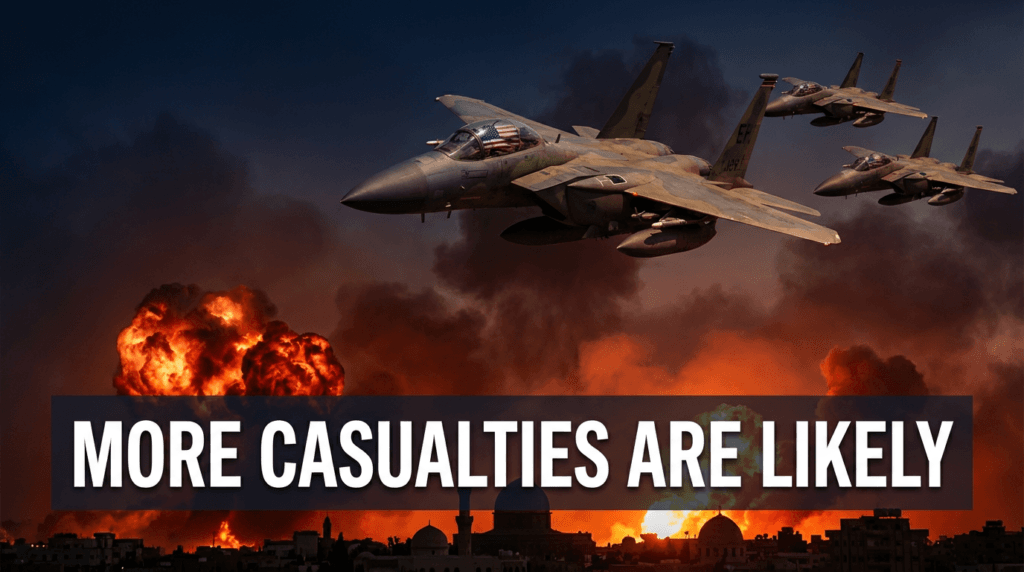
On Sunday, March 1, 2026, President Donald Trump did exactly that. Asked about the mounting costs of Operation Epic Fury — the joint U.S.-Israeli military campaign launched against the Iranian regime on February 28 — Trump did not flinch. “More casualties are likely,” he said. Four American service members had already been killed, struck by an Iranian munition at a tactical operations center in Kuwait. Five others lay seriously wounded. And yet the President held firm: this fight, he said, was “our last best chance” to eliminate the existential threats posed by a regime that has spent decades arming terrorists, massacring its own citizens, and racing toward a nuclear weapon.
That kind of honesty is rare in Washington. And it deserves to be met with an equally honest conversation about what is at stake — for America, for the Middle East, and for the principles that have always made this country worth defending.
The Threat Was Real — and Long Ignored
To understand why Operation Epic Fury was launched, you have to understand what Iran has been doing for years while the world looked away. This is not a story that began on February 28, 2026. It began decades ago, with an Iranian regime that used oil wealth and geopolitical chaos to fund proxy armies across the Middle East — Hezbollah in Lebanon, the Houthis in Yemen, Kata’ib Hezbollah in Iraq — each one a forward arm of the Islamic Republic’s war against Western values and regional stability.
More recently, the world watched as the Iranian regime massacred its own people during the 2025–2026 Iranian protests, imposing internet blackouts and unleashing lethal force against citizens demanding basic freedoms. In January 2026, as the United States began repositioning air and naval assets in the region — the largest such deployment since the 2003 invasion of Iraq — Iranian officials responded not with diplomacy but with defiance: “We are ready for war,” they declared.
Months of negotiations in Oman and Geneva had gone nowhere. U.S. demands were reasonable: stop enriching uranium to weapons-grade levels, halt the ballistic missile program, end the funding and arming of terrorist proxies. Iran refused at every turn. The window for diplomacy closed. The window for action opened.
What Operation Epic Fury Has Already Achieved
In the first 24 hours alone, U.S. and Israeli forces struck more than 1,000 targets inside Iran. The operation’s objectives, as laid out by Defense Secretary Pete Hegseth, are clear and measurable: destroy Iranian missile production, dismantle its navy and security infrastructure, and ensure the regime never obtains a nuclear weapon. Iranian Supreme Leader Ali Khamenei — the architect of four decades of terror — was killed. By Day 3, the White House confirmed that 49 of the most senior Iranian regime leaders had been eliminated.
“We didn’t start this war,” Secretary Hegseth said, “but under President Trump, we are finishing it.”
That framing matters. Conservatives have long been skeptical of open-ended military entanglements — and rightly so. The specter of Iraq and Afghanistan haunts every foreign policy debate. But this is not a nation-building exercise. There is no plan to occupy Iran, reshape its culture, or spend two decades attempting to construct a democracy at gunpoint. The objectives are specific, the timetable defined — Trump estimates four to five weeks — and the strategic logic sound. A nuclear-armed Iran, led by a regime that openly funds terrorism and calls for the annihilation of Israel, is not a manageable deterrent. It is a civilizational threat.
The Cost of Inaction Would Have Been Far Greater
Critics will point to the casualties — four American lives lost, a friendly-fire incident that downed three F-15s, civilian deaths inside Iran, and retaliatory Iranian missiles striking hotels in Dubai and US bases across the Gulf. These costs are real and should not be minimized. Every American life lost is a solemn weight.
But fiscal accountability demands that we also count the costs of the alternative. A nuclear Iran would have fundamentally altered the balance of power in the most volatile region on earth. It would have emboldened every rogue state watching from the sidelines. It would have placed Israel — America’s closest democratic ally — under an existential cloud. It would have made every US military base in the Middle East a potential target for nuclear blackmail. The price of inaction, measured over a decade, would have dwarfed the price of action measured over five weeks.
This is the calculus that serious leaders make — and it is one of the least comfortable truths in statecraft. Personal responsibility, at the level of the presidency, means being willing to make that call, stand by it publicly, and answer for it honestly. Trump has done all three.
Law, Order, and the Defense of a Rules-Based World
There is also a deeper principle at stake. Conservatives believe in law and order — not just at home, but in the international arena. Iran has violated its Nuclear Non-Proliferation Treaty obligations, defied United Nations Security Council resolutions, and financed the very terrorist organizations responsible for the deaths of hundreds of American soldiers over the past two decades. The rule of law is not merely a domestic concept. When a regime systematically violates every norm of civilized behavior and faces no consequence, it does not stay contained. It grows bolder.
The United Nations, for its part, has called for “restraint.” One might ask: restraint toward a regime that fired missiles at civilian neighborhoods in Dubai, targeted the US Navy’s Fifth Fleet headquarters in Bahrain, and set hotel towers ablaze across the Gulf? There is a time for diplomacy. There is also a time to act. The two are not always compatible, and confusing them has historically been catastrophic.
What Comes Next — and What Americans Must Do
The conflict is still unfolding. Hezbollah launched fresh missile strikes against Israel on March 2. Iranian-backed militias in Iraq have threatened “total war.” The region is volatile, and the coming weeks will test American resolve, military readiness, and diplomatic dexterity in equal measure.
At home, the debate will intensify. Opposition voices will question the legal authority, the strategy, and the cost. Those are legitimate debates in a democracy — and they should happen. But they should happen with accurate information, honest acknowledgment of the threat that Iran posed, and a clear-eyed understanding that there are moments in history when a nation must choose between the comfort of inaction and the burden of leadership.
America has always, at its best, chosen leadership. That tradition is worth defending — in the halls of Congress, in our communities, and in the conversations we have with our neighbors.
Conclusion: This Is Not the Time to Look Away
Trump’s warning — “more casualties are likely” — was not a political gaffe. It was a president speaking to the American people with the respect they deserve: as adults, as citizens, as stakeholders in the outcome of a conflict being waged in their name. That candor, however uncomfortable, is the foundation of accountable government.
The stakes of Operation Epic Fury are not abstract. They involve the nuclear ambitions of the world’s leading state sponsor of terrorism, the security of America’s allies, the lives of US service members, and the long-term stability of global energy markets. Ignoring them was never an option — it only felt like one.
Stay informed. Hold your representatives accountable. And if you believe, as many Americans do, that a strong, principled, and honest foreign policy is worth fighting for — say so. Loudly.