Morteza Tayyebi at Pearson Airport: How Iran’s Regime Enforcers Are Walking Into Canada — and Staying
The Video That Stopped a Community in Its Tracks
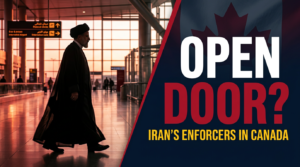
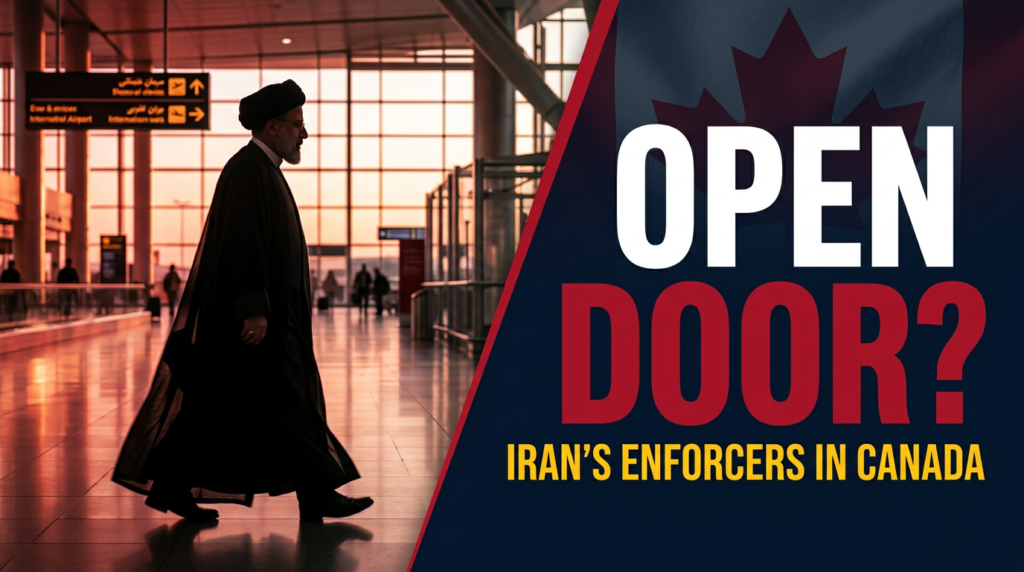
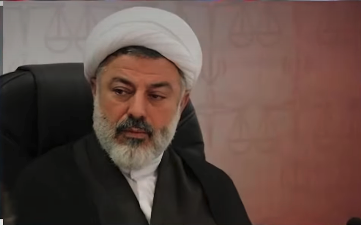
It began with a short clip — the kind that gets shared first in tight-knit WhatsApp groups, then explodes across social media within hours. Footage filmed at Toronto’s Pearson International Airport showed a Shia cleric arriving from Iran with his family. Within the Iranian diaspora, the man was quickly identified as Hojjatoleslam Morteza Tayyebi — described by those who recognized him as a figure deeply embedded in the machinery of the Islamic Republic.

Then came the detail that turned outrage into fury: claims that Tayyebi had recently obtained Canadian citizenship.
To be precise about what we know and what remains unconfirmed: the Canadian government has not officially verified Tayyebi’s identity, his citizenship status, or the specific circumstances of his arrival. Those claims originated from Iranian-Canadian activists and social media accounts — communities with firsthand knowledge of regime figures, but whose allegations still require official corroboration. One fact-check post explicitly noted there is “no verified documentation” of his citizenship status as of publication.
Support Independent Local Journalism
TheTownHall.News is a non-profit reader-supported journalism. Just $5 helps us hire local reporters, investigate important issues, and hold public officials accountable across Alameda County. If you believe our community deserves strong, independent journalism, please consider donating $5 today to support our work.But here is the uncomfortable truth that no amount of bureaucratic hedging can obscure: the scenario is entirely plausible. Not because someone gamed an otherwise airtight system, but because Canada’s immigration and border security apparatus has been systematically weakened for years — and individuals linked to the Iranian regime have been exploiting that weakness with remarkable ease and remarkable impunity.
The Tayyebi story may still be developing. The systemic failure it reflects is fully documented, exhaustively reported, and inexcusable.
Not an Anomaly — A Pattern
If the allegations surrounding Morteza Tayyebi shock you, they shouldn’t surprise you. The public record is already damning enough without him.
In the summer of 2025, a CBC News investigation confirmed that Mahdi Nasiri — a former senior Iranian official who served as managing director of one of Ayatollah Khamenei’s primary state-run propaganda newspapers — arrived in Canada, received a visa, and then publicized his own presence on social media. Openly. Defiantly. Without consequence.
That same year, policy researchers from the Canadian Coalition Against Terror and Secure Canada revealed that border authorities were investigating 66 suspected cases of Iranian regime-linked figures living in Canada — and that number, they warned, was almost certainly an underestimate. An immigration lawyer had already received over 300 public tips from ordinary citizens, representing an estimated 700 suspected cases of regime-connected individuals and businesses operating on Canadian soil.
According to The Globe and Mail, the Canada Border Services Agency (CBSA) had identified nearly 30 suspected senior Iranian officials who should be barred from remaining in the country. As of early March 2026, the number successfully removed: one.
One removal. Dozens of documented cases. Hundreds more suspected. This is not bureaucratic backlog. This is institutional collapse.
How Canada’s Generosity Became a Weapon
Understanding how this happens requires confronting an uncomfortable reality: Canada’s legal framework — built on compassion, due process, and the protection of human rights — is being systematically weaponized by the very people it was never designed to protect.
The principle of non-refoulement prohibits deporting individuals to countries where they may face persecution or torture. It is a cornerstone of international humanitarian law, designed to protect dissidents, activists, and refugees. It is now being routinely invoked by former persecutors — people who ran the prisons, enforced the theocracy, and signed the orders — to block their own deportation from Canada.
Support Independent Local Journalism
TheTownHall.News is a non-profit reader-supported journalism. Just $5 helps us hire local reporters, investigate important issues, and hold public officials accountable across Alameda County. If you believe our community deserves strong, independent journalism, please consider donating $5 today to support our work.The tactics are brazen. One regime-linked individual sued the federal government to prevent her removal. In another case, Iranian visa applicants filed a human rights complaint alleging racism because their applications were referred to CSIS for security screening. When merely being flagged for a national security review becomes actionable discrimination, the system has turned itself inside out.
The mechanics of delay are equally effective. Multiple layers of immigration appeals can stretch a deportation order into a years-long legal marathon. Only a small number of CBSA officers across the entire country are assigned specifically to build cases against Iranian regime figures — and they juggle those responsibilities alongside a full complement of other duties. The agency’s own union warned in late 2025 that CBSA was already short 2,000 frontline officers and facing a proposed $68 million budget cut. In January 2026, the federal government announced plans to eliminate 3,300 positions at Immigration, Refugees and Citizenship Canada (IRCC).
People inside the system have a phrase for what is happening. They call it a country “sleepwalking into infiltration.”
The Real Victims of This Failure
Reducing this story to a policy debate risks obscuring the human beings at its centre — and they deserve to be seen clearly.
CSIS has confirmed credible death threats from the Iranian regime targeting individuals currently living in Canada. Iranian-Canadians across the country have reported being surveilled, intimidated, and harassed by agents of the Islamic Republic operating within Canadian borders. Former Justice Minister Irwin Cotler — one of the most respected human rights advocates in Canadian history — was the target of an Iranian assassination plot on Canadian soil.
And then there is the wound that has never fully healed: on January 8, 2020, Iranian air defence forces deliberately shot down Ukraine International Airlines Flight PS752, killing 55 Canadian citizens and 30 permanent residents. Families. Students. Young professionals who had built lives here and were simply flying home. No one has faced Canadian justice for that act of mass murder.
For the hundreds of thousands of Iranian-Canadians who fled the Islamic Republic — who lost siblings to its prisons, parents to its executioners, friends to its crackdowns — the sight of a figure like Morteza Tayyebi reportedly arriving at Pearson with a Canadian passport in hand is not a political abstraction. It is a knife in an open wound. It tells them that their government cannot tell the difference between their story and the story of the people who made their lives a nightmare.
What Conservatives Are Demanding — And Why They’re Right
On March 11, 2026, Conservative Shadow Immigration Minister Michelle Rempel Garner introduced a motion at the House of Commons Immigration Committee that represents the most comprehensive legislative response to this crisis yet proposed. The motion demands:
- Immediate enforcement of all existing deportation orders against non-citizen regime officials
- Reform of the Immigration and Refugee Protection Act to explicitly bar non-citizens involved in regime-linked businesses, propaganda operations, or human rights abuses
- Extension of inadmissibility to non-citizen immediate family members of regime officials
- Removal of non-refoulement protections for non-citizens proven complicit in human rights violations
- Mandatory in-person interviews for all refugee claimants from countries with governments hostile to Canada
- Full public disclosure of the identities of known non-citizen Iranian regime officials living in Canada — including the individual whose name the government inexplicably prohibited media from publishing following a February 2026 Global News investigation
The Liberal government has not publicly responded to the motion.
That silence is its own answer.
What Canadian Citizenship Must Mean
Beneath the legal arguments and policy debates lies a question of principle that Canadians cannot keep avoiding: what does citizenship actually mean?
It is not a transaction. It is not simply the administrative endpoint of a residency process. Citizenship is a covenant — a mutual commitment between an individual and a nation, premised on shared values, respect for the law, and a basic commitment to the safety and dignity of fellow citizens.
When that covenant is extended to individuals who have actively participated in a regime that tortures dissidents, executes protesters, targets minorities, and murders Canadians abroad, it is not an act of compassion. It is a betrayal — of the covenant itself, of every legitimate immigrant who earned their citizenship honestly, and above all of the Iranian-Canadian community that came here to escape exactly this.
A system that cannot distinguish between a refugee and the official who sent that refugee to prison has not just failed administratively. It has failed morally.
Conclusion: The Name on the Passport Must Mean Something
Whether or not every detail surrounding Hojjatoleslam Morteza Tayyebi’s arrival at Pearson is ultimately confirmed, the video has done something important: it has forced a conversation that Canada’s political class has been too comfortable avoiding.
The IRGC is a designated terrorist organization on Canadian soil. The Iranian regime has murdered Canadian citizens. Dozens of its officials are living in Canadian cities, filing asylum claims, launching legal challenges, and in some cases obtaining the most powerful document Canada issues — its passport.
This must end. Not with another parliamentary study. Not with another government statement expressing concern. With action — real, enforceable, legislated action that tells the world Canada’s citizenship means something, that its borders mean something, and that the people who built this country and the people who fled here for safety will be protected by it.
Canadian citizenship is a privilege earned through commitment to this country’s values — not a loophole to be exploited by those who have spent their lives destroying those values elsewhere.
Call to Action
If this story angers you, let that anger be productive.
📢 Contact your Member of Parliament and demand they support the Conservative motion to deport Iranian regime officials and reform the Immigration and Refugee Protection Act. Find your MP at ourcommons.ca.
📖 Stay informed — follow investigative coverage from Global News, The Globe and Mail, and Iran International, which have led the reporting on this issue.
🔁 Share this article — the Iranian-Canadian community has been raising these alarms for years. Help make sure their voices are finally heard by the people who need to act.
The integrity of Canadian citizenship — and the safety of Canadians — depends on what happens next.
Editorial note: The specific claims that Hojjatoleslam Morteza Tayyebi holds Canadian citizenship and that the individual in the Pearson Airport footage is definitively identified as him have not been independently verified by official Canadian government sources as of the date of publication. All broader claims regarding Iranian regime-linked individuals in Canada are sourced from verified investigative reporting cited throughout this article.