Nanoparticle Heart Disease Treatment Is Advancing Fast — Will the Medical Industry Let It Reach Patients?
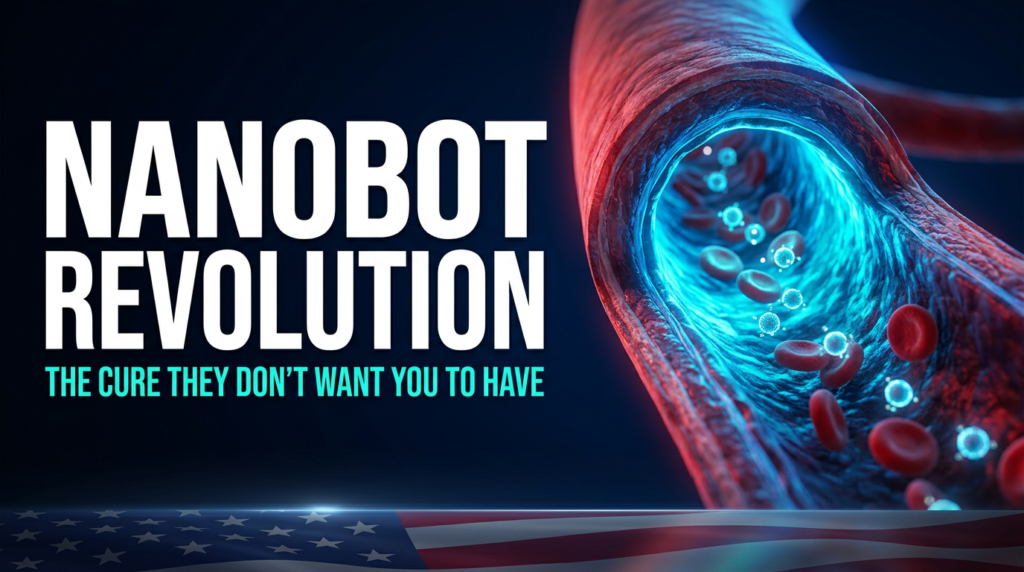
A wave of breakthrough research suggests microscopic nanoparticle therapies could one day replace expensive, repeat surgical procedures for clogged arteries. The science is advancing fast — and the financial stakes for a powerful medical industry have never been higher.
Every 40 seconds, an American suffers a heart attack. Cardiovascular disease remains the leading cause of death in the United States, claiming more than 695,000 lives annually, according to the CDC. For decades, the standard response has been the same: medications, stents, angioplasty, and repeat procedures — a cycle that generates billions of dollars in annual revenue for the healthcare system and costs patients and taxpayers enormously.
Now, a convergence of cutting-edge research from Michigan State University, Australian institutions, and laboratories across the world is pointing toward a radically different future — one where microscopic nanoparticle therapies could target and clear arterial plaque with surgical precision, without a single incision. The science is not yet ready for your doctor’s office. But it is advancing far faster than the medical establishment may be prepared to acknowledge.
Support Independent Local Journalism
TheTownHall.News is a non-profit reader-supported journalism. Just $5 helps us hire local reporters, investigate important issues, and hold public officials accountable across Alameda County. If you believe our community deserves strong, independent journalism, please consider donating $5 today to support our work.What the Research Actually Shows
The headline-grabbing claims circulating on social media — that “Swedish nanobots” are already curing patients in clinical trials — are premature. But strip away the viral exaggeration, and the underlying science is genuinely remarkable.
In October 2024, Michigan State University researchers published findings in Nature Communications showing that a nanoparticle infusion, developed in collaboration with Stanford University’s Leeper Lab, successfully reduced dangerous arterial plaque inflammation in both mouse and pig models. Critically, the team scaled production to liter volumes — the range required for human use — and observed zero side effects, thanks to the therapy’s precision targeting of specific immune cells within plaques.
“That’s the scarier one that leads to most heart attacks,” said Bryan Smith, MSU associate professor of engineering, referring to inflammatory plaque rupture — the kind that triggers sudden cardiac events without warning. His nanoparticles are designed to activate the immune system to “eat away” the plaque core from the inside, reducing the vulnerability that kills people without notice.
Separately, researchers at the South Australian Health and Medical Research Institute published findings in Materials Today Bio in August 2025 showing that 20-nanometer particles — coated to seek out immune cells buried inside arterial walls — achieved a 52% reduction in advanced plaques in animal models, routing cleared cholesterol safely to the liver with no toxic buildup. Human trials have not yet begun, but the roadmap is clear.

Why This Technology Threatens a Lucrative Status Quo
Here is where the story becomes not just a medical breakthrough — but a test of whether American healthcare puts patients or profits first.
The U.S. performs approximately 700,000 angioplasty and stenting procedures every year, at an average cost exceeding $30,000 per procedure. Repeat interventions are common, since stents treat the symptom — blockage — but do not address the underlying inflammatory disease. That recurring need is, for many hospital systems and device manufacturers, a feature, not a flaw.
A nanoparticle therapy that reduces plaque inflammation at its root — potentially preventing the need for repeat surgeries — would represent a direct financial threat to a system built on procedural volume. This is not a conspiracy theory. It is a straightforward economic reality that any honest observer of American healthcare must confront.
“When a therapy can prevent the procedure, the system that profits from the procedure has every incentive to slow-walk its adoption.”
This is not unique to cardiology. Americans have watched this dynamic play out with generic drugs, outpatient care, and preventive medicine for decades. The question is whether regulators, insurers, and medical institutions will allow innovation to reach patients at the speed the science warrants — or at the speed that protects incumbent revenue.
The Real Cost of Inaction
Cardiovascular disease costs the United States an estimated $239 billion per year in healthcare spending and lost productivity, according to the American Heart Association. That figure is projected to nearly double by 2035. For every year that a proven preventive therapy is delayed by regulatory lag, institutional inertia, or financial self-interest, tens of thousands of Americans pay with their lives or their livelihoods.
Support Independent Local Journalism
TheTownHall.News is a non-profit reader-supported journalism. Just $5 helps us hire local reporters, investigate important issues, and hold public officials accountable across Alameda County. If you believe our community deserves strong, independent journalism, please consider donating $5 today to support our work.This is a matter of fiscal accountability as much as medical progress. The federal government — through Medicare and Medicaid — is the single largest payer for cardiovascular procedures in the country. Taxpayers fund a substantial portion of that $239 billion annual burden. When breakthrough therapies that could reduce that burden face slow adoption, ordinary Americans bear the cost twice: once in taxes, and once in the operating room.
Personal responsibility in healthcare begins with access to the best available options. Patients cannot make informed choices about their own care if transformative treatments are delayed, underfunded, or quietly sidelined. A system that claims to prioritize patient outcomes must be held to that standard — publicly, persistently, and without apology.
What Critics Get Wrong
Skeptics of enthusiasm around nanoparticle therapies make fair points: animal studies do not always translate to humans, regulatory caution exists for good reason, and the path from laboratory to clinic is long and legitimately complex.
Those arguments deserve respect — and the researchers leading this work share them. Bryan Smith’s team has been deliberate and rigorous, testing in mice first, then pigs, building toward human trials with documented safety data. The Lancet-affiliated journal eBioMedicine published a 2025 review specifically addressing the challenge of translating nanotechnology for atherosclerosis from bench to bedside, acknowledging that while clinical application remains limited, the potential is clear and the scientific foundation is solid.
Regulatory rigor is not the enemy here. Regulatory capture — where powerful incumbent industries shape the pace and terms of approval for competing technologies — is. There is a meaningful difference between the FDA doing its job and the FDA being steered by the stakeholders it is meant to oversee. Americans should demand transparency about which voice is driving the timeline.
How This Affects Families and Communities
Heart disease does not discriminate by income, but its consequences fall hardest on working families without the financial cushion to absorb repeat hospitalizations, lost wages, or long recoveries. A father of three who survives a heart attack and spends weeks in rehabilitation is not just a medical statistic — he is a family’s economic backbone, temporarily broken.
Therapies that could prevent that rupture from happening in the first place — administered as an infusion rather than an operating room procedure — are not just medically significant. They are economically liberating. They represent the kind of innovation that reduces dependency on the healthcare system, restores personal agency, and cuts the cost burden that falls on families, employers, and ultimately taxpayers.
That is precisely why this research deserves public attention, serious investment, and an honest national conversation — free from the influence of those whose business model depends on the problem remaining unsolved.
Key Takeaway
The nanobot revolution for heart disease is not science fiction. It is peer-reviewed, published science — advancing rapidly through animal models and approaching the threshold of human trials. The technology works by recruiting the body’s own immune system to dismantle dangerous arterial plaque from within, with a precision no scalpel can match. What stands between this breakthrough and the patients who need it is not the science. It is money, institutional inertia, and the uncomfortable truth that in American healthcare, preventing a procedure is not always as profitable as performing one.
The Bottom Line
Science is delivering the tools to dramatically reduce the toll of cardiovascular disease. Whether the American healthcare and regulatory system will deliver those tools to patients — at the speed they deserve — depends on public awareness, civic engagement, and the willingness to ask hard questions of powerful institutions.
Share this article. Forward it to your doctor. Bring it to your elected representatives. The patients who will benefit from this technology in the years ahead are people you know — and the decisions being made right now will determine how long they have to wait.
Stay informed. Demand accountability. Support journalism that follows the science and the money, wherever both may lead.