Portland Border Patrol Shooting: Suspected Gang Members Shot After Allegedly Ramming Vehicle at Agents
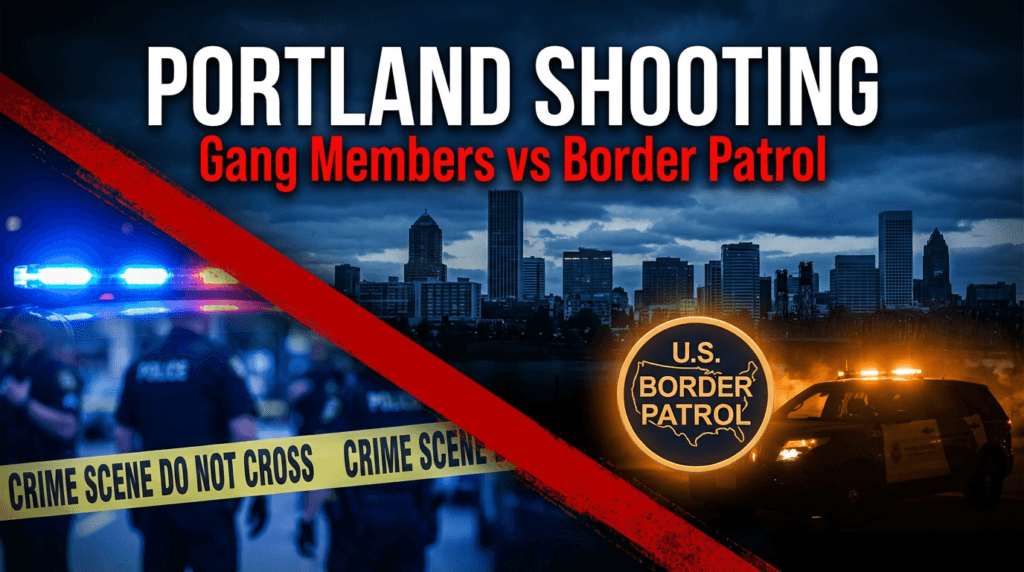
Just one day after the fatal shooting of Renee Nicole Good in Minneapolis, federal agents in Portland, Oregon, shot and wounded two people during a targeted vehicle stop on January 8, 2026. The Department of Homeland Security identified the individuals as Luis David Nico Moncada and Yorlenys Betzabeth Zambrano-Contreras, both Venezuelan nationals and suspected members of the violent Tren de Aragua gang.
The shooting occurred amid an unprecedented surge in vehicle attacks against federal immigration officers nationwide, with DHS reporting a 3,200% increase in such attacks. Federal officials say the Border Patrol agent fired in self-defense when the driver attempted to run over agents with his vehicle. Oregon officials, however, have launched their own investigation, questioning the federal account and demanding ICE halt operations in Portland.
The incident has become another flashpoint in the national debate over immigration enforcement, use of lethal force, and the growing violence against federal officers conducting enforcement operations.
Support Independent Local Journalism
TheTownHall.News is a non-profit reader-supported journalism. Just $5 helps us hire local reporters, investigate important issues, and hold public officials accountable across Alameda County. If you believe our community deserves strong, independent journalism, please consider donating $5 today to support our work.The Incident: What Happened
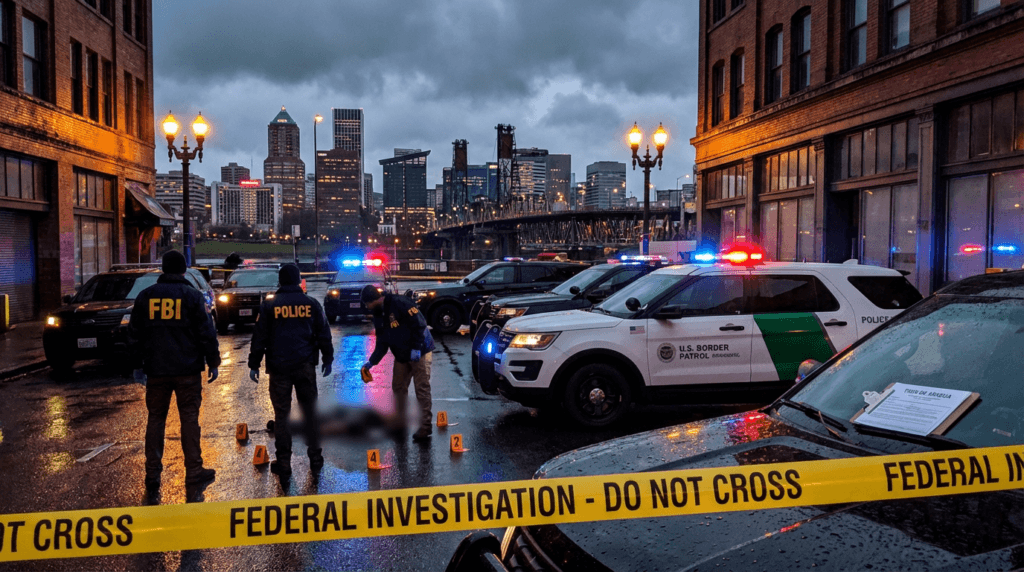
At approximately 2:19 p.m. on Thursday, January 8, U.S. Customs and Border Protection agents were conducting a targeted vehicle stop in the 10200 block of Southeast Main Street in Portland’s Hazelwood neighborhood, near the Adventist Health campus.
Federal Account
According to DHS Assistant Secretary Tricia McLaughlin, when agents identified themselves to the occupants of a red Toyota, “the driver weaponized his vehicle and attempted to run over the law enforcement agents.”
“Fearing for his life and safety, an agent fired defensive shots,” McLaughlin said. “The driver drove off with the passenger, fleeing the scene.”
Two law enforcement sources familiar with the matter told NBC News that when the driver tried to flee, the car struck an agent, prompting the agent to fire at the vehicle.
The driver and passenger fled approximately three miles before calling for help near Northeast 146th Avenue and East Burnside Street. Portland police officers arrived to find both individuals with apparent gunshot wounds. Officers applied a tourniquet, and both were transported to local hospitals with major injuries. Their current conditions have not been publicly disclosed.
Local Response and Investigation
Portland Police Chief Bob Day emphasized that local police “do not know the facts of this case” as they arrived after the shooting occurred and are simply providing support to the FBI, which is leading the investigation.
“We are still in the early stages of this incident,” Day said. “We understand the heightened emotion and tension many are feeling in the wake of the shooting in Minneapolis, but I am asking the community to remain calm as we work to learn more.”
The FBI Portland office confirmed it is investigating “an assault on federal officers” involving two Customs and Border Protection agents.
Oregon Attorney General Dan Rayfield, a Democrat, announced his own investigation into whether “any federal officer acted outside the scope of their lawful authority.”
Support Independent Local Journalism
TheTownHall.News is a non-profit reader-supported journalism. Just $5 helps us hire local reporters, investigate important issues, and hold public officials accountable across Alameda County. If you believe our community deserves strong, independent journalism, please consider donating $5 today to support our work.The Suspects: Luis David Nico Moncada and Yorlenys Betzabeth Zambrano-Contreras
On Friday, January 9, the Department of Homeland Security publicly identified the two individuals shot in Portland and provided details about their alleged criminal backgrounds.
Luis David Nico Moncada
According to DHS, Moncada is the driver of the vehicle and a suspected member of Tren de Aragua, the Venezuelan transnational criminal gang that has expanded operations throughout the United States. DHS alleges that Moncada illegally entered the United States in 2022.
Federal officials characterize Moncada as having a “lengthy criminal history,” though specific details of prior arrests or convictions have not been publicly released.
Yorlenys Betzabeth Zambrano-Contreras
DHS identified Zambrano-Contreras as the passenger in the vehicle. According to federal officials, she illegally entered the U.S. in 2023 and “played an active role in a Tren de Aragua prostitution ring.”
DHS also alleges that Zambrano-Contreras “was involved with a prior shooting in Portland,” though details of that incident have not been made public.
OPB’s Caveat
Oregon Public Broadcasting noted in its reporting that it “could not immediately confirm the allegations” made by DHS about the suspects’ gang affiliations and criminal histories.
Tren de Aragua: Venezuela’s Expanding Criminal Network
The Portland shooting brings renewed attention to Tren de Aragua, a Venezuelan prison gang that has evolved into a sophisticated transnational criminal organization operating across the Americas.
Origins and Expansion
Tren de Aragua originated in Venezuela’s Tocorón prison and has expanded its operations to include human trafficking, prostitution rings, drug smuggling, extortion, and violent crime. The gang has established a presence in multiple U.S. cities, with federal law enforcement identifying it as a growing threat.
Recent Incidents Involving Tren de Aragua
The Portland shooting is not the first time suspected Tren de Aragua members have been involved in vehicle attacks against federal agents. In December 2025, a suspected gang member, Luis Jesus Acosta Gutierrez, rammed a law enforcement vehicle into a tree during a vehicle stop, part of the broader pattern of vehicular assaults documented by DHS.
Federal officials have emphasized that the gang’s presence in the United States poses a significant public safety threat, with members involved in violent crimes including murder, assault, and attacks on law enforcement.
The Broader Context: Surge in Vehicle Attacks
The Portland shooting occurred against the backdrop of dramatically increased violence against federal immigration officers. On January 8—the same day as the Portland incident—DHS released alarming statistics:
Unprecedented Increases
- 1,347% increase in assaults: From January 20 to December 31, 2025, DHS reported 275 assaults against ICE officers compared to 19 during the same period in 2024.
- 3,200% increase in vehicular attacks: From January 21, 2025, to January 7, 2026, ICE and Border Patrol officers experienced 66 vehicular attacks compared to only 2 during the same period the previous year.
- 8,000% increase in death threats: Federal immigration officers faced a massive surge in threats to their lives.
Documented Vehicle Attacks in 2025
DHS provided numerous examples of vehicle attacks against federal officers, including:
- The June 2025 attack on ICE Agent Jonathan Ross (involved in the Minneapolis shooting), who was dragged more than 100 yards by a vehicle, suffering injuries requiring 33 stitches.
- Two separate vehicular assaults against ICE officers during Operation Midway Blitz in the Chicago metro area in October 2025.
- An illegal alien who hit an ICE officer with a vehicle in September 2025, nearly crushing the officer.
- A suspected Tren de Aragua gang member who rammed a law enforcement vehicle into a tree in December 2025.
These statistics provide crucial context for understanding why federal agents conducting vehicle stops may perceive genuine threats to their safety when drivers attempt to flee or make sudden movements with their vehicles.
Local Officials Condemn Shooting, Demand ICE Halt Operations
Portland Mayor Keith Wilson condemned the shooting and called for ICE to end operations in the city until a full investigation is conducted.
“We know what the federal government says happened here,” Wilson said at a press conference attended by Oregon Governor Tina Kotek and other local officials. “There was a time when we could take them on their word. That time has long passed. We are calling on ICE to halt all operations in Portland until a full investigation can take place.”
Wilson also urged residents to respond peacefully: “I call on every Portlander to represent our values and to show up with calm and purpose during this difficult time. Portland does not respond to violence with violence. We respond with clarity, unity, and a commitment to justice.”
Governor Kotek expressed outrage at what she characterized as federal overreach: “We are all shaken and outraged by another terrible, unnecessary, violent event instigated by the reckless agenda of the Trump administration. This time in our own state.”
The Multnomah County Board of Commissioners issued a statement saying: “What we can say now is enough is enough. The terror and violence ICE is causing in our neighborhoods must end now.”
Republican Response: Defending Federal Agents
State Senator Christine Drazan, a Republican from Canby running to unseat Governor Kotek, issued a sharply contrasting statement that appeared to directly respond to Democratic officials’ condemnations.
“I am disappointed, but not surprised, to see our state’s politicians rush to judgment and treat dangerous criminals like victims,” Drazan said. She added that she wanted gang members off the street and that an investigation would determine whether the shooting was warranted. “The last thing we need in a moment like this is a bunch of grandstanding politicians exploiting this situation and inciting fear to advance their own political agendas.”
Protests Erupt Across Portland
The shooting sparked immediate protests across Portland, with demonstrations at both the ICE facility and City Hall.
ICE Facility Protests
Nearly 500 people gathered outside the Portland ICE facility Thursday evening, chanting slogans opposing immigration enforcement. The protest initially remained peaceful, with federal officers largely staying back and not engaging the crowd—a departure from previous demonstrations.
Around 7:45 p.m., Portland police officers with the bureau’s crowd control unit arrived and asked people to clear the street to allow a vehicle to enter the ICE facility. Police pushed the crowd onto sidewalks, angering protesters.
About an hour later, police announced they observed criminal activity and would be making targeted arrests. Several dozen officers began pushing the crowd back while demonstrators shouted at them, saying they should arrest immigration enforcement officers instead.
Portland police announced early Friday morning that six people had been arrested during the protest. All six were charged with disorderly conduct. Five were also charged with interfering with a peace officer, and two were additionally charged with rioting.
City Hall Vigil
More than 200 people gathered outside City Hall Thursday evening for a peaceful vigil where city councilors, union leaders, and community activists spoke out against federal immigration enforcement.
“It is really concerning that ICE is allowed to just walk the streets,” said Portland resident Nikita Daryanani, who attended the vigil. “I don’t blame people for being afraid.”
The Minneapolis Connection
The Portland shooting occurred just one day after ICE Agent Jonathan Ross shot and killed Renee Nicole Good in Minneapolis. Both incidents involved federal claims that drivers “weaponized” their vehicles against agents, prompting defensive shots.
Minneapolis Mayor Jacob Frey disputed the federal characterization of the Good shooting as “bulls—” after viewing video evidence. The similarities between the two incidents—occurring on consecutive days and both involving federal claims of vehicle attacks—have intensified scrutiny of how federal agents assess and respond to perceived vehicle threats.
Vehicles as Weapons: Legal Standards and Training
The use of vehicles as weapons against law enforcement has become an increasingly recognized threat, with the dramatic surge in such attacks documented by DHS highlighting the genuine dangers federal agents face.
Legal Standards for Use of Force
Under established use-of-force law, officers are generally justified in using deadly force when they have a reasonable belief that they or others face an imminent threat of death or serious bodily injury. When a vehicle is used as a weapon, courts have recognized that it can constitute deadly force.
Key factors typically considered include:
- The speed and direction of the vehicle
- Whether the vehicle made contact with the officer
- The officer’s ability to move out of the way
- Whether alternative responses were available
- The totality of circumstances known to the officer at the time
The Vehicle Stop Dilemma
Law enforcement experts note that vehicle stops present particularly complex scenarios. When a driver attempts to flee, officers must make split-second decisions about whether the fleeing vehicle poses a deadly threat.
Critics argue that shooting at fleeing vehicles can be dangerous and ineffective, potentially endangering bystanders. Many police departments have implemented policies restricting such shootings.
Supporters counter that the documented 3,200% increase in vehicle attacks against federal agents shows this is a genuine and growing threat, not a theoretical concern. They argue that officers cannot always predict when a driver will use their vehicle as a weapon and must be able to defend themselves.
The Gang Factor: Tren de Aragua’s Violent History
If DHS’s allegations about Moncada and Zambrano-Contreras are accurate, the Portland shooting would represent another violent encounter between federal agents and suspected Tren de Aragua members.
The gang has been linked to numerous violent incidents, including:
- Murders and assaults in multiple U.S. cities
- Human trafficking and prostitution operations
- Drug smuggling and distribution
- Extortion of Venezuelan immigrants
- Attacks on law enforcement
Federal officials have emphasized that Tren de Aragua represents a significant and growing threat to public safety, with the gang exploiting immigration systems to establish operations in American communities.
Investigations Underway
Multiple investigations are examining the Portland shooting:
FBI Investigation: The FBI is leading a federal investigation focused on the alleged “assault on federal officers.” This investigation will examine whether Moncada and Zambrano-Contreras attempted to use their vehicle as a weapon against Border Patrol agents.
Oregon Attorney General Investigation: Attorney General Dan Rayfield announced an independent state investigation focused on “whether any federal officer acted outside the scope of their lawful authority.” This investigation will examine whether the use of lethal force was justified.
Portland Police Support: While Portland police are not leading the investigation, they are providing support to federal investigators and maintaining public safety at the scene.
The Question of Reasonable Belief
At the heart of the Portland case is whether the Border Patrol agent had a reasonable belief that his life was threatened when he fired his weapon.
Factors supporting reasonable belief:
- The documented 3,200% increase in vehicle attacks against federal agents
- The suspects’ alleged gang affiliations and criminal histories
- Reports that the vehicle struck an agent
- The driver’s attempt to flee the scene
- Zambrano-Contreras’s alleged involvement in a prior shooting in Portland
- The broader context of Tren de Aragua violence against law enforcement
Factors that may complicate the analysis:
- The lack of independent video evidence (unlike Minneapolis)
- Questions about whether the agent could have avoided positioning himself in the vehicle’s path
- The fact that both suspects survived and may provide their own account of events
- The timing—occurring just one day after the controversial Minneapolis shooting
- Local officials’ skepticism of the federal account
Unlike the Minneapolis shooting, where video evidence exists (though interpretations differ), the Portland incident apparently was not captured on video, making the investigation more dependent on witness testimony and physical evidence.
Portland’s History with ICE
Portland has a contentious history with federal immigration enforcement. The city has positioned itself as a sanctuary city and has weathered months of protests outside the ICE facility. President Trump has repeatedly criticized Portland’s approach to immigration enforcement and has threatened to deploy military forces to the city.
The shooting has reignited these tensions, with local officials demanding federal agents leave the city and federal officials insisting they will continue enforcement operations regardless of local opposition.
Community Impact
The shooting occurred in Hazelwood, a large and diverse neighborhood in East Portland. Residents described fear and confusion in the aftermath.
As children played on nearby streets Thursday evening, one woman stepped out of her apartment and warned them not to speak to each other in Spanish and not to open the door if anyone came to their apartment—a stark illustration of the fear gripping immigrant communities.
Conclusion
The Portland Border Patrol shooting represents another volatile intersection of aggressive federal immigration enforcement, alleged gang violence, and the documented surge in vehicle attacks against federal officers.
If DHS’s allegations are accurate, Moncada and Zambrano-Contreras are suspected members of a violent transnational gang involved in serious criminal activity including prostitution rings and prior shootings. In that context, the Border Patrol agent’s decision to fire when the vehicle allegedly struck him could be seen as a reasonable response to a genuine deadly threat.
However, Oregon officials have raised questions about the federal account and are conducting their own investigation into whether agents acted within their lawful authority. The timing—just one day after the controversial Minneapolis shooting—has intensified scrutiny of federal claims that drivers are “weaponizing” vehicles.
Whether the shooting was justified will ultimately depend on what investigators conclude about the sequence of events: Did the vehicle strike the agent? Was the agent in a position where he could not escape? Did the suspects’ alleged gang affiliations and criminal histories create a reasonable belief that they posed a deadly threat?
The answers will have implications for how federal immigration enforcement is conducted, particularly in sanctuary cities like Portland that have positioned themselves in opposition to the Trump administration’s enforcement priorities.
As investigations proceed, one fact remains clear: federal immigration officers face unprecedented levels of violence, including a 3,200% increase in vehicle attacks. Whether the Portland shooting represents a justified response to that threat or an excessive use of force will be determined by the evidence that emerges from multiple ongoing investigations.
Call to Action
This story continues to develop as FBI and Oregon Attorney General investigations proceed. Stay informed by following credible news sources for updates on the investigations into the Portland Border Patrol shooting. The findings will have significant implications for federal law enforcement protocols, immigration enforcement operations, and the relationship between federal agents and sanctuary cities. If you have information about the incident, the FBI is seeking witnesses to provide statements for their investigation.