The Iran War’s Uncomfortable Truth: Regime Change Was Never Guaranteed — And Washington Knew It
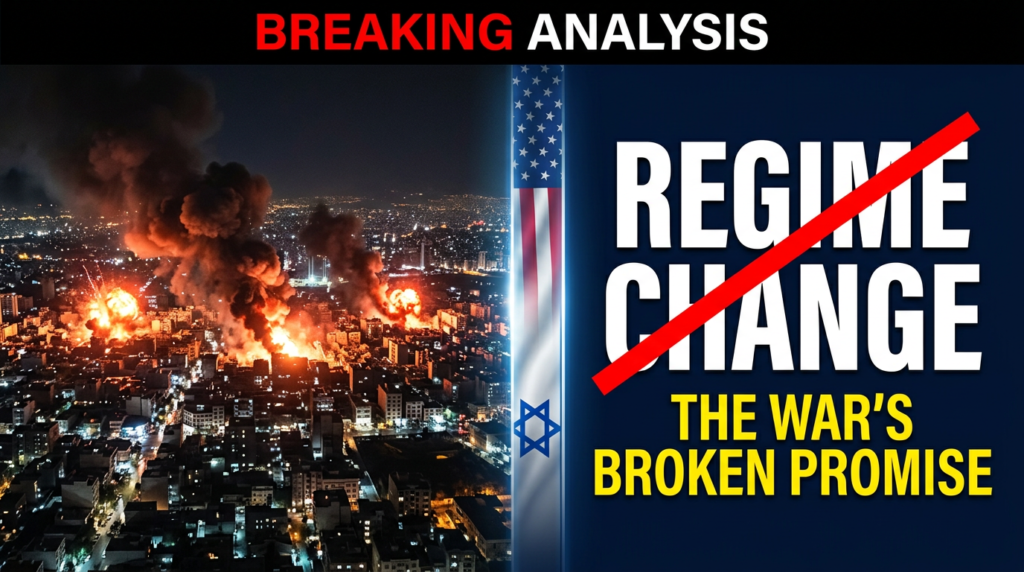
The month-long U.S.-Israeli military campaign against Iran is proving that airpower alone cannot topple an entrenched theocracy. As the war drags into its second month, American taxpayers and allied nations deserve straight answers — not managed expectations.
For nearly four weeks, the United States and Israel have pounded Iranian military infrastructure, nuclear sites, and command centers in one of the most significant military operations since the Iraq War. The opening strikes on February 28 killed Supreme Leader Ali Khamenei. Oil prices surged past $110 a barrel. Global markets shuddered. And back home, thirteen American service members came back in flag-draped coffins.
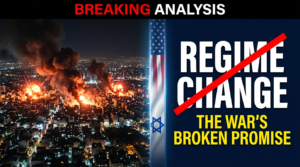
The implicit promise behind all of it — that the Islamic Republic would buckle, that ordinary Iranians would rise up, that the regime would fall — has not materialized. Now, with the war entering an uncertain new phase, the question every American taxpayer, every allied government, and every honest policymaker must ask is this: was regime change ever a realistic plan, or was it a sales pitch?
Support Independent Local Journalism
TheTownHall.News is a non-profit reader-supported journalism. Just $5 helps us hire local reporters, investigate important issues, and hold public officials accountable across Alameda County. If you believe our community deserves strong, independent journalism, please consider donating $5 today to support our work.The Euphoria That Wasn’t
In the war’s opening days, optimism ran high in Washington and Jerusalem. Israeli intelligence, particularly the Mossad, reportedly promised that a combination of decapitation strikes and popular unrest would unravel the Islamic Republic from within. Senior Netanyahu advisers spoke privately of a historic opportunity.
It hasn’t worked. According to reporting by the New York Times, Netanyahu has privately expressed frustration that Mossad’s promises of internal revolt never materialized. Far from collapsing, the Iranian regime has been taken over by ultra-hardliners who replaced the pragmatists killed in the early strikes. The new guard has no interest in negotiating and every incentive to dig in.
German Chancellor Friedrich Merz said it plainly on Friday: regime change is “unlikely” and has “mostly gone wrong” in past conflicts. He wasn’t editorializing. He was describing a historical pattern American policymakers have repeatedly ignored — from Iraq to Libya to Afghanistan.
What the Intelligence Actually Said — and Didn’t
According to Reuters, regime change was among the arguments Netanyahu used in a private call with President Trump before the operation was greenlit. It was one argument among several — not a guaranteed outcome, not an intelligence assessment, but a possibility floated to tip the scales.

That distinction matters enormously. When possibilities become the emotional centerpiece of a military campaign — and when the backup plan is never developed — the result is exactly what we’re seeing now: a war with clear targets but no clear endgame.
The U.S. military has confirmed it destroyed only approximately one-third of Iran’s missile arsenal. The Strait of Hormuz remains contested. Iran has fired cluster munitions at Israeli population centers. And the 82nd Airborne is reportedly moving toward the Persian Gulf — a signal that a ground option is under active consideration.
Thirteen American lives lost. Three hundred and three wounded. And the regime in Tehran is still standing.
Trump’s Dilemma — and America’s Real Interests
To his credit, Trump appears to have recognized early that regime change was not guaranteed. He reportedly rejected Netanyahu’s proposal to jointly call on Iranians to rise up, fearing mass civilian casualties with no strategic upside. That was a sound call.
Trump has extended the pause on energy infrastructure strikes twice and put forward a 15-point framework to end the war. Iran rejected it formally, though back-channel messages suggest some willingness to talk. The White House has called itself “hopeful” of direct meetings this week, reportedly in Pakistan.
Support Independent Local Journalism
TheTownHall.News is a non-profit reader-supported journalism. Just $5 helps us hire local reporters, investigate important issues, and hold public officials accountable across Alameda County. If you believe our community deserves strong, independent journalism, please consider donating $5 today to support our work.This is where America’s core interests need to drive decisions — not Israeli electoral politics or ideological ambition. A negotiated settlement that permanently ends Iran’s nuclear weapons program, reopens the Strait of Hormuz, and brings home U.S. forces is a win — regardless of whether the Ayatollah’s flag still flies over Tehran. Fiscal conservatives should be clear-eyed: prolonged nation-building in Iran would dwarf the costs of Iraq and Afghanistan combined.
What Critics Get Wrong
Critics on the left will argue this war never should have started. That’s a legitimate debate — but it ignores an underlying reality: Iran was months away from nuclear weapons capability, had funded proxy attacks killing American soldiers, and was openly sponsoring terrorism across the Middle East. The status quo was not sustainable.
The real failure isn’t that the U.S. acted. It’s that action was taken without honest public accounting of what was achievable. Regime change was always a low-probability outcome — not because it was morally wrong to pursue, but because history and intelligence both suggested it required a full ground invasion. Voters and taxpayers deserved that honesty from day one.
There’s a meaningful difference between supporting American strength abroad and signing a blank check for a war with no defined victory conditions. Personal responsibility begins at the top.
The Real Cost — to Markets, Families, and American Credibility
The economic damage is already severe. Brent crude at $110 a barrel means higher gas prices for every American driving to work. U.S. consumer sentiment has plunged to its lowest since December 2025. The Dow and Nasdaq are in correction territory. Cargo volumes at Iraqi ports are down 50%.
These aren’t abstract numbers. They’re felt at the grocery checkout, at the gas pump, and in the retirement accounts of ordinary Americans who played no part in the decisions that led here.
Meanwhile, Iran’s post-war regime will almost certainly be more radical, more repressive, and more anti-American than the one the strikes were intended to remove. The pragmatists who might have cut a deal are dead. The hardliners who replaced them have no incentive to moderate. That is the unintended consequence of a campaign built on optimistic assumptions rather than hard strategic planning.
The Way Forward: Strength Through Clarity
A strong America doesn’t walk away from strategic commitments — but it also doesn’t let those commitments drift into open-ended occupations with no measurable success criteria. Trump has the leverage to negotiate a verifiable end to Iran’s nuclear program, secure freedom of navigation in the Strait of Hormuz, and bring American troops home with their mission accomplished. That’s a victory worth claiming.
What the American public cannot afford is another chapter where “regime change” becomes the unachievable standard against which every outcome is measured as failure. Define the mission. Execute it. Come home.
The men and women in uniform, and the families paying $4-plus at the pump, deserve nothing less.
Key Takeaway
The Iran war was sold in part on the promise of regime change. That promise has not been kept — not because the military failed, but because the premise was fragile from the start. The real test now is whether American leadership can define a clear, achievable victory before the costs in lives and dollars grow any larger.
Stay informed. Share this article. Support independent journalism that holds all sides accountable — and engage in your community, at the ballot box, and in every civic space available to you.