Trump Confronts Iran Nuclear Threat: Why Maximum Pressure Beats Appeasement Every Time
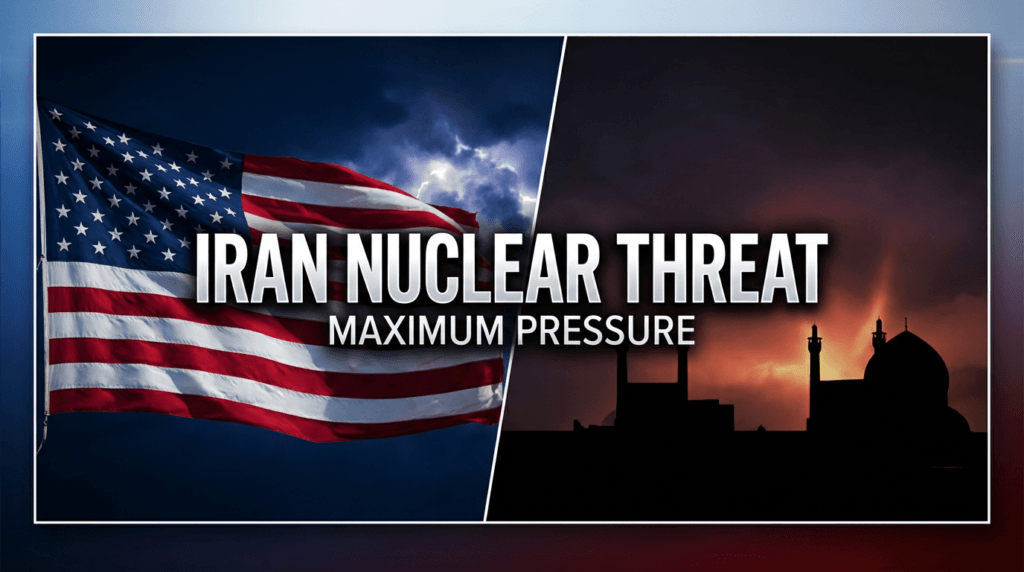
The stakes couldn’t be higher. As American and Iranian negotiators sit across from each other in Muscat, Oman, the world watches to see whether diplomacy backed by strength can prevent the Islamic Republic from acquiring nuclear weapons—or whether we’re headed toward another Middle Eastern catastrophe born from years of weakness and wishful thinking.
Iran’s Supreme Leader Ayatollah Ali Khamenei issued an ominous warning in early February: any American military action would spark a “regional war.” It’s the kind of threat that would have sent previous administrations scrambling for concessions. But President Trump’s approach represents a fundamentally different philosophy—one rooted in the conservative principle that peace comes through strength, not capitulation.
The question facing America today isn’t whether we should engage with Iran. It’s whether we’ll repeat the mistakes of the past or learn from them.
Support Independent Local Journalism
TheTownHall.News is a non-profit reader-supported journalism. Just $5 helps us hire local reporters, investigate important issues, and hold public officials accountable across Alameda County. If you believe our community deserves strong, independent journalism, please consider donating $5 today to support our work.The Obama-Era Disaster We’re Still Cleaning Up
To understand today’s crisis, we must confront an uncomfortable truth: the 2015 Joint Comprehensive Plan of Action (JCPOA)—the so-called “Iran Deal”—was a catastrophic failure of American foreign policy. Sold as a pathway to peace, it was actually a highway to nuclear capability paved with American dollars and diplomatic naivety.
The JCPOA temporarily restricted Iran’s uranium enrichment to 3.67% purity—far below weapons-grade levels—in exchange for lifting crippling economic sanctions. But here’s what the deal’s architects didn’t advertise: it had sunset provisions that would eventually allow Iran to enrich uranium without limits. It failed to address Iran’s ballistic missile program. It ignored Tehran’s sponsorship of terrorist proxies across the Middle East. And it released billions in frozen assets that flowed directly to funding Hezbollah, Hamas, and other groups dedicated to killing Americans and our allies.
President Trump withdrew from this disastrous agreement in 2018, recognizing what should have been obvious: you don’t reward bad actors with cash and hope they’ll behave. You hold them accountable.
Maximum Pressure: A Strategy Rooted in Reality
Upon returning to office in 2025, President Trump immediately reinstated his “maximum pressure” campaign against Iran. This isn’t warmongering—it’s fiscal and moral accountability applied to foreign policy.

The strategy is straightforward: impose severe economic sanctions targeting Iran’s oil exports and financial networks, deny the regime resources to fund terrorism and nuclear development, and make clear that military options remain on the table if diplomacy fails. According to the White House, this approach aims to “deny Iran all paths to a nuclear weapon and counter its malign activities.”
Critics call this aggressive. Conservatives call it responsible governance. When dealing with a regime that chants “Death to America,” funds terrorist organizations, and openly pursues weapons of mass destruction, anything less than maximum pressure is maximum irresponsibility.
The results speak for themselves. The Treasury Department reports that Iran’s economy has been severely constrained, limiting its ability to export terror and accelerate its nuclear program. New sanctions announced in February 2026 targeted Iranian oil networks, further tightening the economic vise.
The Nuclear Reality We Can’t Ignore
Here are the facts that should alarm every American: Iran has enriched uranium to 60% purity—a level that has no peaceful civilian application and is just a technical step away from the 90% needed for nuclear weapons. The International Atomic Energy Agency (IAEA) has documented Iran’s stockpile growth and its obstruction of inspections. Tehran has repeatedly refused to halt high-level enrichment.
Meanwhile, on February 5, 2026, the New START treaty—the last remaining nuclear arms control agreement between the United States and Russia—officially expired. We now live in a world with no limits on the two largest nuclear arsenals and an aspiring nuclear power in Iran that funds terrorism across the globe.
Support Independent Local Journalism
TheTownHall.News is a non-profit reader-supported journalism. Just $5 helps us hire local reporters, investigate important issues, and hold public officials accountable across Alameda County. If you believe our community deserves strong, independent journalism, please consider donating $5 today to support our work.This isn’t fear-mongering. It’s the reality that decades of diplomatic weakness have created.
The ongoing talks in Oman represent a critical juncture. Iran insists that uranium enrichment is a “red line” and non-negotiable. Foreign Minister Abbas Araghchi stated that Iran “cannot accept zero enrichment” and will keep enriched uranium inside the country. The Trump administration, by contrast, demands meaningful concessions—specifically, that Iran permanently halt high-level enrichment and restore full IAEA inspections.
Why Strength Matters More Than Ever
Conservative foreign policy rests on a simple principle: America’s role isn’t to apologize for our power but to use it responsibly to protect our interests and those of our allies. This means understanding that our adversaries respect strength, not good intentions.
President Trump’s deployment of additional military assets to the Middle East isn’t escalation—it’s deterrence. It sends an unmistakable message: America will not allow Iran to acquire nuclear weapons, and we will not abandon Israel and our Gulf partners to face this threat alone.
Critics who denounce this as “saber-rattling” misunderstand both history and human nature. Iran didn’t come to the negotiating table because of eloquent speeches or diplomatic pleasantries. They came because economic pressure made the status quo unsustainable and military pressure made miscalculation too costly.
This is how you prevent wars, not start them. Weakness invites aggression. Strength compels negotiation.
The Conservative Case for Vigilance
Several core conservative principles converge in this crisis:
Fiscal Accountability: American taxpayers shouldn’t fund—directly or indirectly—a regime that uses those resources to kill Americans and destabilize the Middle East. The JCPOA’s release of billions to Iran was a betrayal of this principle.
Limited but Strong Government: The federal government has few constitutional responsibilities more fundamental than national defense. Preventing a nuclear-armed Iran falls squarely within that mandate.
Law and Order on the World Stage: International agreements mean nothing if they’re not enforced. Iran has violated every understanding, broken every promise, and exploited every concession. Accountability demands consequences.
Protecting American Interests: Energy security, regional stability, and the safety of our allies directly impact American prosperity and security. We cannot outsource these concerns to international bodies that lack the will or capability to act.
What Comes Next
The talks in Oman will determine whether diplomacy backed by credible force can achieve what appeasement never could: a verifiable end to Iran’s nuclear weapons program. Early reports suggest both sides have agreed to continue negotiations, but fundamental disagreements remain.
Iran wants sanctions relief without giving up its nuclear infrastructure. America wants irreversible limits on Iran’s nuclear program before any sanctions are lifted. These positions are incompatible, and something has to give.
The worst possible outcome would be another JCPOA-style agreement that trades immediate political relief for long-term strategic disaster. The best outcome would be a deal that genuinely prevents Iran from acquiring nuclear weapons, includes robust verification mechanisms, and maintains pressure until Iran demonstrates sustained compliance.
But if Iran refuses to negotiate in good faith, America must be prepared to act. That doesn’t mean war is inevitable or desirable—it means war must remain a credible option, because that’s the only language the Iranian regime understands.
The Choice Before Us
This moment will define American foreign policy for a generation. Will we repeat the mistakes of the Obama era, prioritizing the appearance of diplomacy over the reality of security? Or will we maintain the strength and resolve necessary to protect American interests?
The conservative answer is clear: peace through strength isn’t a slogan—it’s a strategy that has kept America safe through every major conflict of the past century. From Reagan’s confrontation with the Soviet Union to the current standoff with Iran, history teaches that totalitarian regimes respect power, not weakness.
Iran’s nuclear ambitions represent an existential threat not just to Israel and our Gulf partners, but to American security and global stability. We cannot afford to get this wrong.
Call to Action
The Iran nuclear crisis demands informed, engaged citizens. Here’s what you can do:
Stay Informed: Follow developments closely. Don’t rely on mainstream media narratives that often downplay threats or criticize American strength. Seek out diverse sources and think critically about what’s at stake.
Contact Your Representatives: Let your senators and representatives know you support a strong stance against Iran’s nuclear program. Demand they hold the administration accountable to achieving real results, not symbolic agreements.
Share This Article: The more Americans understand what’s really happening, the better equipped we’ll be to make sound decisions. Use your voice and your platforms to spread awareness.
Support Our Allies: Israel and our Gulf partners face this threat daily. Support policies and leaders who stand with our allies rather than abandoning them to appease our enemies.
The Iran nuclear threat isn’t going away on its own. It will take American resolve, conservative principles, and citizens who refuse to let their government repeat the mistakes of the past. The time to act is now—before “maximum pressure” becomes our only option other than accepting a nuclear-armed Iran.