Trump Signature on US Currency: A Historic Break from 165 Years of Tradition Explained
For the first time since 1861, a sitting president’s signature will appear on American currency — and the left is already melting down. Here’s why this moment is bigger than the politics surrounding it.
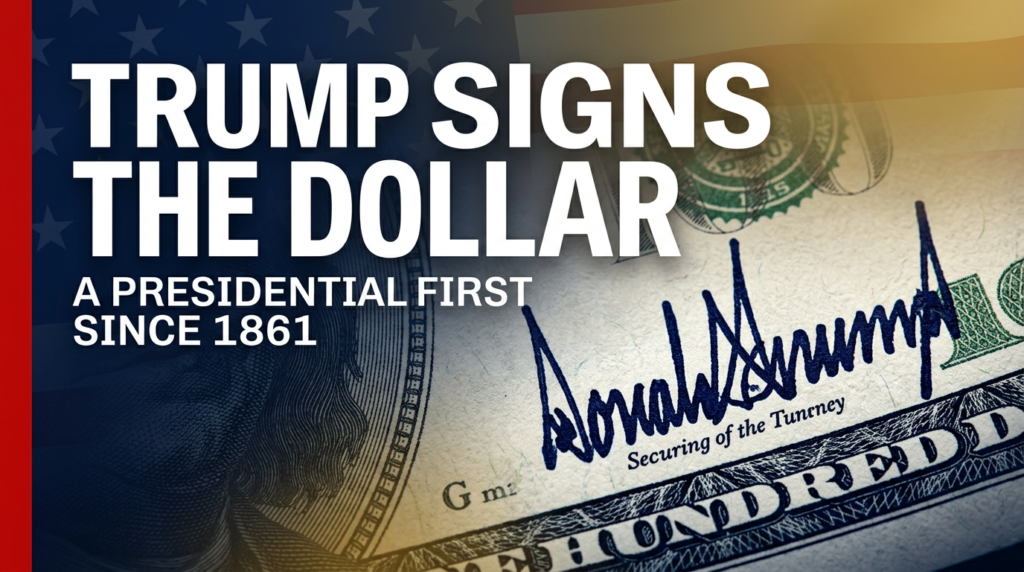
Every dollar bill in your wallet carries a quiet declaration: this note is backed by the full faith and credit of the United States government. Beginning in June 2026, that declaration will carry a new weight — the signature of the 47th President of the United States, Donald J. Trump, alongside Treasury Secretary Scott Bessent.
The Treasury Department made the announcement on March 26, 2026, framing the decision around America’s 250th anniversary — the Semiquincentennial. It’s a bold move, no question. But strip away the noise, and what you have is a moment of rare transparency: a president willing to put his name where the money is, literally and figuratively.
Support Independent Local Journalism
TheTownHall.News is a non-profit reader-supported journalism. Just $5 helps us hire local reporters, investigate important issues, and hold public officials accountable across Alameda County. If you believe our community deserves strong, independent journalism, please consider donating $5 today to support our work.A 165-Year Tradition — and Why It Changed
Since 1861, American paper currency has carried only the signature of the U.S. Treasurer — a tradition designed to keep the political and the financial worlds at arm’s distance. That convention served its purpose for generations.
But traditions aren’t sacred just because they’re old. The question worth asking is: does this tradition still serve the American people — or has it simply become another layer of institutional anonymity that lets officials escape accountability?
Treasury Secretary Scott Bessent put it plainly: “There is no more powerful way to recognize the historic achievements of our great country and President Donald J. Trump than U.S. dollar bills bearing his name.” U.S. Treasurer Brandon Beach added that it is “not only appropriate, but also well deserved.” The $100 bill goes first, entering print circulation in June 2026, with other denominations to follow.
What This Means for Civic Accountability
Here is an idea that should resonate across the political spectrum, even if it doesn’t: accountability requires visibility.

For decades, Americans have grown increasingly frustrated with a federal government that acts without ownership. Policies get passed, money gets spent, and when things go wrong, no single hand is ever on the wheel. Bureaucracies diffuse responsibility until it evaporates entirely.
Trump putting his signature on the currency is, at its core, an act of civic ownership. His name is now tied to the dollar in your pocket — to inflation, to the purchasing power of working families, to the strength of the American economy. If the dollar strengthens, his name is on it. If it weakens, his name is on it. That is accountability made tangible.
Why the Timing Is Significant
The United States turns 250 years old this year — a milestone that demands commemoration in ways that outlast a news cycle.
Coinage and currency have always carried the symbols of their era. The faces on our bills are not arbitrary — they are statements about who we are and what we value as a nation. The 250th anniversary is an appropriate moment to ask: what does America stand for in 2026?
“American currency will continue to stand as a symbol of prosperity, strength, and the unshakable spirit of the American people.” — U.S. Treasurer Brandon Beach
A federal arts commission recently approved a commemorative 24-karat gold coin bearing Trump’s image for the anniversary as well — further signaling the administration’s intent to anchor this historic milestone to the presidency.
Support Independent Local Journalism
TheTownHall.News is a non-profit reader-supported journalism. Just $5 helps us hire local reporters, investigate important issues, and hold public officials accountable across Alameda County. If you believe our community deserves strong, independent journalism, please consider donating $5 today to support our work.What Critics Get Wrong
Predictably, the opposition was swift. California Governor Gavin Newsom took to social media with a sardonic jab: “Now Americans will know exactly who to blame as they’re paying more for groceries, gas, rent, and health care.”
It’s a sharp line — but also a tell. Newsom’s response inadvertently makes the pro-accountability argument for the administration. If putting a president’s name on currency means voters know exactly who to hold responsible for economic conditions, then critics should be celebrating this move, not attacking it. The left has spent years demanding more transparency from government. When they get it in a form they didn’t choose, the goalposts move.
It’s worth noting: during the COVID-19 pandemic in his first term, Trump’s name appeared on stimulus checks sent to millions of Americans. The dollar did not collapse. What it did was remind Americans who their government was and what it was doing.
The Broader Pattern — and Why It Matters
This decision doesn’t exist in a vacuum. It is part of a broader effort by the Trump administration to restore a sense of American identity to federal institutions — institutions that for years have felt increasingly distant, bureaucratic, and unaccountable.
The administration is making a sustained argument: that America has a face, a name, and a leader willing to be identified with its fortunes. Critics call it vanity. Supporters call it leadership. The distinction comes down to whether you believe the president’s record deserves the recognition — and that is precisely the kind of debate a healthy democracy should have openly.
The dollar belongs to the American people. And the American people deserve to know whose hand is steering the ship.
Key Takeaway
Starting with the $100 bill in June 2026, every American will carry in their wallet a visible reminder of who is responsible for the strength of their currency. In a country that values personal responsibility and transparent governance, that is not a scandal. It is a standard worth holding.
Stay Informed. Stay Engaged.
If you believe in independent journalism, government accountability, and the importance of civic knowledge — share this article with your network. Subscribe to The Town Hall News for unfiltered analysis on the stories that shape America.