Venezuela Interior Minister Betrayal: How Diosdado Cabello Enabled Maduro’s Capture
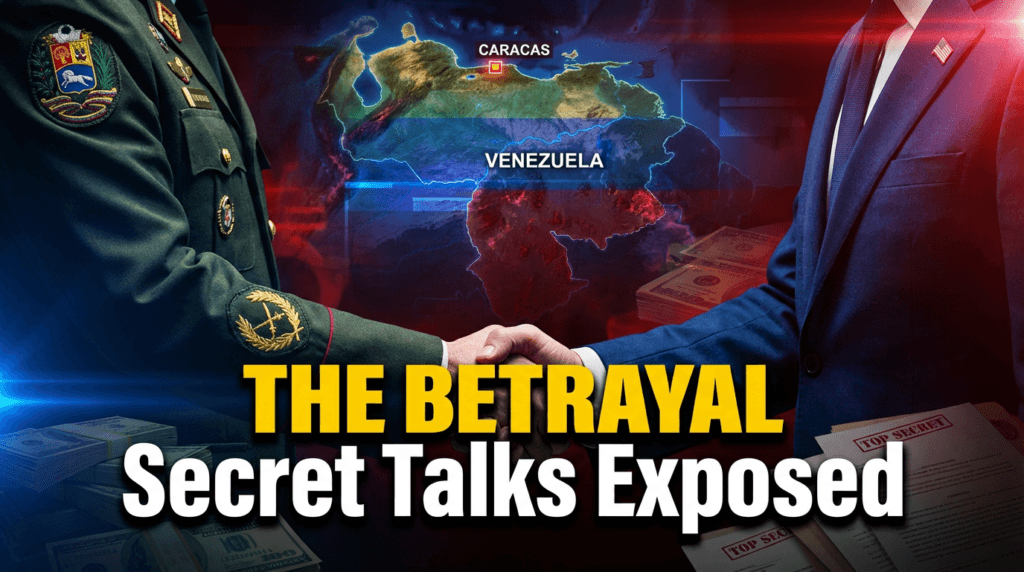
The most stunning revelation from the U.S. military operation that captured Venezuelan dictator Nicolás Maduro isn’t just the audacity of the January 3rd raid—it’s what made it possible. New reporting confirms that Diosdado Cabello, Venezuela’s feared interior minister and Maduro’s supposed enforcer, had been secretly communicating with the Trump administration for months before American forces swooped into Caracas and extracted the socialist strongman.
This isn’t just a story about one official’s duplicity. It’s a masterclass in how authoritarian regimes collapse from within when their own enforcers recognize that power—not ideology—is what matters. And it raises profound questions about American foreign policy, the rule of law, and what happens when dictatorships finally face consequences for decades of corruption and drug trafficking.
The Betrayal That Made History
According to multiple sources familiar with the matter, Trump administration officials began discussions with Cabello in the early days of Trump’s second term—well before the January 3rd operation that resulted in 83 deaths, including 47 Venezuelan soldiers and 32 Cuban troops protecting Maduro. The communications continued right up to the raid and have persisted since Maduro’s capture.
Support Independent Local Journalism
TheTownHall.News is a non-profit reader-supported journalism. Just $5 helps us hire local reporters, investigate important issues, and hold public officials accountable across Alameda County. If you believe our community deserves strong, independent journalism, please consider donating $5 today to support our work.Let that sink in: The man responsible for Venezuela’s domestic intelligence apparatus, its police forces, and the feared colectivos—armed motorcycle gangs that terrorize dissidents—was talking to Washington while publicly pledging loyalty to Maduro. The same official who faces a $25 million U.S. bounty for drug trafficking was negotiating with the very government seeking his arrest.
This is what happens when socialist dictatorships built on corruption and violence finally meet their reckoning. The ideology evaporates. The revolutionary rhetoric disappears. What remains are calculating operators trying to save themselves as the ship goes down.
Personal Responsibility in the Face of Tyranny
The Cabello situation illuminates a fundamental conservative principle: individuals make choices, and those choices have consequences. For years, Cabello chose to be Maduro’s chief enforcer. He oversaw widespread domestic espionage. He commanded the security apparatus that imprisoned political opponents and crushed dissent. According to U.S. prosecutors, he helped run the “Cartel de los Soles,” a narco-trafficking network that flooded American streets with cocaine.
But when faced with his own potential capture and the collapse of the regime he helped build, Cabello made a different choice. He engaged with American officials. He was warned against using his security forces to target Venezuela’s opposition. And critically, he wasn’t taken during the raid that captured Maduro—despite being listed second in the same Department of Justice indictment.
This isn’t about celebrating Cabello as a hero. It’s about recognizing that even within corrupt systems, individuals retain agency. They can choose to perpetuate evil or step back from it. The Trump administration understood this and leveraged it brilliantly.
Law and Order on the International Stage
Critics of the Maduro operation have questioned its legality under international law. But here’s what they’re missing: The United States has not only a right but a duty to pursue narco-terrorists who flood our communities with deadly drugs and destabilize an entire hemisphere.
Maduro wasn’t just an authoritarian who rigged elections. He ran a narco-state that exported violence, drugs, and millions of refugees into neighboring countries and ultimately toward the U.S. border. The Trump administration’s decision to finally enforce American law—to treat drug trafficking charges against a head of state as seriously as charges against any other criminal—represents a restoration of law and order principles on the global stage.
Deputy Attorney General Todd Blanche put it plainly: The United States has “an absolute legal right to go and arrest people charged with horrible crimes.” When a regime becomes a criminal enterprise, when a government exists primarily to traffic narcotics and oppress its people, it forfeits the protections normally afforded to sovereign nations.
This is what accountability looks like. For decades, international institutions have allowed dictators to hide behind sovereignty while committing atrocities. The Trump administration’s willingness to act—to actually enforce the law rather than issue meaningless resolutions—sends a clear message: Actions have consequences.
Support Independent Local Journalism
TheTownHall.News is a non-profit reader-supported journalism. Just $5 helps us hire local reporters, investigate important issues, and hold public officials accountable across Alameda County. If you believe our community deserves strong, independent journalism, please consider donating $5 today to support our work.The Limits of Government and the Dangers of Socialism
Venezuela’s collapse offers a devastating case study in why limited government matters. Under Hugo Chávez and then Maduro, Venezuela went from being South America’s wealthiest nation—sitting atop the world’s largest proven oil reserves—to a failed state where people eat zoo animals to survive.
This didn’t happen because of American sanctions or “imperialism,” as the regime’s apologists claim. It happened because socialist central planning destroyed a functional economy. Price controls created shortages. Nationalizations drove away investment and expertise. Corruption became the only way to survive in a system where government controlled everything.
The interim government now led by Delcy Rodriguez faces a monumental task: rebuilding a nation destroyed by decades of socialist mismanagement. But here’s the catch—Rodriguez herself was part of that system. She served as Maduro’s vice president and oil minister. The Trump administration’s apparent strategy of working with regime insiders rather than the democratic opposition has raised eyebrows, but it reflects a pragmatic calculation about who can actually maintain order during a transition.
This is where conservative principles about limited government become crucial for Venezuela’s future. The country doesn’t need another strongman or a different flavor of authoritarianism. It needs property rights, rule of law, free markets, and institutions that constrain government power rather than concentrate it.
Fiscal Accountability and Venezuela’s Oil Wealth
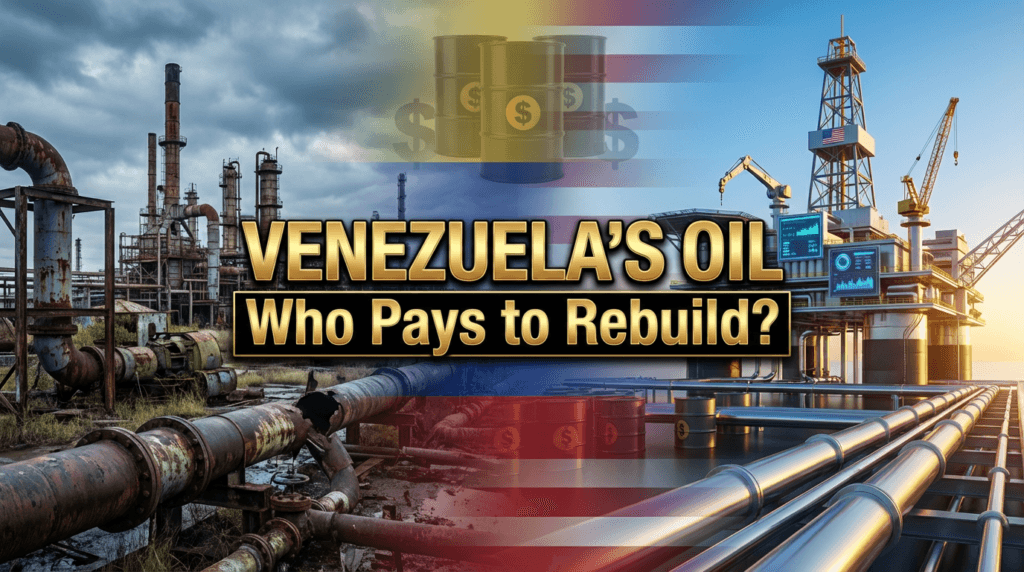
President Trump has been characteristically blunt about American interests in Venezuela’s oil reserves. “American oil companies will return to Venezuela and rebuild the sector’s infrastructure,” he told reporters, suggesting the work could be completed in less than 18 months.
Critics have pounced on this as evidence of imperialism. But let’s be clear about what’s actually happening: Venezuela’s oil infrastructure is in ruins because socialist mismanagement destroyed it. The country with the world’s largest oil reserves can barely produce oil. Meanwhile, Venezuela owes American companies billions in seized assets from illegal nationalizations.
The Trump administration’s approach—having American companies rebuild Venezuela’s oil sector in exchange for access to those resources—isn’t exploitation. It’s fiscal accountability. Venezuela’s oil wealth should benefit the Venezuelan people, not line the pockets of socialist kleptocrats. But rebuilding requires expertise, investment, and infrastructure that Venezuela doesn’t have.
If American companies invest billions to repair the damage socialism caused, they deserve compensation. That’s not imperialism—it’s basic economics. And if that reconstruction also helps secure American energy independence and lowers gas prices for American families, that’s called protecting American interests, which is exactly what a president should do.
What Happens Next: The Cabello Question
The most intriguing aspect of these revelations is what they mean for Venezuela’s immediate future. Cabello controls the security apparatus that could either maintain stability or plunge the country into chaos. He faces a $25 million bounty and serious drug trafficking charges, yet he remains in his position as interior minister.
The Trump administration is clearly trying to thread a needle: maintain enough leverage over Cabello to prevent violence while eventually removing him from power. As Elliott Abrams, Trump’s former special representative on Venezuela, noted: “If and when he goes, Venezuelans will know that the regime has really begun to change.”
This raises uncomfortable questions that conservatives must grapple with honestly. Is it acceptable to work with indicted narco-traffickers if doing so prevents bloodshed and facilitates transition? Does the end of removing a dictator justify the means of negotiating with his henchmen?
These aren’t easy questions, and reasonable people can disagree. But what’s clear is that the Trump administration prioritized results over ideological purity. They recognized that Cabello, despite his criminal record, held power that could either facilitate or obstruct their objectives. They engaged with that reality rather than pretending it didn’t exist.
This is pragmatic conservatism—understanding the world as it is, not as we wish it were, while still working toward better outcomes.
The Broader Message to Dictators
The Maduro capture and the Cabello revelations send an unmistakable message to authoritarian regimes worldwide: America is no longer a paper tiger. The days of endless negotiations, toothless sanctions, and strongly worded statements are over.
If you run a narco-state, if you flood American communities with drugs, if you create humanitarian disasters that send millions of refugees toward U.S. borders—there will be consequences. And those consequences might include American special forces landing in your capital at 3 AM.
This isn’t warmongering. It’s deterrence. For years, dictators have calculated that they could commit atrocities with impunity because Western democracies lacked the will to act. The Venezuela operation recalibrates those calculations.
China and Russia are watching. Cuba is watching. Iran is watching. They’ve seen that their Venezuelan ally was captured and is now sitting in a Manhattan jail cell wearing orange prison garb. They’ve seen that even Maduro’s most loyal enforcer was hedging his bets with Washington.
The international order isn’t based on the strength of institutions like the United Nations—it’s based on the willingness of powerful nations to enforce norms and protect their interests. The Trump administration’s actions in Venezuela demonstrate that American power, when properly applied, remains the most effective force for change in the world.
Conclusion: Principles and Pragmatism
The Venezuela interior minister betrayal reveals something essential about how tyrannies end: not with grand ideological awakenings, but with calculating insiders recognizing which way the wind is blowing. Diosdado Cabello didn’t have a moral conversion—he made a survival calculation.
But that doesn’t diminish the significance of what’s happened. A dictator who terrorized his people for over a decade now faces justice in an American courtroom. A narco-state that poisoned American communities is collapsing. And the officials who enabled that regime are scrambling to save themselves.
The Trump administration’s approach combines conservative principles with cold-eyed pragmatism. They recognized that removing Maduro required leverage over the security forces that kept him in power. They understood that perfect solutions don’t exist in international relations—only better and worse options. And they chose action over endless deliberation.
Venezuela’s future remains uncertain. The interim government is led by former regime insiders. The democratic opposition has been sidelined. American oil companies are positioning to rebuild infrastructure destroyed by socialism. None of this is neat or ideologically pure.
But here’s what matters: A narco-trafficker who masqueraded as a president is facing justice. The socialist regime that destroyed a nation is collapsing. And America is finally putting its interests first while creating conditions for Venezuela to rebuild on principles of free markets and limited government rather than authoritarian socialism.
That’s not imperialism. That’s leadership.
Call to Action
The Venezuela story is still unfolding, and what happens next will shape not just that nation’s future but America’s role in the hemisphere for decades to come. Stay informed about developments as the Trump administration navigates this complex situation. Share this article with others who need to understand what’s really happening beyond the mainstream media’s simplistic narratives. And most importantly, demand that your elected representatives support policies that put American interests first while promoting freedom and accountability abroad.
The collapse of the Maduro regime proves that dictatorships built on corruption and socialism eventually fail. Our job is to ensure that what replaces them is better—for Venezuelans, for the hemisphere, and for American security and prosperity.