When Election Officials Break the Rules: The Timothy Scouton Case and What It Means for Election Integrity
One Man, Eleven Votes, and a Crack in the Foundation
The integrity of American elections does not rest on grand gestures or sweeping federal mandates. It rests on something far more fundamental: the thousands of ordinary citizens who show up on Election Day as poll workers, election judges, and county officials — people trusted to uphold the law, one precinct at a time.
Which is why what happened in Badoura Township, Minnesota, on November 5, 2024, deserves far more national attention than it has received.
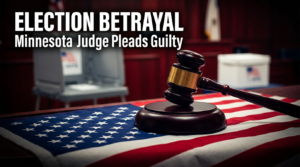
Timothy Michael Scouton, 65, the head election judge for a small Hubbard County precinct, allowed eleven unregistered individuals to cast ballots in the 2024 general election — in direct violation of Minnesota state law. On March 23, 2026, he pleaded guilty to a felony count of accepting ballots from unregistered voters. Sentencing is scheduled for May 18, 2026.
Support Independent Local Journalism
TheTownHall.News is a non-profit reader-supported journalism. Just $5 helps us hire local reporters, investigate important issues, and hold public officials accountable across Alameda County. If you believe our community deserves strong, independent journalism, please consider donating $5 today to support our work.This is not a story about a partisan conspiracy. It is not a story about a stolen election. It is a story about something arguably more dangerous in the long run: what happens when the people entrusted to enforce the rules decide the rules don’t apply to them.
The Facts of the Case
Scouton had served as an election judge in Hubbard County for approximately ten years. He completed both basic and head judge training as recently as July 2024 — just months before the election. He knew the rules. There is no credible argument that he did not.
On Election Day, when eleven individuals arrived at his precinct without completed voter registration forms, Scouton did not turn them away, did not flag the issue for county officials, and did not attempt to resolve the problem through proper channels. Instead, according to court records and reporting from Alpha News Minnesota, he directed other judges at his precinct not to use the required registration forms and had the eleven individuals sign the “back of the book” — an improvised workaround with no legal basis.
The discrepancy was discovered two days later, on November 7, when Hubbard County Auditor Kay Rave found that no completed registration forms had been returned for those eleven voters. An investigation was launched. Scouton was arrested and charged with two felonies: accepting ballots from unregistered voters and neglect of duty. He pleaded guilty to the first count; the second was dismissed as part of a plea agreement.

He now faces up to five years in prison and a $10,000 fine — and is permanently barred from ever serving as an election judge again.
Personal Responsibility: There Are No Acceptable Excuses
Scouton’s defense attorney, Anthony Bussa, has argued that his client’s conduct was not intentional criminal behavior, but rather a good-faith attempt to accommodate voters on a chaotic Election Day. The voters, Bussa notes, did sign a log with their names, addresses, and dates of birth, and their identities were checked against driver’s licenses.
That argument deserves scrutiny — and it fails.
Voter registration is not a bureaucratic formality designed to inconvenience the public. It is a foundational safeguard that ensures the people casting ballots are who they say they are, that they live where they claim to live, and that they are legally eligible to vote. The requirement exists precisely because elections are not casual civic exercises — they are legally binding processes whose outcomes carry enormous consequences.
An election judge who cannot locate the required forms has exactly one appropriate response: stop, escalate, and seek guidance from county officials. Scouton did none of that. He improvised a workaround, directed subordinate judges to follow his lead, and sent eleven people home having cast ballots they were not legally entitled to cast. That is not a paperwork error. That is a unilateral decision by one individual to override the law.
Support Independent Local Journalism
TheTownHall.News is a non-profit reader-supported journalism. Just $5 helps us hire local reporters, investigate important issues, and hold public officials accountable across Alameda County. If you believe our community deserves strong, independent journalism, please consider donating $5 today to support our work.Personal responsibility means owning the consequences of your choices — not asking a judge to treat a felony like a misdemeanor because your intentions were good.
Law and Order: The System Worked — But Only Barely
There is a silver lining here worth acknowledging: the system caught this. Auditor Kay Rave did her job. The investigation moved forward. A guilty plea was secured. The rule of law, in this instance, prevailed.
Minnesota Secretary of State Steve Simon noted that election crimes by election workers are “nearly unprecedented,” and that of 83 election-related criminal cases in Minnesota since 2020, almost all involved voters — not officials. That context matters. The vast majority of America’s election workers are honest, dedicated public servants.
But “nearly unprecedented” is not the same as “impossible,” and the Scouton case illustrates exactly the kind of vulnerability that election integrity advocates have long warned about: a single individual, in a position of authority, deciding that the rules are optional. The fact that eleven votes in a small township almost certainly did not change any election outcome is beside the point. Principles do not bend for small numbers. Either the law applies uniformly, or it doesn’t apply at all.
The conservative case for law and order has never been about blind deference to government. It is about the recognition that ordered liberty depends on rules being followed consistently — especially by those entrusted with enforcing them. When an election judge bypasses voter registration law, he isn’t just bending a rule. He is eroding the public’s confidence in the entire democratic process.
Election Integrity Is Not a Partisan Issue — It’s a Civic Obligation
Critics of election integrity efforts often dismiss concerns about procedural violations as thinly veiled voter suppression. But the Scouton case makes that framing impossible to sustain. Here, the violation ran in the opposite direction: an official made it easier for people to vote outside the legal framework, not harder.
The lesson is not that elections are rigged or that fraud is rampant. The lesson is simpler and more important: rules exist for a reason, and everyone — regardless of intent — must follow them.
Election integrity is not a Republican issue or a Democratic issue. It is the foundational condition under which self-governance is possible. A society that cannot trust its election results cannot function as a democracy. And trust is built not through rhetoric, but through consistent, transparent enforcement of the rules that govern how votes are cast and counted.
This is why the prosecution of Timothy Scouton matters, even if his precinct is small, even if his actions did not swing an election, and even if his attorney argues his heart was in the right place. The message sent by accountability is just as important as the specific facts of any individual case.
What Comes Next: May 18 and the Question of Consequences
Hubbard County Attorney John Olson has indicated he will argue against any sentencing departure at the May 18 hearing. Scouton’s defense team will push for a gross misdemeanor-level sentence, citing the absence of fraudulent intent and the informal verification steps taken on Election Day.
The court’s decision will carry weight beyond this case. A lenient sentence risks signaling that election officials who bend the rules face minimal consequences. A sentence commensurate with the felony conviction would reinforce that election law is not a suggestion — it is a binding standard that applies to every participant in the process, from the voter at the booth to the judge at the front of the room.
Justice, in this case, requires more than a guilty plea. It requires a consequence serious enough to matter.
Conclusion: Vigilance Is the Price of Free and Fair Elections
The story of Timothy Scouton will not dominate cable news. It will not trend on social media for more than a day. It involves eleven votes in a township most Americans have never heard of, and a man whose neighbors probably never imagined he’d become a felony defendant.
But that is precisely why it matters.
Free and fair elections are not protected by grand institutions or sweeping laws alone. They are protected by the cumulative weight of thousands of small acts of compliance — by election judges who follow the rules even when no one is watching, by auditors who check the paperwork even when everything seems fine, and by prosecutors who pursue accountability even when the stakes seem small.
Timothy Scouton failed that standard. The system, to its credit, held him accountable. The question now is whether the sentence on May 18 will be worthy of the principle at stake.
📢 Call to Action
Stay informed. Stay engaged. Stay involved.
Election integrity begins at the local level. Here’s how you can make a difference:
- Follow the May 18 sentencing and hold your local officials accountable for how they respond to cases like this.
- Share this article with anyone who believes the rule of law must apply equally to everyone — especially those in positions of public trust.
- Volunteer as an election judge or poll worker. Honest, informed citizens in those roles are the single most effective safeguard against the kind of failure this case represents.
- Contact your state legislators and urge robust training, oversight, and real accountability for election officials.
The strength of American democracy is not guaranteed. It is earned, precinct by precinct, election by election, by citizens who refuse to look the other way.
Sources: Star Tribune, Alpha News Minnesota, KAXE North, Red Lake Nation News, Hubbard County court records, Minnesota Secretary of State’s office.