When the Lights Go Out: Israel Energy Crisis and the True Cost of War in the Middle East
The World Is Watching — And the Stakes Have Never Been Higher
The Middle East is on fire — and this time, the flames are reaching the power grid.
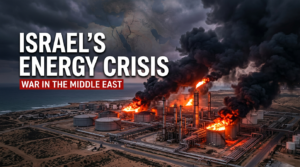
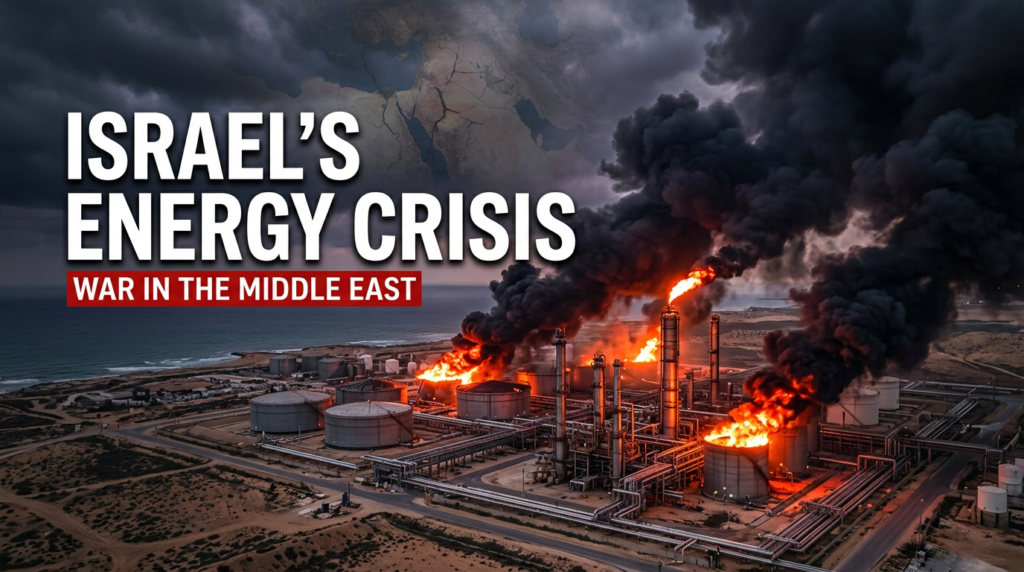
As the conflict between Israel and Iran escalates into one of the most consequential military confrontations of the 21st century, a new and deeply troubling front has emerged: the systematic targeting of energy infrastructure. Israel’s natural gas fields have been shut down. Refineries have taken hits. And the ripple effects are being felt at gas pumps and power stations from Tel Aviv to Texas.
This is not just a regional conflict. It is a stress test for Western civilization’s most foundational commitments — to energy independence, national sovereignty, fiscal responsibility, and the rule of law. And how the free world responds will define the geopolitical order for decades to come.
Support Independent Local Journalism
TheTownHall.News is a non-profit reader-supported journalism. Just $5 helps us hire local reporters, investigate important issues, and hold public officials accountable across Alameda County. If you believe our community deserves strong, independent journalism, please consider donating $5 today to support our work.What Is Actually Happening on the Ground
Let’s be clear about the facts, because misinformation is spreading as fast as the missiles.
In late February 2026, Israel and the United States launched a coordinated strike campaign against Iran, targeting nuclear facilities, military leadership compounds, and ballistic missile infrastructure. In response, the Israeli Energy Ministry ordered the temporary shutdown of parts of the country’s natural gas reservoirs and fuel refineries — a precautionary but significant move that exposed just how vulnerable modern democratic nations are when their energy systems become military targets.
Iran wasted no time retaliating. Iranian strikes have damaged Israeli oil and gas infrastructure, with reports of significant disruptions confirmed around March 12, 2026. Simultaneously, Israel struck a major oil refinery south of Tehran that supplies approximately 15% of Iran’s total energy needs. The conflict has also throttled traffic through the Strait of Hormuz, the narrow waterway through which roughly 20% of the world’s oil supply flows daily.
The Guardian has described the resulting disruption as potentially the “largest supply disruption in the history of oil markets.” That is not hyperbole. That is a five-alarm warning to every government, every household, and every economy that depends on stable energy.
Energy Security Is National Security
Conservatives have long argued what the left has repeatedly dismissed: energy independence is not a luxury — it is a national security imperative.
For decades, Western nations were warned that over-reliance on volatile regions for energy would eventually come back to haunt them. Those warnings were ignored in favor of globalist trade agreements, climate-driven energy restrictions, and a naïve faith that diplomacy alone could neutralize authoritarian regimes.
Israel’s current crisis is the consequence of that thinking taken to its logical extreme. When a nation’s energy infrastructure becomes a legitimate military target — and when adversaries are willing to exploit it — the absence of robust domestic energy reserves and redundant supply chains is not merely an inconvenience. It is an existential vulnerability.
The United States and its allies must take note. Strategic energy reserves, domestic production capacity, and diversified supply chains are not talking points — they are lifelines. A government’s first obligation is to protect its citizens, and that protection must extend to the systems that keep the lights on, the hospitals running, and the economy functioning.
Fiscal Accountability and the Hidden Cost of Dependence
There is also a profound fiscal argument to be made here that too few leaders are making.
Support Independent Local Journalism
TheTownHall.News is a non-profit reader-supported journalism. Just $5 helps us hire local reporters, investigate important issues, and hold public officials accountable across Alameda County. If you believe our community deserves strong, independent journalism, please consider donating $5 today to support our work.Global oil prices have spiked dramatically in response to the Hormuz disruption, straining household budgets and national economies already stretched thin by years of post-pandemic inflation. Governments are now scrambling to release strategic oil reserves — a short-term fix that does nothing to address the underlying structural problem.
Fiscal responsibility demands long-term thinking. The cost of investing in domestic energy infrastructure, diversified supply chains, and genuine energy independence is a fraction of the economic devastation that results from energy market collapse during a geopolitical crisis. Every dollar not spent on proactive energy security today becomes ten dollars spent on crisis management tomorrow.
The conservative principle here is straightforward: government exists to protect its citizens and steward public resources wisely. Allowing critical national infrastructure to remain vulnerable to foreign attack — while simultaneously restricting domestic energy development in the name of short-term political gains — is a betrayal of that obligation. Taxpayers deserve better than leaders who mortgage their security for ideological comfort.
Law, Order, and the Rules of Civilized Nations
Beyond energy, this conflict raises urgent questions about international law, sovereignty, and the rules-based order that Western civilization has spent decades constructing.
Iran’s targeting of civilian energy infrastructure — refineries, gas fields, and distribution networks — is not merely a military tactic. It is an assault on civilian populations who depend on those systems for heat, light, medical care, and economic survival. Under international law, deliberate attacks on civilian infrastructure constitute war crimes.
Law and order must mean something — both at home and abroad. Conservatives who believe in the rule of law domestically must apply that same principle internationally. A world in which rogue regimes can bomb power grids and cripple civilian economies without meaningful accountability is a world trending toward chaos. The failure to hold Iran accountable for its actions — through coordinated sanctions, diplomatic isolation, and if necessary military deterrence — sends a dangerous signal to every authoritarian government watching from the sidelines.
The free world cannot preach law and order at home while tolerating lawlessness abroad. That contradiction is not just morally inconsistent — it is strategically fatal.
Free Speech, Truth, and the Fog of Information Warfare
One dimension of this conflict that deserves special attention is the staggering volume of misinformation circulating on social media. Within hours of the latest strikes, viral posts were claiming that Iran had destroyed a secret Mossad bunker, that Netanyahu had been assassinated, and that Israel’s energy supply had been “obliterated.” All of these claims were either false or wildly exaggerated.
This is not accidental. Information warfare is a core component of modern conflict, and authoritarian regimes have become extraordinarily sophisticated at seeding false narratives into Western social media ecosystems. Iranian state-linked media has been directly implicated in spreading fabricated stories about Netanyahu’s death and Israeli military losses.
Free speech is a sacred value — but truth is its foundation. A society that cannot distinguish between verified reporting and state-sponsored propaganda is a society that cannot defend itself. Conservatives who champion free speech must equally champion media literacy, source verification, and the courage to call out misinformation regardless of which narrative it serves. The antidote to bad speech is not censorship — it is better, bolder, more rigorous journalism.
What This Means for the West — And What Must Be Done
The Israel energy crisis is a mirror. It reflects back to us — clearly and uncomfortably — the consequences of decades of strategic complacency, energy dependence, and a foreign policy culture that prioritized negotiation over deterrence.
The path forward demands a return to first principles:
- Energy independence must be treated as a national security priority, not a partisan talking point. Domestic production, strategic reserves, and infrastructure hardening are non-negotiable.
- Fiscal discipline requires honest accounting of the true cost of energy vulnerability. Leaders must invest proactively rather than spend reactively.
- The rule of law must be enforced internationally, with real consequences for regimes that target civilian infrastructure and civilian populations.
- Truth must be defended actively. In an era of information warfare, citizens have a responsibility to consume news critically and demand accuracy from the platforms and outlets they trust.
The lights going out in Israel is not just Israel’s problem. It is a warning to every free nation that complacency has a price — and that price is being paid right now, in real time, by real people.
Conclusion: Strength, Clarity, and the Will to Act
Conservatives have always understood that strength deters aggression, that freedom is not free, and that the systems underpinning civilized life — energy, law, truth, sovereignty — must be actively defended, not passively assumed.
The crisis unfolding in the Middle East is a test of whether the West still has the clarity to recognize a threat and the will to respond to it with purpose and principle. Half-measures, wishful thinking, and politically convenient narratives will not protect us.
The time for bold, principled leadership is now.
📣 Call to Action
Stay informed. Stay engaged. Share this article with someone who needs to understand what’s really at stake in the Middle East — and what it means for our energy security, our economy, and our way of life. Subscribe to our newsletter for fact-checked, principle-driven analysis you won’t find in the mainstream media. Because an informed citizenry is the first line of defense.