Hayward’s 2026 Minimum Wage Hike: Another Mandate That Hurts the Workers It Claims to Help
Good Intentions, Harmful Consequences
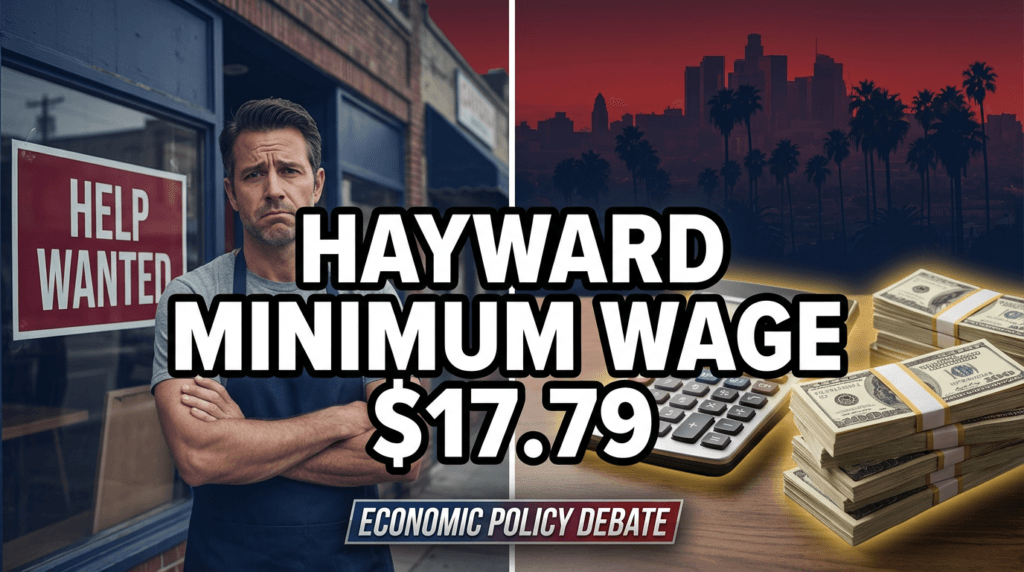
Hayward, California, has joined the growing list of cities imposing aggressive minimum wage mandates on local businesses. Starting in 2026, the city will require large employers to pay workers at least $17.79 per hour, while smaller businesses must pay $16.90. Meanwhile, neighboring Oakland has set its minimum wage at $17.34 across the board.
On the surface, these increases sound compassionate—who doesn’t want workers to earn more? But beneath the feel-good rhetoric lies a troubling reality: government-mandated wage hikes don’t create prosperity. They redistribute costs, eliminate jobs, and punish the very small businesses that form the backbone of our communities.
Conservatives understand that economic growth comes from opportunity, not mandates. When government forces businesses to pay wages disconnected from productivity and market conditions, it doesn’t lift workers up—it prices them out of the labor market entirely. Hayward’s latest wage mandate is a textbook example of progressive policy that prioritizes political optics over economic reality.
Support Independent Local Journalism
TheTownHall.News is a non-profit reader-supported journalism. Just $5 helps us hire local reporters, investigate important issues, and hold public officials accountable across Alameda County. If you believe our community deserves strong, independent journalism, please consider donating $5 today to support our work.Let’s examine why this mandate will hurt more than it helps, and what it reveals about the broader failure of government intervention in the free market.
The Illusion of Compassion: Why Mandates Don’t Equal Prosperity
Supporters of minimum wage increases frame their position as a moral imperative: workers deserve a “living wage,” and greedy employers won’t pay it without government coercion. But this narrative ignores basic economic principles that have been proven time and again.
Wages reflect value, not need. In a free market, wages are determined by the productivity and skills a worker brings to an employer, balanced against what consumers are willing to pay for goods and services. When government artificially inflates wages beyond what a business can sustain, one of three things happens: businesses raise prices (passing costs to consumers), cut hours or staff (eliminating jobs), or close their doors entirely.
Hayward’s tiered approach—$17.79 for large employers, $16.90 for smaller ones—acknowledges this reality implicitly. The city recognizes that small businesses operate on thinner margins and can’t absorb sudden cost increases as easily as larger corporations. But this admission undermines the entire premise of the mandate. If small businesses can’t afford $17.79, why assume they can afford $16.90? And why assume any business, regardless of size, should be forced to pay wages that don’t align with their revenue and productivity?
The uncomfortable truth is that minimum wage mandates are not about helping workers—they’re about politicians demonstrating their compassion at someone else’s expense. The costs are borne by business owners, entry-level workers who lose opportunities, and consumers who pay higher prices.
The Real Victims: Small Businesses and Entry-Level Workers
While large corporations like Amazon or Walmart can absorb wage increases through automation, efficiency gains, or price hikes, small businesses don’t have that luxury. A family-owned restaurant, retail shop, or service provider operates on razor-thin margins. Every dollar added to labor costs is a dollar that must come from somewhere else—often from the owner’s own livelihood or from the jobs they can no longer afford to offer.
Small businesses will cut hours and staff. Faced with a mandate that increases payroll costs by 10% or more overnight, many businesses will reduce employee hours, eliminate positions, or delay hiring. The workers who most need entry-level jobs—teenagers, recent immigrants, those re-entering the workforce—will find fewer opportunities available. The city’s mandate doesn’t guarantee anyone a job; it only guarantees that some jobs won’t exist.
Automation accelerates. Large employers respond to wage mandates by investing in technology that replaces workers. Self-checkout kiosks, automated ordering systems, and AI-driven customer service are already replacing entry-level positions across the country. Hayward’s mandate will accelerate this trend, leaving low-skilled workers with fewer pathways to employment.
Prices rise, hurting consumers. Businesses that survive the mandate will pass costs to consumers through higher prices. This disproportionately impacts low- and middle-income families—the very people progressive policies claim to help. A $2 increase in the cost of a meal or haircut may seem small, but it adds up quickly for families already struggling with California’s high cost of living.
Support Independent Local Journalism
TheTownHall.News is a non-profit reader-supported journalism. Just $5 helps us hire local reporters, investigate important issues, and hold public officials accountable across Alameda County. If you believe our community deserves strong, independent journalism, please consider donating $5 today to support our work.Oakland’s Mandate: A Cautionary Tale Next Door
Hayward isn’t alone. Oakland’s $17.34 minimum wage is part of the same progressive wave sweeping Alameda County. But Oakland’s experience should serve as a warning, not a model.
Oakland has already seen the consequences of aggressive wage mandates: small businesses closing, restaurants cutting staff, and employers moving operations to neighboring cities with lower labor costs. The city’s business climate has deteriorated, and its tax base has suffered as a result. Yet rather than learn from these failures, Hayward is doubling down on the same approach.
The regional race to the bottom. When cities compete to impose the highest minimum wage, they don’t create prosperity—they create a patchwork of regulations that punish businesses and confuse workers. A restaurant owner in Hayward must navigate different wage rules than a competitor in Fremont or San Leandro. This regulatory chaos discourages investment and makes it harder for businesses to plan for the future.
Conservatives believe in local control, but not when it means local governments imposing mandates that violate free-market principles. The solution isn’t for every city to set its own arbitrary wage floor—it’s for government to step back and let businesses and workers negotiate terms that reflect local conditions and individual circumstances.
The Conservative Alternative: Opportunity, Not Mandates
So what’s the alternative? How do we help workers earn more without destroying the businesses that employ them?
1. Reduce the cost of living. California’s high cost of living—driven by excessive regulation, housing shortages, and high taxes—is the real culprit behind workers’ struggles. Instead of forcing businesses to pay higher wages, Hayward should focus on reducing housing costs, streamlining permitting processes, and cutting taxes. When it’s cheaper to live and operate a business, everyone benefits.
2. Encourage skills development. Minimum wage jobs are meant to be entry points, not careers. Instead of mandating higher pay for low-skill work, we should invest in vocational training, apprenticeships, and education that help workers develop marketable skills. A worker who earns $20 per hour because of their skills is far better off than one who can’t find a job because the minimum wage priced them out.
3. Support small business growth. Hayward should be making it easier, not harder, to start and run a business. Reducing red tape, offering tax incentives, and protecting businesses from frivolous lawsuits would create more jobs and more opportunities for workers to advance.
4. Trust the free market. Businesses that don’t pay competitive wages lose workers to competitors who do. The market self-corrects without government intervention. When government steps in with mandates, it disrupts this process and creates unintended consequences that hurt the very people it claims to help.
Fiscal Accountability: Who Pays for This Mandate?
One of the most frustrating aspects of minimum wage mandates is that politicians get to claim credit for “helping workers” without bearing any of the costs. The city of Hayward doesn’t pay the higher wages—business owners do. The city doesn’t lose revenue when businesses close or move—taxpayers do.
This is the opposite of fiscal accountability. If Hayward’s city council truly believes workers need higher pay, they should fund it through the city budget, not force private businesses to absorb the cost. Of course, that would require raising taxes or cutting spending—politically unpopular moves that reveal the true cost of progressive policies.
Conservatives believe in transparency and accountability. If a policy has costs, those costs should be visible and borne by those who support the policy, not hidden in the form of job losses, higher prices, and business closures.
Conclusion: Mandates Are Not Compassion
Hayward’s 2026 minimum wage increase is a textbook example of progressive policy that prioritizes good intentions over good outcomes. It will hurt small businesses, eliminate jobs, and raise costs for consumers—all while politicians pat themselves on the back for their compassion.
True compassion means creating an environment where businesses thrive, workers have opportunities to advance, and families can afford to live. It means trusting individuals and businesses to make decisions that reflect their unique circumstances, rather than imposing one-size-fits-all mandates from city hall.
Oakland’s struggles should serve as a warning. Hayward still has time to reverse course, but only if voters and business owners speak up and demand policies that promote opportunity, not mandates.
Call to Action
Stay informed. Follow local news and attend city council meetings to understand how these mandates affect your community.
Support small businesses. Shop local and let business owners know you value their contributions to the community.
Get involved. Contact your city representatives and demand policies that promote economic growth, not government overreach.
Share this article. Help others understand the real consequences of minimum wage mandates and the conservative principles that offer a better path forward.
The fight for free markets and fiscal accountability starts at the local level. Don’t let Hayward become another cautionary tale.