
Hayward’s Budget Is “Balanced,” But Staff Says the City Still Needs Another $2M to $4M Cushion
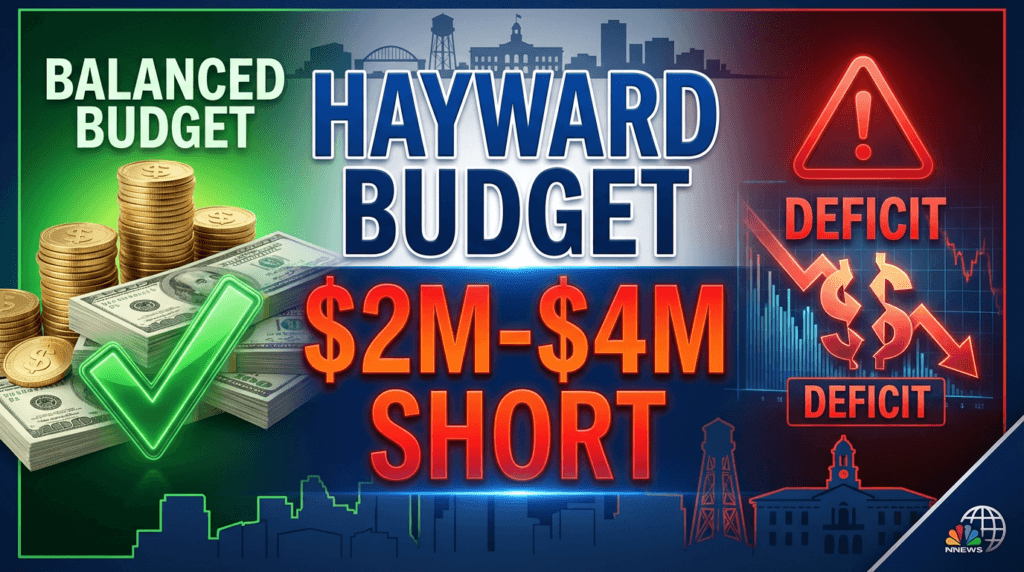
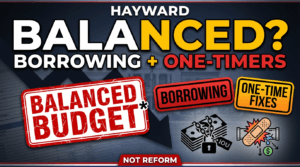
Hayward officials are presenting a budget plan they describe as balanced. But in the City’s own budget materials, staff also delivers a blunt warning: even after the balancing actions, Hayward still needs another $2 million to $4 million to establish a modest 1 to 2 percent operating contingency for the next six months.
That detail matters for taxpayers because a “balanced” budget without a meaningful contingency is not truly stable. It is a plan that can be knocked off course by routine surprises, from revenue shortfalls to overtime spikes, vendor costs, or unforeseen emergencies.
What staff is asking for, and why
In the budget update presentation, staff indicates the City is working to identify an additional $2M to $4M to create a 1 to 2 percent operating contingency.
Support Independent Local Journalism
TheTownHall.News is a non-profit reader-supported journalism. Just $5 helps us hire local reporters, investigate important issues, and hold public officials accountable across Alameda County. If you believe our community deserves strong, independent journalism, please consider donating $5 today to support our work.Contingencies are not optional padding. In municipal finance, they are a basic safeguard that helps prevent emergency cuts mid-year. Without that cushion, a city has fewer responsible options when something goes wrong, and “something” almost always goes wrong.
A 1 to 2 percent contingency is also not generous. It is closer to a bare minimum. The fact that Hayward is still searching for it after the budget has been “balanced” raises a credibility problem: the budget may be balanced on paper, but it is not balanced with resilience.
Why a missing contingency increases the risk of sudden cuts or new fees
When a city lacks a real contingency, it typically turns to one of the following moves when costs or revenues shift unexpectedly:
- spending freezes that delay maintenance and projects,
- service reductions implemented quickly and unevenly,
- deeper vacancy holds and overtime restrictions that can degrade service delivery,
- or new or higher fees justified as “necessary adjustments.”
For residents, the result is often the same: instability and uncertainty. The budget process becomes reactive, and taxpayers are told to accept changes on short notice because there is “no choice.”
The bigger story: “balanced” does not mean “secure”
The City’s presentations include various actions to close the gap, but the lingering need for a $2M to $4M buffer shows the balancing plan has little margin for error. That is especially significant because other parts of the strategy include assumptions and implementation challenges, such as personnel savings and revenue timing.
In other words, the City is not just short on cushion. It is short on cushion while relying on measures that can slip.
That combination is what turns a budget year into a crisis year.
What residents should ask City Hall to show publicly
If Hayward wants to rebuild public trust, it should stop leaning on vague assurances and instead publish clear, simple answers to basic questions:
- What specific line items will fund the $2M to $4M contingency?
- What happens if the City cannot find that money, which departments face cuts first?
- What triggers the City tapping the contingency, and who approves that decision?
- Why was the budget presented as “balanced” before a basic contingency was secured?
Those are not hostile questions. They are the minimum standard for transparency when taxpayers are being asked to accept a fragile plan.
Support Independent Local Journalism
TheTownHall.News is a non-profit reader-supported journalism. Just $5 helps us hire local reporters, investigate important issues, and hold public officials accountable across Alameda County. If you believe our community deserves strong, independent journalism, please consider donating $5 today to support our work.Why it matters
A city budget is not just a spreadsheet. It is a promise of service delivery, public safety, infrastructure upkeep, and financial responsibility. When staff admits the City still needs $2M to $4M just to build a small contingency, it signals that the budget is still under strain, and residents may be one bad quarter away from another round of fiscal urgency.
Impact metrics to watch: higher public turnout at council meetings, increased social media attention to transparency demands, and potential pressure for spending restraint or leadership accountability if the City continues to operate without a meaningful cushion.