Oakland Sunday Parking Fees: Another Tax Burden Small Businesses Can’t Afford
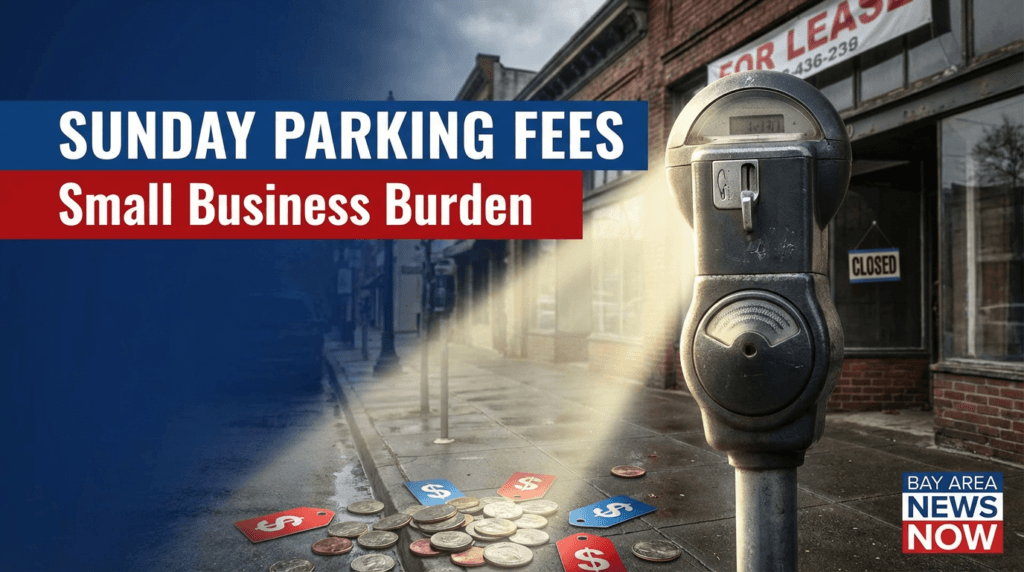
Starting January 4, 2026, Oakland residents and visitors will face a new reality: parking meters will run on Sundays from noon to 6 p.m., ending a decades-long tradition of free Sunday parking rooted in religious observance. City officials promise this change will “improve parking availability” and boost local commerce, but small business owners and residents see something entirely different—another tax masquerading as a solution, imposed by a city government that has spent itself into a fiscal crisis.
The move raises fundamental questions about government priorities. When a city faces a self-inflicted budget deficit exceeding $100 million, should the solution be squeezing more money from already-burdened taxpayers and struggling businesses? Or should leaders examine their own spending decisions and operational inefficiencies first?
Oakland’s Sunday parking enforcement isn’t just about meters. It’s about a governing philosophy that reflexively reaches into citizens’ wallets rather than looking inward at its own failures.
Support Independent Local Journalism
TheTownHall.News is a non-profit reader-supported journalism. Just $5 helps us hire local reporters, investigate important issues, and hold public officials accountable across Alameda County. If you believe our community deserves strong, independent journalism, please consider donating $5 today to support our work.The Real Story Behind the Revenue Grab
Let’s be clear about what’s happening here. Oakland faces a structural budget deficit that city officials project at approximately $129 million for the current fiscal year, with an additional $280 million deficit looming in future years. Rather than addressing the root causes of this crisis—years of mismanagement, inefficient spending, and policies that have driven businesses and residents away—the city has chosen the path of least political resistance: extracting more revenue from those who remain.
Transportation Director Josh Rowan claims the policy will “improve parking availability for everyone,” but this talking point doesn’t withstand scrutiny. If parking turnover were genuinely the issue, Oakland could implement time limits without charging fees. Cities across America manage parking demand through various non-revenue mechanisms. The truth is simpler and less palatable: Oakland needs money, and Sunday parkers represent an untapped revenue stream.
Consider the city’s own track record. A 2022 pilot program enforcing parking fees at Lake Merritt generated hundreds of thousands of dollars—a figure that reveals the real motivation behind Sunday enforcement. When government officials can measure success in revenue collected rather than problems solved, citizens should be skeptical.
Small Businesses Bear the Brunt
Nina Moore, co-owner of Everett and Jones Barbeque, captured the frustration felt by many Oakland entrepreneurs: “We’re struggling, and we don’t need that.” Her words reflect a harsh reality that city officials seem unwilling to acknowledge.

Oakland’s small businesses are already operating on razor-thin margins in an increasingly hostile environment. According to recent economic data, downtown Oakland’s office vacancy rate stands at 28.3% as of the third quarter of 2025, compared to just 7.5% in 2019. A Bay Area Council Economic Institute report found that crime and chronic underinvestment in public safety have significantly weakened Oakland’s economy, driving away both businesses and customers.
In this context, Sunday parking fees aren’t just an inconvenience—they’re potentially the final straw. Sunday has traditionally been one of the busiest days for many Oakland businesses, particularly restaurants and retail establishments. Free parking provided a competitive advantage, giving customers one less reason to shop online or drive to neighboring cities with more business-friendly policies.
Sharon Brooks-Boyd, an Oakland resident, asked the obvious question: “With charging me for parking, why am I going to come?” It’s a question every business owner in Oakland is now asking about their customer base.
The conservative principle here is straightforward: government should create conditions for businesses to thrive, not add burdens that make survival harder. When small businesses succeed, they create jobs, generate tax revenue organically, and strengthen communities. When government nickels and dimes them to death, everyone loses.
Fiscal Accountability Starts at City Hall
Oakland’s budget crisis didn’t materialize overnight, nor did it result from insufficient revenue. The city’s problems stem from spending decisions, operational inefficiencies, and policies that have eroded the tax base.
Support Independent Local Journalism
TheTownHall.News is a non-profit reader-supported journalism. Just $5 helps us hire local reporters, investigate important issues, and hold public officials accountable across Alameda County. If you believe our community deserves strong, independent journalism, please consider donating $5 today to support our work.A 2025 SPUR report examining Oakland’s structural deficit identified chronic overspending and failure to align expenditures with realistic revenue projections. The city has consistently spent beyond its means while watching businesses and middle-class families relocate to more affordable, safer communities. The result is a shrinking tax base forced to shoulder ever-increasing demands.
Rather than implementing meaningful reforms—consolidating redundant programs, negotiating sustainable labor agreements, or cutting wasteful spending—Oakland officials have chosen to squeeze existing residents and businesses harder. Sunday parking enforcement is just the latest example.
True fiscal accountability requires leaders to make difficult choices about priorities and efficiency. It means examining every dollar spent and asking whether taxpayers are receiving value. It means recognizing that government doesn’t have a revenue problem when it can’t live within a budget that already includes substantial parking citation income—revenues that grew substantially in 2024 through “ramped-up citywide enforcement.”
Conservative fiscal principles demand that government tighten its belt before asking citizens to tighten theirs. Oakland is doing the opposite.
The Unintended Consequences
Government officials often fail to anticipate how new policies will affect real people’s behavior and choices. Sunday parking enforcement will likely produce several predictable consequences that undermine the city’s stated goals.
First, cost-conscious consumers will simply avoid Oakland on Sundays, choosing to shop in neighboring communities or online instead. The parking fees may generate some revenue, but at what cost to businesses that depend on Sunday traffic?
Second, lower-income residents will bear a disproportionate burden. As the Mercury News reported, parking fees and citations weigh more heavily on those with limited means—often people who have been displaced from Oakland by rising housing costs and now drive in from other East Bay communities. Adding Sunday fees compounds the financial pressure on those least able to absorb it.
Third, the policy may actually reduce overall economic activity in Oakland. If fewer people visit the city on Sundays, businesses will see reduced sales, leading to lower tax revenues from those businesses. The city might collect parking fees while losing sales tax and business tax revenue—a classic example of being penny-wise and pound-foolish.
Finally, there’s the principle of the matter. For generations, Sunday has held special status in American culture—a day set apart for worship, family, and rest. The tradition of free Sunday parking acknowledged this cultural value. Eliminating it for budgetary convenience represents another small erosion of the social fabric that holds communities together.
A Pattern of Misplaced Priorities
Sunday parking enforcement fits a disturbing pattern in Oakland’s governance: addressing symptoms while ignoring root causes.
The city faces serious challenges with crime, homelessness, infrastructure decay, and business flight. These problems require leadership, tough choices, and a willingness to challenge failed approaches. Instead, Oakland officials focus on revenue extraction schemes that are politically easier but ultimately counterproductive.
Conservative governance principles emphasize solving problems at their source, not creating new revenue streams to paper over failures. If Oakland truly wants to improve its fiscal situation, the path forward is clear: make the city safer, cleaner, and more business-friendly. When Oakland becomes a place where people want to live, work, and shop, revenue will follow naturally.
What Oakland Should Do Instead
Rather than implementing Sunday parking fees, Oakland should pursue genuine solutions to its budget crisis:
Reform spending practices. Conduct a comprehensive audit of city expenditures, identifying waste and redundancy. Many cities have found substantial savings through operational efficiency improvements without cutting essential services.
Prioritize public safety. The Bay Area Council Economic Institute report demonstrated that crime directly undermines Oakland’s economy. Investing in effective policing and prosecution would pay dividends by attracting businesses and residents back to the city.
Create a business-friendly environment. Instead of adding new costs, Oakland should reduce regulatory burdens and fees that drive businesses away. A thriving business sector generates far more tax revenue than parking meters ever will.
Rebuild trust with taxpayers. Demonstrate fiscal responsibility and accountability before asking residents and businesses to contribute more. Show that existing resources are being used wisely.
These approaches align with conservative principles: limited government that focuses on core functions, fiscal responsibility, and creating conditions for economic growth rather than extracting resources from a struggling economy.
Conclusion
Oakland’s decision to enforce Sunday parking meters represents a failure of leadership and a betrayal of the small businesses and residents who have remained loyal to the city despite its challenges. Rather than addressing the root causes of its fiscal crisis, Oakland has chosen the easy path of extracting more revenue from those who can least afford it.
This isn’t about parking turnover or access—it’s about a city government that refuses to live within its means and expects everyone else to pay for its failures. Conservative principles demand better: fiscal accountability, respect for taxpayers, support for small businesses, and recognition that government exists to serve citizens, not the other way around.
The business owners of Jack London Square, Rockridge, and neighborhoods across Oakland deserve leaders who will fight for their success, not add to their burdens. The residents who continue to support Oakland’s economy deserve respect, not new fees.
Oakland can do better. It must do better. And it starts with leaders who understand that their job is to create conditions for prosperity, not to squeeze every last dollar from a struggling community.
Call to Action
Oakland residents and business owners: Your voice matters. Contact your City Council representatives and demand fiscal accountability before new revenue schemes. Attend council meetings and make your opposition heard. Share this article with fellow Oakland residents and business owners who need to understand what’s really behind Sunday parking enforcement.
Support Oakland’s small businesses. Visit them, shop local, and let them know you stand with them against policies that make their survival harder.
Stay informed. Follow Oakland city budget discussions and hold officials accountable for spending decisions. Demand transparency about how parking revenue will be used and whether it actually improves services or simply plugs holes created by fiscal mismanagement.
The fight for Oakland’s future isn’t just about parking meters—it’s about the kind of city we want to be. Make your voice heard before it’s too late.