Pleasanton’s Water Rate Shock: How City Hall’s 112% Increase Betrays Taxpayer Trust

In a stunning display of fiscal irresponsibility, the Pleasanton City Council unanimously approved devastating water rate increases that will hammer hardworking families with bills jumping as much as 112% for some households. What the council euphemistically calls “uniform pricing” is nothing more than government overreach that punishes conservative water usage and rewards wasteful consumption—turning basic fiscal responsibility on its head.
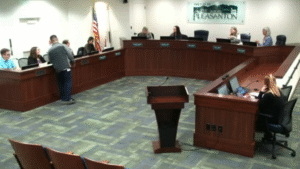
The October 7th public hearing was a mere formality. Despite promises of public input, the council steamrolled ahead with rate hikes that will burden families already struggling with California’s crushing cost of living. For a city that prides itself on family values, this decision represents a betrayal of the very residents who make Pleasanton a desirable place to live.
The Staggering Reality of Pleasanton’s Rate Hike
By the Numbers: Who Gets Hit Hardest
The new rate structure, effective January 1, 2026, abandons the previous tiered system that rewarded conservation in favor of a “uniform pricing” model that penalizes exactly the kind of responsible behavior conservatives champion. Here’s what Pleasanton families face:
Support Independent Local Journalism
TheTownHall.News is a non-profit reader-supported journalism. Just $5 helps us hire local reporters, investigate important issues, and hold public officials accountable across Alameda County. If you believe our community deserves strong, independent journalism, please consider donating $5 today to support our work.- 52% of households will see increases of $20-$40 per month in the first year alone
- Some families face increases of up to 112%—more than doubling their water bills
- Average single-family customers will pay 10.8% more, jumping from $176.05 to $195.13 monthly
- This marks the third consecutive year of water rate increases
The cruelest irony? Families who practice conservation—using less water to be responsible stewards and save money—are being punished the most severely. Meanwhile, high-usage customers actually see their per-gallon costs decrease under the new “uniform” system.
The False Promise of “Infrastructure Investment”
City officials justify these crushing increases by claiming they need to fund “critical infrastructure investments” in Pleasanton’s aging water system. While infrastructure maintenance is legitimate, the question taxpayers should ask is: Where has our money been going all these years?
Pleasanton residents have already endured a 30% increase in 2024 and a 12% increase in 2025. Now they’re being asked to fund what should have been ongoing maintenance through proper fiscal planning. This pattern reveals a fundamental failure of government stewardship—reactive crisis management instead of proactive fiscal responsibility.
Why This Represents Everything Wrong with Big Government
Abandoning Market Principles
The shift from tiered to uniform pricing abandons basic market principles that conservatives understand intuitively: price should reflect value and encourage responsible behavior. The previous tiered system rewarded conservation by charging less per gallon for lower usage—exactly how free markets work.
Under the new system, a family using 200 gallons per day pays the same per-gallon rate as someone using 800 gallons. This eliminates any financial incentive for conservation and essentially subsidizes waste. It’s wealth redistribution through water bills, where responsible families subsidize their wasteful neighbors.
The Burden on Working Families
Pleasanton’s median household income may be higher than state averages, but that doesn’t mean families can absorb unlimited government fee increases. Many residents already stretch budgets to afford housing in a community with good schools and low crime rates—core conservative values.
These water rate hikes disproportionately impact:
- Young families buying their first homes
- Seniors on fixed incomes who have lived in Pleasanton for decades
- Small business owners facing additional operational costs
- Families with multiple children who already face higher living expenses
For these households, an extra $20-$40 per month isn’t trivial—it’s groceries, school supplies, or savings for their children’s future.
The Process Problem: Where Was Real Public Input?
Prop 218: More Theater Than Democracy
California’s Proposition 218 requires public hearings for utility rate increases, but Pleasanton’s process reveals how government can technically follow the law while ignoring the spirit of public accountability.
Support Independent Local Journalism
TheTownHall.News is a non-profit reader-supported journalism. Just $5 helps us hire local reporters, investigate important issues, and hold public officials accountable across Alameda County. If you believe our community deserves strong, independent journalism, please consider donating $5 today to support our work.The “public hearing” was scheduled after the council had already approved the rate study and signaled their intent to proceed. Public comments were allowed, but the outcome was predetermined. This isn’t meaningful public participation—it’s political theater designed to provide legal cover for unpopular decisions.
True conservative governance would have:
- Started with public input on whether rate increases were necessary
- Explored alternatives like efficiency improvements or service reductions
- Provided detailed cost-benefit analysis comparing different approaches
- Implemented gradual increases rather than shock therapy
Transparency and Accountability Failures
The city’s communication strategy reveals another problem: Instead of clearly explaining the massive increases some families would face, official materials emphasized that “only 52%” of bills would increase by $20-$40. This downplays the reality that nearly half of all households face significant increases, with some seeing bills more than double.
Conservative principles demand honest, transparent government communication. Residents deserve to know exactly how their bills will change and why, not sugar-coated summaries that minimize the impact.
A Better Path Forward: Conservative Solutions
Market-Based Conservation Incentives
Instead of abandoning tiered pricing, Pleasanton could have strengthened conservation incentives through true market mechanisms:
- Steeper tiers that more aggressively reward low usage
- Seasonal pricing that reflects actual supply costs
- Rebate programs funded by high-usage surcharges
- Technology investments that help residents monitor and reduce consumption
Fiscal Responsibility First
Before asking taxpayers for more money, city government should demonstrate it’s using current resources efficiently:
- Comprehensive audit of water department operations
- Competitive bidding for all infrastructure projects
- Regional cooperation to share costs with neighboring communities
- Performance metrics that tie staff compensation to efficiency improvements
Phased Implementation
Rather than shocking families with immediate massive increases, a conservative approach would phase in changes over several years, allowing households to adjust their budgets and consumption patterns.
The Broader Implications for California Conservatives
Pleasanton’s water rate debacle reflects broader problems plaguing California governance. Even in relatively conservative communities, local officials embrace big-government solutions that burden taxpayers rather than pursuing efficiency and accountability.
This pattern—crisis, followed by emergency rate increases, followed by promises that “this time will be different”—has become standard operating procedure across California. It’s why families are leaving the state and businesses are relocating to places where government respects taxpayer dollars.
A Warning for Other Communities
Pleasanton’s experience should serve as a warning for other California communities. When local governments abandon market principles and fiscal discipline, residents pay the price through reduced quality of life and diminished economic freedom.
Conservative voters must demand better from local officials who claim to share their values but govern like big-spending progressives when tough decisions arise.
Conclusion: Demanding Real Leadership
Pleasanton’s water rate increases represent a failure of conservative governance principles at the local level. Instead of rewarding responsible behavior and demanding government efficiency, the city council chose the easy path of passing costs to residents while abandoning market-based incentives for conservation.
This decision will make Pleasanton less affordable for working families, less attractive to businesses, and less aligned with the conservative values that made it a desirable community in the first place. It’s a reminder that the fight for limited government and fiscal responsibility must happen at every level—from Washington D.C. to city hall.
The real tragedy isn’t just the money—it’s the missed opportunity to demonstrate how conservative principles can solve real problems through innovation, efficiency, and respect for taxpayers. Instead, Pleasanton chose the progressive playbook: raise taxes, abandon market incentives, and hope residents don’t notice until the bills arrive.
Call to Action
Don’t let your local government follow Pleasanton’s example. Attend city council meetings, demand transparent budgets, and hold officials accountable for fiscal responsibility. Share this article with friends and neighbors who care about conservative governance at the local level. Subscribe to our newsletter for more coverage of how big government policies impact real families in communities across California.
The fight for conservative principles starts in your own backyard—make your voice heard before it’s too late.