Three Strikes and Still Learning? Repeat Hate Graffiti at Pleasanton High School Exposes Failure of “Restorative” Discipline
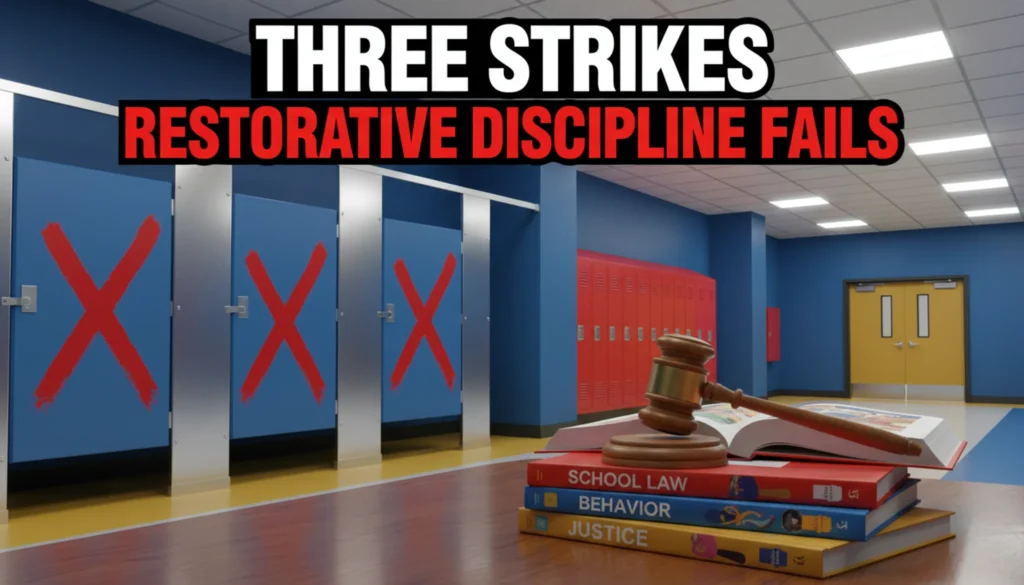
For the third time in just over a month, hateful graffiti has been discovered at Amador Valley High School in Pleasanton. On December 3, 2025, school staff found swastikas, racial slurs including the n-word, and personal attacks against administrators scrawled inside a girls’ bathroom. This follows two similar incidents on October 30 and 31, when identical hate speech and symbols were found in boys’ restrooms.
Three incidents. Same hateful content. Same school. And apparently, the same ineffective response.
While school administrators rush to express how “deeply disturbed” they are and promise “restorative approaches” to discipline, parents and taxpayers are left asking the obvious question: If the current approach was working, why does this keep happening?
Support Independent Local Journalism
TheTownHall.News is a non-profit reader-supported journalism. Just $5 helps us hire local reporters, investigate important issues, and hold public officials accountable across Alameda County. If you believe our community deserves strong, independent journalism, please consider donating $5 today to support our work.The answer reveals a troubling pattern in modern education—one where accountability takes a backseat to ideology, where consequences are replaced with conversations, and where parental rights are sidelined in favor of administrative control. It’s time for Pleasanton families to demand better.
The Facts: A Pattern of Failure
According to Principal Malcolm Norrington’s communications to parents, the incidents unfolded as follows:
- October 30: Extensive vandalism discovered in a boys’ restroom stall, including the n-word, hate symbols, and other hate-motivated statements
- October 31: Additional graffiti found in a second stall in the same bathroom
- December 3: More hate symbols, racial slurs, and personal attacks found in a girls’ bathroom, this time targeting the principal and a vice principal by name
After each incident, the school followed the same script: remove the graffiti, close the affected stalls temporarily, promise counseling for affected students, increase bathroom supervision, and pledge to provide “education and support” to those responsible.
Yet here we are again. Three times in five weeks.
The definition of insanity, as the saying goes, is doing the same thing over and over while expecting different results. By that measure, Amador Valley’s response to hate speech has been clinically insane.
The “Restorative Justice” Trap
Principal Norrington’s December 3 message to parents reveals the core problem. He wrote that students who engage in hate-motivated behavior “are scared, misinformed, confused.” His solution? They “will be held accountable” but also “need guidance, education, and support to repair harm and learn.”
This is textbook restorative justice language—the progressive discipline philosophy that has swept through California schools over the past decade, often with disastrous results.
Restorative justice sounds compassionate in theory: instead of punishing bad behavior, we’ll help students understand why their actions were wrong and guide them toward better choices. The problem is that this approach fundamentally misunderstands human nature and the purpose of consequences.
When a student vandalizes school property with hate speech—not once, but repeatedly—they’re not “confused.” They know exactly what they’re doing. They’re testing boundaries, seeking attention, or deliberately trying to intimidate and harm others. What they need isn’t a conversation circle and a feelings journal. They need clear, immediate, and meaningful consequences that make it crystal clear such behavior will not be tolerated.
Support Independent Local Journalism
TheTownHall.News is a non-profit reader-supported journalism. Just $5 helps us hire local reporters, investigate important issues, and hold public officials accountable across Alameda County. If you believe our community deserves strong, independent journalism, please consider donating $5 today to support our work.Conservative principles have always understood this truth: accountability works. Consequences matter. When we remove consequences in the name of compassion, we don’t help troubled students—we enable them and endanger everyone else.
Where Are the Parents?
Perhaps the most troubling aspect of this situation is what we don’t know—because the school won’t tell us.
Due to student privacy laws, administrators refuse to disclose whether the perpetrators have been identified, whether the incidents are connected, or what consequences have been imposed. The Pleasanton Unified School District’s Safety and Communications Coordinator told the press that “because this matter involves student discipline, we cannot disclose information about individual students or consequences.”
This is where parental rights collide with administrative secrecy.
Parents whose children attend Amador Valley High School have a right to know whether their school is safe. They have a right to know whether repeat offenders are being removed from campus or allowed to continue terrorizing their peers. They have a right to know whether their tax dollars are funding effective discipline or expensive therapy sessions that clearly aren’t working.
Instead, they get vague reassurances about “ongoing investigations” and promises to “examine our blind spots, assumptions, and biases.”
Here’s a radical idea: maybe the problem isn’t society’s “blind spots.” Maybe it’s that schools have abandoned common-sense discipline in favor of progressive ideology that prioritizes the feelings of offenders over the safety of victims.
The Real Cost of Soft Discipline
The consequences of failed discipline policies extend far beyond bathroom graffiti.
Across California, schools that have embraced restorative justice and eliminated traditional disciplinary measures have seen increases in classroom disruption, violence, and chronic absenteeism. Teachers report feeling helpless to maintain order. Good students suffer because administrators won’t remove disruptive peers. And families who can afford it flee to private schools or relocate to districts that still believe in accountability.
A 2023 investigation by multiple news outlets found that many California schools face pressure to reduce suspension rates not because student behavior has improved, but because progressive activists view any form of exclusionary discipline as inherently racist or unjust. The result? Students who should be suspended for serious offenses remain in classrooms, creating chaos and danger for everyone else.
At Amador Valley, we’re seeing this dynamic play out in real time. After the first incident, did the school implement serious consequences that deterred future offenses? Obviously not—because the behavior continued. After the second incident? Same result. Now we’re on incident number three, and administrators are still talking about “guidance” and “support” rather than accountability.
What Real Accountability Looks Like
Conservatives believe in redemption and second chances—but we also believe in consequences that match the severity of the offense.
A student who vandalizes school property with hate speech should face:
- Immediate suspension pending investigation
- Criminal charges if appropriate (vandalism is a crime)
- Restitution for cleaning and repair costs
- Loss of privileges including participation in extracurricular activities
- Mandatory transfer to an alternative education setting for repeat offenders
- Full transparency to parents about what happened and what consequences were imposed
These aren’t cruel or unusual punishments. They’re basic accountability measures that protect the majority of students who follow the rules and want to learn in a safe environment.
After meaningful consequences are imposed, then—and only then—can schools offer counseling, education, and opportunities for genuine restoration. But restoration without accountability isn’t restoration at all. It’s permission to continue harmful behavior.
The Parental Rights Imperative
This situation also highlights the urgent need for stronger parental rights in education.
California law requires schools to notify parents about certain matters, but there’s a troubling trend toward keeping parents in the dark about incidents that directly affect their children’s safety and well-being. In this case, the first two graffiti incidents occurred on October 30-31, but Principal Norrington didn’t send his initial communication to parents until November 2—and even then, the information wasn’t shared with the broader community.
Parents have a fundamental right to know when hate speech appears repeatedly at their children’s school. They have a right to participate in decisions about how to address the problem. And they have a right to hold administrators accountable when policies clearly aren’t working.
The conservative movement has long championed parental rights because we understand a basic truth: parents—not bureaucrats, not administrators, not teachers—bear primary responsibility for their children’s welfare and education. Schools serve in loco parentis, but that authority is delegated by parents and can be revoked when schools fail in their duties.
When a school experiences three hate speech incidents in five weeks and responds with therapeutic language about “scared” and “confused” perpetrators rather than clear consequences, parents should demand change. That might mean new leadership, new policies, or new school board members who prioritize safety and accountability over progressive ideology.
Traditional Values, Modern Solutions
None of this is complicated. The solutions are rooted in traditional values that have guided successful societies for generations:
Actions have consequences. When you do something wrong, you face punishment proportional to your offense. This teaches responsibility and deters future misconduct.
Victims matter more than offenders. The rights and safety of innocent students take precedence over the feelings and rehabilitation of those who harm others.
Parents are primary. Families—not government institutions—have the first and final say in their children’s education and wellbeing.
Order enables learning. Students can’t learn in chaotic, unsafe environments. Maintaining discipline isn’t mean; it’s necessary.
Truth matters. We should call hate speech what it is—deliberate, harmful behavior—rather than excusing it as confusion or fear.
These aren’t controversial principles. They’re common sense. Yet modern education has abandoned them in favor of theories that sound compassionate but produce chaos.
A Call for Courage
The situation at Amador Valley High School demands courage from multiple quarters.
School administrators need the courage to impose real consequences, even if it means criticism from progressive activists who view any form of discipline as oppressive.
School board members need the courage to evaluate whether current policies are working and make changes when they’re not.
Teachers need the courage to speak up when they see discipline policies failing, even if it risks retaliation from administrators invested in the status quo.
And most importantly, parents need the courage to demand accountability, transparency, and change.
Conclusion: Accountability Is Compassion
Three hate speech incidents in five weeks isn’t a streak of bad luck. It’s a pattern that reveals systemic failure.
When schools abandon accountability in favor of endless “restorative” conversations, they don’t help troubled students—they enable them. They don’t create safer campuses—they create environments where bad behavior continues unchecked. And they don’t serve the community—they serve an ideology that prioritizes theory over results.
Amador Valley High School serves approximately 2,600 students from families who chose Pleasanton specifically because of its reputation for excellent schools. Those families deserve better than vague promises and therapeutic language. They deserve a school that protects their children, holds offenders accountable, respects parental rights, and maintains the kind of orderly environment where learning can actually occur.
The conservative vision for education isn’t complicated: high standards, clear consequences, parental authority, and unwavering commitment to safety and excellence. When schools embrace these principles, students thrive. When they abandon them, we get three hate speech incidents in five weeks—and counting.
It’s time for Pleasanton parents to demand the accountability their children deserve. Because if we don’t stand up for our kids, who will?
Call to Action
Parents: Attend the next Pleasanton Unified School District board meeting and demand transparency about these incidents and the consequences imposed. Request a copy of the district’s discipline policies and ask specific questions about implementation. Connect with other concerned parents to form a coalition advocating for accountability-based discipline. Share this article with your network to raise awareness. Contact your school board representatives and make it clear you expect real consequences for serious offenses, not just conversations. Consider running for school board yourself if current leadership won’t prioritize safety and accountability. Your children’s safety depends on your willingness to speak up. The time for action is now.