Alameda County Sheriff Shooting Investigation Raises Critical Questions About Use of Force
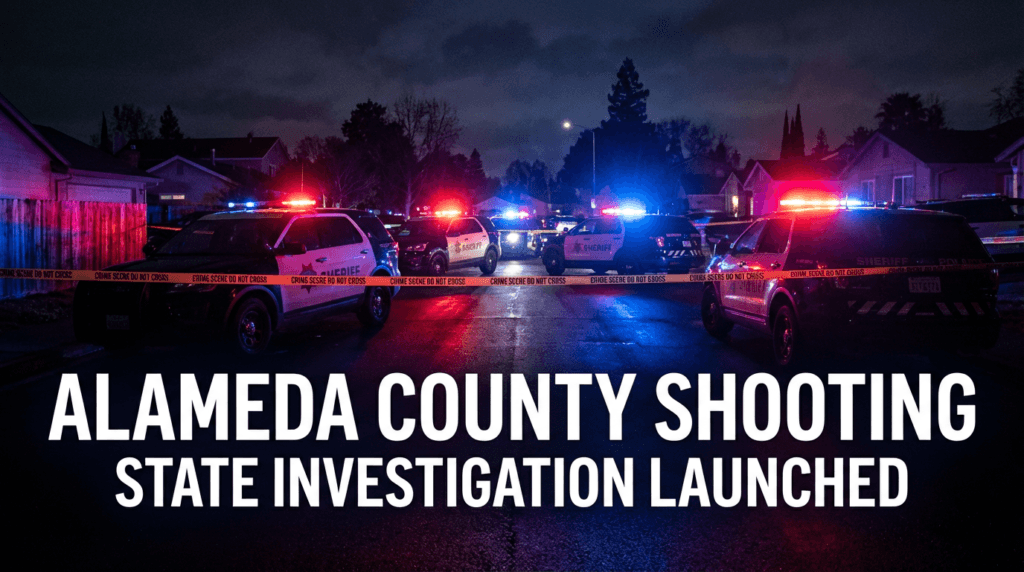
In the early morning hours of February 9, 2026, Alameda County Sheriff’s deputies shot and killed an unarmed person in San Leandro, California. Within hours, California Attorney General Rob Bonta announced a state investigation into the incident—an automatic trigger under California law when law enforcement officers shoot unarmed civilians. While the facts continue to emerge, this case presents fundamental questions about police accountability, use-of-force standards, and the balance between supporting law enforcement and demanding they uphold the highest professional standards.
For those who believe in law and order, this isn’t a simple story with easy answers. It’s a test of principles: Can we support the men and women who risk their lives to protect our communities while also insisting they be held to rigorous standards of conduct? The answer must be yes—because true support for law enforcement means demanding excellence, transparency, and accountability.
What We Know About the San Leandro Incident
According to the official statement from the California Department of Justice, the shooting occurred at approximately 3:19 a.m. on February 9 on the 16000 block of Selborne Drive in San Leandro. The Alameda County Sheriff’s Office reports that deputies responded to a call from a person who stated he had a firearm, wanted to harm others, and requested to speak with law enforcement.
Deputies established a perimeter around the residence. When the individual exited the home, the Sheriff’s Office claims the person “presented an immediate threat to the deputies.” Two deputies fired their weapons, fatally wounding the individual. No deputies were injured during the encounter.
Here’s the critical detail that triggered the state investigation: the person was unarmed. Attorney General Bonta’s office confirmed this fact in their announcement, invoking Assembly Bill 1506 (AB 1506), which mandates independent state review of all law enforcement shootings involving unarmed civilians.
The DOJ’s California Police Shooting Investigation Team has taken over the case. Upon completion, the investigation will be turned over to the DOJ’s Special Prosecutions Section for independent review.
The Immediate Threat Standard: A Question That Demands Answers
The Alameda County Sheriff’s Office stated the individual “presented an immediate threat” to deputies. Yet the person was unarmed. This discrepancy isn’t a minor detail—it’s the central question of this entire incident.
What constitutes an immediate threat? California law allows officers to use deadly force only when they reasonably believe it’s necessary to defend against an imminent threat of death or serious bodily injury. The standard is both objective (would a reasonable officer in the same situation reach the same conclusion?) and subjective (what did this particular officer perceive in that moment?).
But here’s where conservative principles demand clarity: If we’re going to grant law enforcement officers the extraordinary authority to use lethal force—and we should, because their job requires split-second decisions in dangerous situations—then we must also insist on rigorous training, clear policies, and thorough accountability when things go wrong.
This isn’t about being “anti-police.” It’s about being pro-excellence. It’s about recognizing that the vast majority of law enforcement officers are professionals who deserve our support, and that support includes ensuring bad actors or poor decisions don’t tarnish the badge.
The Role of AB 1506: State Oversight and Local Authority
Assembly Bill 1506, which took effect in 2021, requires the California Attorney General’s office to investigate all officer-involved shootings of unarmed civilians. The law was designed to remove potential conflicts of interest when local agencies investigate their own personnel.
From a conservative standpoint, this raises legitimate questions about state versus local authority. Should Sacramento be second-guessing local law enforcement decisions? Shouldn’t communities have the right to oversee their own police departments?
These are fair concerns. But consider the alternative: allowing agencies to investigate themselves creates an inherent conflict of interest that undermines public trust. When a shooting occurs, the community deserves an investigation that’s beyond reproach. That’s not about distrusting local sheriffs—it’s about ensuring the process itself is credible.
Moreover, AB 1506 doesn’t assume guilt. It mandates investigation and review. If the deputies’ actions were justified, a thorough state investigation will demonstrate that. If mistakes were made, the public deserves to know. Transparency strengthens law enforcement legitimacy; opacity erodes it.
Personal Responsibility Cuts Both Ways
One of the core conservative principles is personal responsibility—the idea that individuals must be accountable for their actions and decisions. This principle applies universally, including to those who wear the badge.
The individual who called 911, claimed to have a firearm, and expressed intent to harm others bears responsibility for creating a dangerous situation. His actions set events in motion that would prove fatal. That’s an important part of this story.
But personal responsibility also extends to the deputies who responded. They made a split-second decision to use lethal force against someone they believed posed an immediate threat. If that belief was reasonable given the circumstances—if the person made movements or statements that would lead a trained officer to conclude deadly force was necessary—then their actions may be justified.
However, if the investigation reveals that less-lethal options were available, that de-escalation tactics weren’t attempted, or that the threat assessment was unreasonable, then those deputies must be held accountable. That’s not anti-police sentiment. That’s pro-accountability, and it’s essential for maintaining public trust in law enforcement.
Training, Tactics, and Technology: Preventing Future Tragedies
Beyond this specific incident, we should be asking broader questions about how law enforcement agencies prepare their officers for high-stress encounters with potentially dangerous individuals.
De-escalation training has become a buzzword in recent years, but the concept is sound: Can officers defuse volatile situations without resorting to force? Are they trained to create distance, use cover, and communicate effectively with individuals in crisis?
Less-lethal options such as Tasers, bean bag rounds, and other tools provide alternatives when circumstances permit. Were such options available to these deputies? Were they trained to deploy them effectively?
Mental health response is another critical factor. If someone is calling 911, claiming to have a weapon, and expressing suicidal or homicidal thoughts, that person is likely experiencing a mental health crisis. Do deputies have access to mental health professionals who can assist in these situations?
These aren’t “soft on crime” questions. They’re practical, results-oriented inquiries designed to protect both officers and civilians. Good tactics keep everyone safer.
What This Means for Alameda County and Beyond
The Alameda County Sheriff’s Office now faces intense scrutiny. The state investigation will examine every aspect of this incident: the 911 call, the deputies’ response, their tactical decisions, the shooting itself, and the aftermath. Body camera footage, if available, will be crucial evidence. Witness statements will be collected and analyzed.
For the community, this incident raises questions about trust and transparency. San Leandro residents deserve answers. They deserve to know whether their sheriff’s deputies followed proper protocols, whether the use of force was justified, and what steps will be taken to prevent similar tragedies.
For law enforcement agencies across California, this case serves as a reminder that every use-of-force decision will be scrutinized. That’s appropriate. Officers who carry the authority to use deadly force must be prepared to justify those decisions under the harsh light of investigation.
A Conservative Case for Accountability
Supporting law enforcement and demanding accountability aren’t contradictory positions—they’re complementary. The conservative commitment to law and order requires that we hold all individuals, including those in positions of authority, to high standards of conduct.
When police officers perform their duties with professionalism, courage, and sound judgment, they deserve our unwavering support. When they make mistakes or exercise poor judgment, they must face appropriate consequences. This approach strengthens law enforcement by weeding out bad actors and poor practices, thereby protecting the reputation of the overwhelming majority of officers who serve honorably.
The alternative—reflexive defense of every police action, regardless of circumstances—actually undermines law enforcement by eroding public trust. Communities that don’t trust their police departments become less safe, not more. Crime victims become reluctant to report offenses. Witnesses refuse to cooperate. The social fabric that makes effective policing possible begins to fray.
True support for law enforcement means insisting on excellence, providing adequate training and resources, and holding officers accountable when they fall short. That’s not a liberal position or a conservative position—it’s a principled position.
The Path Forward
As the California Department of Justice conducts its investigation, several outcomes are possible. The deputies’ actions may be found justified based on the totality of circumstances they faced. The investigation may reveal policy failures or training deficiencies that contributed to the tragedy. Or it may uncover evidence of misconduct that warrants criminal prosecution.
Whatever the findings, this incident should prompt serious reflection about how we prepare law enforcement officers for the most challenging aspects of their job. It should spark conversations about mental health crisis response, de-escalation tactics, and use-of-force policies.
Most importantly, it should remind us that supporting law enforcement and demanding accountability aren’t opposing values—they’re essential partners in creating safer, more just communities.
Call to Action
The investigation into this Alameda County Sheriff shooting will take months to complete. As citizens who care about law and order, we have a responsibility to stay informed, demand transparency, and insist on accountability regardless of where the evidence leads.
Here’s what you can do:
- Stay informed: Follow the California Department of Justice’s investigation updates at oag.ca.gov/ois-incidents. Don’t rely on social media rumors—seek out factual reporting.
- Engage your local officials: Contact your county supervisors and sheriff’s office to ask about use-of-force policies, de-escalation training, and accountability measures in your community.
- Support evidence-based reforms: Advocate for policies that improve officer training, provide mental health crisis resources, and ensure thorough investigation of police shootings.
- Share this article: Help others understand why accountability and law enforcement support go hand in hand. Use the share buttons below to spread this message.
The badge represents authority, but it also represents responsibility. Let’s ensure both are honored.