Follow the Money: What Greg Abbott’s Top Donor Reveals About Texas Politics, Accountability, and Conservative Integrity
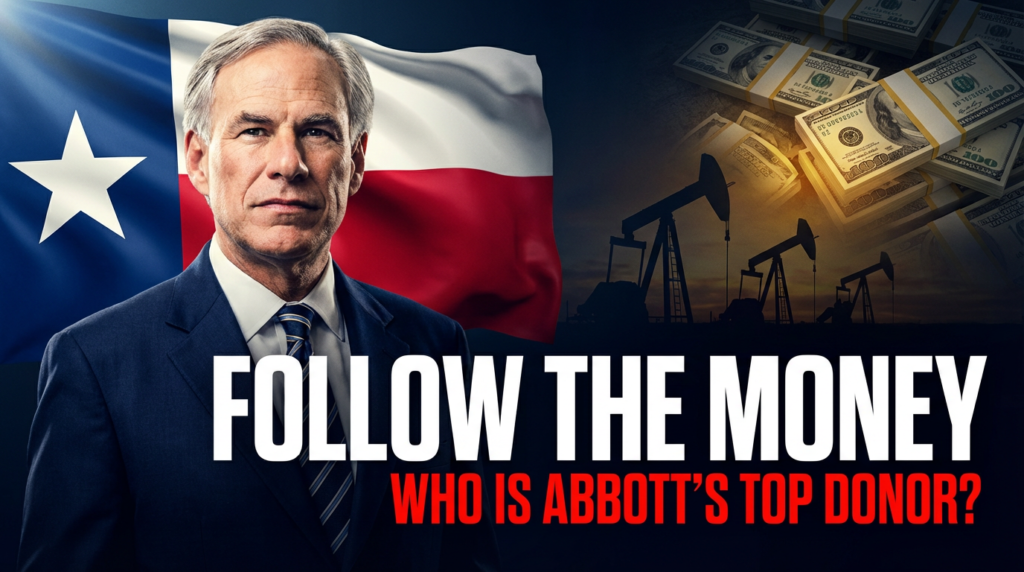
In Texas, conservative voters expect their leaders to be bold, consistent, and transparent — especially when it comes to who funds their political power. So when it emerged that Governor Greg Abbott’s largest individual donor is a Pakistani-born Muslim oil executive who has poured more than $2.4 million directly into Abbott’s campaigns — while also receiving a powerful state board appointment — voters have every right to ask the question that defines conservative governance: Who, exactly, is Greg Abbott working for?
This is not a story about religion. It is a story about accountability, transparency, and the integrity of conservative principles at the highest levels of state government. In a state where the governor wages public battles against Sharia law and designates Islamic organizations as terrorist groups, the financial entanglement with his top Muslim donor is not a minor footnote. It is a headline.
Who Is Syed Javaid Anwar?
S. Javaid Anwar — also known as Syed Javaid Anwar — is a petroleum engineer born in Karachi, Pakistan, who built Midland Energy Inc. into a formidable Permian Basin oil company after immigrating to the United States. By all accounts, his is a genuine American success story: an immigrant who came to this country, earned a petroleum engineering degree from the University of Wyoming, worked hard, built wealth, and became a pillar of the Texas oil industry.
Support Independent Local Journalism
TheTownHall.News is a non-profit reader-supported journalism. Just $5 helps us hire local reporters, investigate important issues, and hold public officials accountable across Alameda County. If you believe our community deserves strong, independent journalism, please consider donating $5 today to support our work.According to public records compiled by Transparency USA and verified through the Texas Ethics Commission, Anwar has donated $2,472,086 directly to Greg Abbott and Texans for Greg Abbott — making him Abbott’s single largest individual donor across multiple election cycles. In just the second half of 2025 alone, he contributed over $1.6 million in cash, plus roughly $122,000 in in-kind gifts, including private jet flights — among them a $100,000 flight to an Ohio football game and political event.
That is not a passive donation. That is an investment.
Anwar’s ties to Abbott go beyond the checkbook. Abbott appointed him to the Texas Higher Education Coordinating Board in 2015 — a body that sets policy for every public college and university in the state. Anwar still serves on that board, with a term running through 2027. No matter how you frame it, significant financial donations followed by a significant government appointment is a pattern that should give taxpayers and voters pause.
Abbott’s Public Stance — and the Contradiction It Creates
Governor Abbott has been unambiguous in his public posture toward Islamic political influence in Texas. In November 2025, he issued a formal proclamation designating both CAIR (the Council on American-Islamic Relations) and the Muslim Brotherhood as foreign terrorist organizations and transnational criminal organizations under Texas law — banning them from purchasing land in the state.
In Abbott’s own words: “The Muslim Brotherhood and CAIR have long made their goals clear: to forcibly impose Sharia law and establish Islam’s ‘mastership of the world.'”
He ordered the Texas Department of Public Safety to investigate groups allegedly imposing Sharia law. His allies rallied against the proposed EPIC City development in East Plano — a 400-acre project that would include housing, a mosque, and a school, which was characterized by some as a potential “Sharia city.” State and federal investigations followed, effectively stalling the project.
Simultaneously, the governor reappointed his top Muslim donor to a seat of real institutional power over Texas higher education.
This is the contradiction that demands honest examination. Conservatives rightly demand that their leaders hold the line — that their words and their deeds align. When they don’t, voters deserve to know why.
The Principles at Stake: Accountability and the Limits of Big Money
Texas is one of the few states in the country with no limits on campaign contributions. While that reflects a genuine commitment to free speech and First Amendment values, it also means the door is wide open for the kind of transactional politics that conservatives have long opposed in Washington.
Support Independent Local Journalism
TheTownHall.News is a non-profit reader-supported journalism. Just $5 helps us hire local reporters, investigate important issues, and hold public officials accountable across Alameda County. If you believe our community deserves strong, independent journalism, please consider donating $5 today to support our work.The concern here is not that Anwar is a Muslim. The concern is that $2.4 million in donations to a sitting governor — combined with a state board appointment — represents exactly the kind of elite donor access that undermines limited government and equal representation. It does not matter whether the donor is an oil tycoon from West Texas or a Pakistani-born energy executive from Midland. The principle is the same: when big money flows to a politician, and that politician then hands out positions of influence, voters must ask whether their interests or the donor’s interests are being served.
Anwar has stated publicly that his donations reflect his gratitude for Abbott’s pro-business and pro-education policies, and that he has “never asked for anything in return.” There are no public records showing he has lobbied against Abbott’s anti-CAIR actions or sought policy changes through the Higher Education Coordinating Board. He may well be sincere. That does not resolve the structural conflict — and it does not answer why a governor so vocal about combating Islamic institutional influence would simultaneously keep a prominently Muslim, Pakistani-born donor in a seat of educational power through 2027.
Accountability requires transparency. Transparency requires asking uncomfortable questions — regardless of whether the answers are flattering.
What Conservative Voters Are Saying
The timing of this story matters. With Texas heading into 2026 primary season and “stop Sharia” emerging as a galvanizing conservative rallying point, the revelations about Anwar’s donations and board appointment have energized grassroots conservatives who feel their leaders are saying one thing in public and doing another behind closed doors.
That instinct is healthy. It is, in fact, the cornerstone of limited government conservatism: trust, but verify. Demand consistency. Hold leaders accountable — especially the ones on your own team.
A Houston Chronicle report from January 2026 noted that Abbott’s “Sharia-free” rhetoric has already begun pushing away conservative Muslims who were once reliable Republican voters. Meanwhile, the contradiction between Abbott’s rhetoric and his donor relationships is fueling frustration among grassroots conservatives who feel the party’s leadership has become more interested in protecting campaign cash than in standing on principle.
That frustration is legitimate. And it points to a broader truth about how political power works in Texas: without contribution limits and with a long-tenured incumbent sitting on $105.7 million in campaign funds, the pressure to ask hard questions about who built that war chest — and what they received in return — falls entirely on an engaged and informed electorate.
The Broader Question for Texas Conservatives
This story is a useful lens through which to examine what conservatism actually demands of its leaders. It demands fiscal accountability — knowing where the money comes from and what it buys. It demands limited government — resisting the concentration of influence in the hands of wealthy insiders. It demands law and order — applying the same standards equally, regardless of a donor’s last name or net worth. And it demands personal responsibility — from voters who choose not to look away when inconvenient truths emerge about their own side.
The question is not whether Syed Javaid Anwar is a good man. By most accounts, he has been a generous contributor to Texas hospitals, universities, and disaster relief efforts. The question is whether a governor who has made the fight against Islamic institutional influence a centerpiece of his public identity can credibly hold that position while his campaign bank account is fed by the state’s most prominent Muslim donor — one who simultaneously serves on a board Abbott controls.
Texas voters deserve a straight answer. So far, they haven’t gotten one.
Conclusion: Principles Don’t Have a Price Tag
Real conservatism is not about who you can raise money from. It is about who you answer to. It is built on the conviction that government must be transparent, accountable, and consistent — that the rules apply equally to everyone, and that leaders do not say one thing in a press release while doing another in private.
The facts here are documented and public: Greg Abbott has designated CAIR a terrorist organization while retaining his top Muslim donor on a state education board and accepting millions in campaign contributions from him. That is not a conspiracy theory. It is a campaign finance record.
Conservatives have always understood that the greatest threat to limited government is not the opposition — it is the corruption of leadership from within. Asking hard questions about donor relationships, state appointments, and the gap between rhetoric and action is not disloyalty. It is exactly what an informed citizenry is supposed to do.
Texas is a conservative state with conservative values. Its voters have the power — and the responsibility — to demand that their governor’s financial relationships reflect the same principles he preaches from the podium.
Call to Action
Stay informed. Stay engaged. Hold the line.
If this story raised questions for you, dig into the public records yourself — Transparency USA and the Texas Ethics Commission publish full campaign finance data online for every voter to review. Share this article with fellow Texans who believe in accountability and consistent conservative governance. And as the 2026 primaries approach, make it your mission to ask every candidate the same question: Who funds you, and what did they get for it?
The integrity of Texas conservatism depends not on blind loyalty to any one leader, but on the willingness of voters to demand the same accountability from their own party that they demand from everyone else.
That’s not a radical idea. That’s just Texas common sense.
Sources: Texas Ethics Commission, Transparency USA, Ballotpedia, Texas Governor’s Office official press release (November 18, 2025), National Today (Houston), The Texas Tribune, Houston Chronicle, Axios.