Stem Cell Therapy for Hearing Loss: A Triumph of Medical Freedom
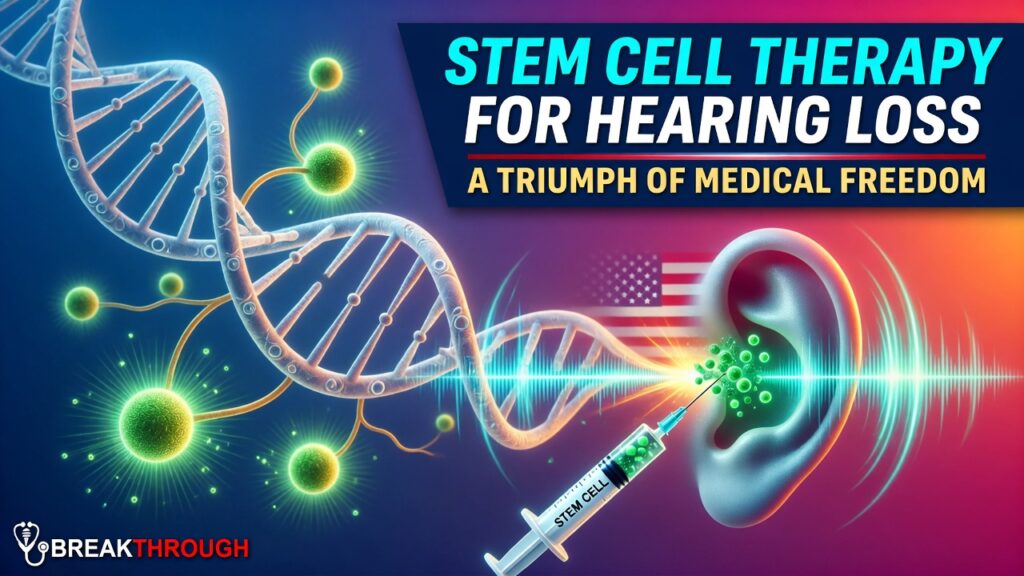
A revolutionary clinical trial is using advanced regenerative medicine to restore natural hearing, offering a private-sector solution to permanent deafness. To ensure this breakthrough reaches the millions who need it, we must protect medical innovation from the suffocating grip of government overreach and regulatory delay.
For decades, the standard response to sensorineural hearing loss has been a lifetime of mechanical dependence. Millions of individuals suffering from auditory nerve damage have been forced to rely on hearing aids that merely amplify sound or cochlear implants that artificially bypass the ear’s natural architecture. These expensive, lifelong solutions do not cure the underlying condition; they simply manage a permanent disability. For a society that values individual self-reliance and the power of human ingenuity, this reliance on perpetual technological assistance has long felt like an incomplete victory.
Now, a pioneering clinical trial is rewriting the script on regenerative medicine, offering a definitive cure rather than a lifetime of treatment. By utilizing stem cell therapy to regrow damaged auditory nerves, researchers are successfully reconnecting the inner ear directly to the brain. This breakthrough does not just amplify external noise—it biologically restores the natural transmission of sound signals. It is a monumental triumph of private-sector innovation that embodies the best of scientific progress, achieved not through centralized government mandates, but through targeted entrepreneurial investment and rigorous clinical excellence.
The Biological Revolution in Restoration
The science behind this new treatment represents a fundamental shift from mechanical management to genuine biological restoration. Sensorineural hearing loss occurs when the delicate hair cells or the auditory nerve fibers within the cochlea are destroyed by aging, loud noise exposure, or genetic factors. Once these neural pathways degrade, the connection between the ear and the brain is broken, resulting in permanent deafness. Traditional interventions cannot regrow these tissues; they merely work around the dead space.