New Alzheimer’s Focused Ultrasound Study Shows Massive Plaque Reduction
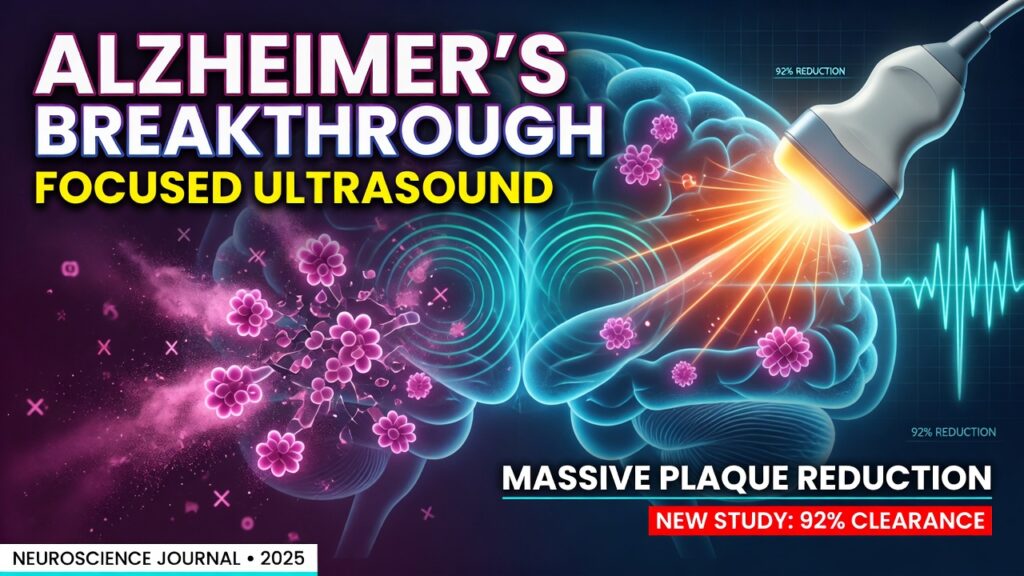
A groundbreaking study confirms that non-invasive focused ultrasound can safely clear brain plaques, offering a path to cognitive health that preserves personal dignity and clinical accountability without the yoke of government-dependent drug regimes.
The battle against Alzheimer’s disease has long been a graveyard of failed pharmaceutical promises and astronomical government spending. For decades, families have watched their loved ones fade away while the medical establishment funneled billions into “silver bullet” drugs that often deliver more side effects than solutions. However, a landmark study recently finalized in the Journal of Neurosurgery has fundamentally shifted the conversation, proving that a non-invasive, technology-driven approach can do what drugs have struggled to achieve: safely and extensively clear the toxic plaques associated with cognitive decline.
This is not just a win for science; it is a victory for the principles of innovation and personal responsibility. Led by Dr. Jin Woo Chang, the research demonstrates that by using MR-guided focused ultrasound to temporarily open the blood-brain barrier, we can trigger the brain’s own clearance mechanisms. This breakthrough suggests a future where medical treatment is a precise, localized intervention rather than a lifelong dependency on subsidized pharmaceuticals. It is time we stop looking to the next “big-government” healthcare mandate and start looking at the disruptive technologies that empower families to take back control of their health.
Support Independent Local Journalism
TheTownHall.News is a non-profit reader-supported journalism. Just $5 helps us hire local reporters, investigate important issues, and hold public officials accountable across Alameda County. If you believe our community deserves strong, independent journalism, please consider donating $5 today to support our work.Why This Breakthrough Matters Now
The results of the South Korean clinical trial are nothing short of revolutionary. Researchers targeted the bilateral frontal lobes—areas of the brain critical for executive function and personality—and achieved a blood-brain barrier (BBB) opening volume of 43.1 cubic centimeters. To put that in perspective, this is twice the volume achieved in any previous trial. This isn’t a marginal improvement; it is a categorical leap forward in our ability to access and treat the human brain without a single incision.
For the six patients involved, the results were tangible. PET scans revealed a longitudinal decrease in amyloid-beta plaques in the majority of participants. Perhaps more importantly for the families, five out of six patients showed marked improvement in neuropsychiatric symptoms, including reduced irritability and anxiety. In an era where “brain health” is often buried under layers of bureaucratic red tape, this study stands as a testament to what happens when clinical excellence is prioritized over pharmaceutical lobbying.
The Real Cost of Government Drug Dependency
For too long, the “official” path to treating Alzheimer’s has been paved with anti-amyloid antibodies that come with price tags exceeding $25,000 per year. These drugs often require federal subsidies and Medicare expansion to be “accessible,” effectively tethering the elderly to the state. Furthermore, these medications are frequently linked to ARIA (Amyloid-Related Imaging Abnormalities)—a polite medical term for brain swelling and micro-hemorrhages.
The focused ultrasound method, as detailed in the Chang study, offers a starkly different vision. By utilizing the body’s natural immune response to clear plaques once the barrier is temporarily opened, we reduce the need for high-dose, high-risk chemical interventions. This represents true fiscal accountability in medicine. Instead of a “forever pill” funded by taxpayers, we are looking at a targeted procedure that works with the human body, not against it.

Defending Parental Rights and Family Legacy
Alzheimer’s is a thief that steals more than just memories; it steals the legacy of a family. When a parent loses their cognitive faculty, the burden of care often falls on the children, creating a cycle of emotional and financial strain. Traditional civic values emphasize the strength of the family unit, yet current medical trends often force families into the hands of institutionalized care.
The ability to treat Alzheimer’s symptoms non-invasively and early means keeping parents in their homes longer. It means preserving the “traditional” structure of the multi-generational family where wisdom is passed down rather than institutionalized. By supporting technologies that prioritize safety and outpatient recovery, we are advocating for the right of every family to care for their elders with dignity, rather than surrendering them to the “system.”
What Critics Get Wrong About Innovation
Skeptics and proponents of the “old guard” often argue that technology-led treatments are “too experimental” or “too expensive” for the average citizen. This is a classic misdirection. History shows that when the private sector and specialized clinical researchers are allowed to innovate without the stifling hand of over-regulation, costs plummet and safety soars.
The critics ignore the “cost of doing nothing.” The current trajectory of dementia care is projected to bankrupt the Western healthcare system within two decades. Promoting a procedure that is safe, repeatable, and non-invasive isn’t “experimental”—it’s a moral and fiscal imperative. The Chang study proved that the procedure is safe even when repeated three times at two-month intervals. The data is in; the only thing standing in the way is a slow-moving regulatory apparatus.
The Free Speech of Scientific Data
In recent years, we have seen an alarming trend where certain scientific perspectives are “de-boosted” or ignored if they don’t align with the interests of large pharmaceutical conglomerates. The journey of the Chang study—from a preprint on Research Square to a peer-reviewed publication in 2025—is a win for the free exchange of ideas.
Support Independent Local Journalism
TheTownHall.News is a non-profit reader-supported journalism. Just $5 helps us hire local reporters, investigate important issues, and hold public officials accountable across Alameda County. If you believe our community deserves strong, independent journalism, please consider donating $5 today to support our work.“Science thrives in the light of scrutiny and the freedom to challenge the status quo. We cannot allow ‘consensus’ to become a cage for medical progress.”
When we protect the right of researchers to publish findings that might disrupt the profitable “pill-a-day” model, we protect the consumer. Independent journalism and open-access preprints are essential tools in ensuring that life-saving data reaches the public before it can be buried by those with a vested interest in the status quo.
Law, Order, and Medical Ethics
A society built on law and order must also be a society built on medical ethics. The “informed consent” of a patient is the bedrock of Western medicine. By providing a non-invasive alternative to traditional surgery or high-risk drugs, we are expanding the options available to the individual.
The South Korean study was conducted with rigorous ethical oversight, ensuring that the patients—all women aged 50 to 85—were treated with the utmost respect for their personhood. This is the gold standard we should demand: high-tech solutions that never lose sight of the individual’s rights.
Key Takeaways: The Future of Cognitive Liberty
- Safety First: The study confirmed that opening the BBB across large areas of the frontal lobe (43.1 cm³) is safe and repeatable.
- Results-Driven: Plaque reduction was achieved without the concurrent administration of high-risk drugs.
- Patient Outcomes: 83% of participants saw a reduction in neuropsychiatric symptoms, improving their quality of life.
- Fiscal Sanity: Technology-driven procedures offer a potential exit ramp from the cycle of perpetual pharmaceutical subsidies.
Conclusion: A Path Toward Cognitive Independence
The publication of the latest news surrounding this breakthrough marks a turning point in the fight against Alzheimer’s. It proves that when we lean into innovation, respect the data, and prioritize the individual over the institution, breakthroughs happen. We do not have to accept a future where aging is synonymous with a loss of self and a gain in government dependency.
The path forward is clear: support clinical research that emphasizes non-invasive technology, demand transparency from the FDA and other regulatory bodies, and protect the right of families to choose the best care for their loved ones. We are on the cusp of a “Cognitive Renaissance,” but it will only be realized if we have the courage to champion medical freedom over medical bureaucracy.
Call to Action
- Stay Informed: Follow the progress of the Focused Ultrasound Foundation and their upcoming larger-scale trials.
- Share the Truth: Viral awareness is the only way to break through the pharmaceutical industry’s media monopoly. Share this article with your community.
- Support Independent Journalism: Help us continue to provide fact-checked, principled reporting that challenges the establishment.
- Engage Locally: Talk to your healthcare providers about the availability of MR-guided focused ultrasound in your region.