Eileen Wang Arcadia Case Exposes the Cost of Foreign Influence and Broken Trust
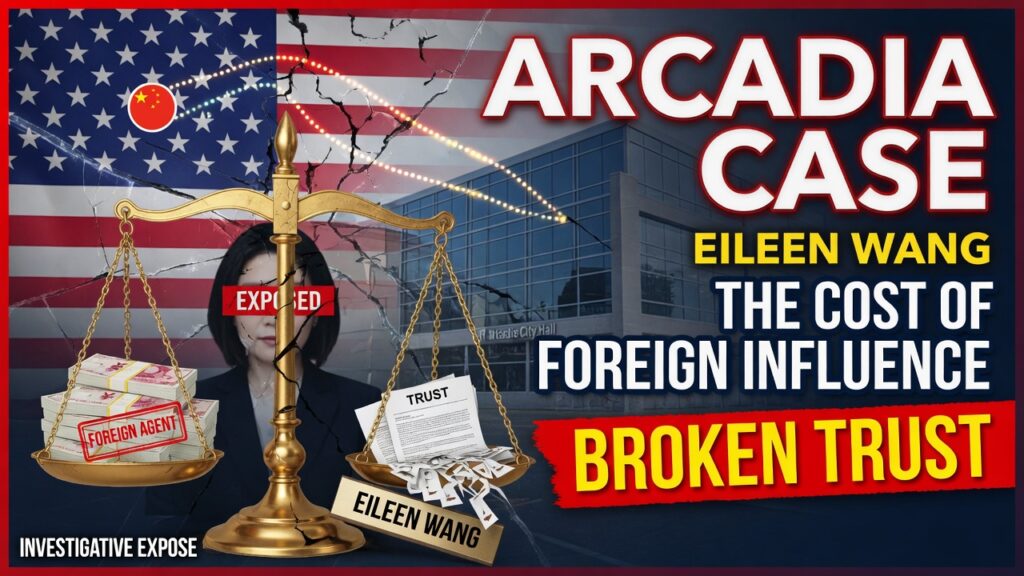
Arcadia’s former mayor Eileen Wang is now at the center of a federal case that has quickly become bigger than one city and one politician. The allegations, and Wang’s reported agreement to plead guilty, raise serious questions about foreign influence, public trust, and whether elected officials are willing to meet the same standards they expect from everyone else.
This is not just a political scandal. It is a reminder that civic life depends on honesty, transparency, and respect for the law. When a local leader is accused of secretly acting for a foreign government, residents are right to expect swift answers, firm accountability, and no special treatment.
What Happened in Arcadia
According to the Justice Department, Wang was charged with acting in the United States as an illegal agent of the People’s Republic of China, and she has agreed to plead guilty as part of a plea deal. Prosecutors allege she and her then-fiancé, Yaoning “Mike” Sun, helped run a website called U.S. News Center that published pro-PRC material and content supplied by Chinese officials.
Support Independent Local Journalism
TheTownHall.News is a non-profit reader-supported journalism. Just $5 helps us hire local reporters, investigate important issues, and hold public officials accountable across Alameda County. If you believe our community deserves strong, independent journalism, please consider donating $5 today to support our work.The reported details are striking. Court filings and news coverage say Wang was accused of sharing articles, responding to officials through WeChat, and even sending screenshots showing how many times a post had been viewed. If those allegations hold up in court, they describe a deliberate effort to shape public messaging without the disclosure U.S. law requires.
Why This Matters Now
Cases like this cut to the heart of the trust problem in American government. People can disagree about policy, but they should be able to assume that an elected official is acting for the public, not for a foreign power. That standard is especially important in local government, where residents expect practical leadership on schools, safety, roads, and budgets rather than ideological games or hidden agendas.
A city is not supposed to be a platform for outside influence. It is supposed to be a place where local taxpayers can believe that decisions are made in the open and in their interest. When that trust is broken, the damage goes beyond one officeholder because it makes people doubt the institutions they rely on every day.
The Federal Case
The Justice Department says the charge carries a maximum sentence of 10 years in federal prison. Wang reportedly made her first court appearance on Monday and is expected to formally plead guilty in the coming weeks. Those are serious developments, and they show that the case is moving beyond speculation into the legal process.

It also matters that the alleged conduct occurred before Wang was sworn into office in December 2022, according to city officials. That does not make the allegations trivial. It does, however, sharpen the question of personal responsibility: once someone seeks public office, they must be prepared to answer not only for what they did, but for whether they were fit for the trust they wanted voters to grant them.
“Public office is a duty, not a shield.”
“Transparency is the minimum standard, not an optional extra.”
Arcadia’s Response
Arcadia’s city leadership moved quickly to distance the city from the allegations. The city manager said the claims were “deeply troubling,” stressed that the conduct was tied to Wang individually, and said no city finances or staff were involved. That distinction matters, because taxpayers should not be forced to absorb the cost of misconduct they did not cause.
The city also said it would appoint an interim mayor. That is the right next step: keep the government functioning, keep the public informed, and make sure the matter is handled through the legal system rather than political theater. Residents deserve stable local government, not a prolonged crisis that drains time, money, and attention from essential services.
What Critics Miss
Some will argue that these cases are being used to inflame fears about foreign interference or to score political points. That concern should not be dismissed out of hand, because every democracy should guard against overreach and avoid guilt by association. But skepticism does not erase the facts alleged here, and due process does not mean pretending the evidence is meaningless.
The stronger principle is simple: law and order protect everyone. If someone acts on behalf of a foreign government without disclosure, then the issue is not partisan spin, it is accountability. The public has every right to expect prosecutors to prove their case and every right to expect elected officials to follow the rules before they ask others to trust them.
Support Independent Local Journalism
TheTownHall.News is a non-profit reader-supported journalism. Just $5 helps us hire local reporters, investigate important issues, and hold public officials accountable across Alameda County. If you believe our community deserves strong, independent journalism, please consider donating $5 today to support our work.The Bigger Lesson
This case also highlights how fragile public trust has become. Americans are watching government at every level struggle with credibility, and that makes clean lines of responsibility more important than ever. Citizens can tolerate disagreement; what they cannot tolerate is deception dressed up as public service.
That is why this story resonates beyond Arcadia. It speaks to a broader civic frustration: too many people feel that rules are enforced unevenly, that institutions explain too little, and that accountability arrives only after the damage is done. Whether the issue is public ethics, foreign influence, or basic honesty, the fix starts with clear standards and consequences that actually mean something.
Key Takeaway
The Arcadia case is a test of whether public office still carries real obligations. If the allegations are accurate, then the public should see a full legal reckoning, not a soft landing. If American cities want trust, they need leaders who understand that private loyalties must never outrank public duty.
This is exactly the kind of story readers should share, debate, and follow closely. Civic life works best when citizens stay informed, question power, and refuse to normalize misconduct. Support independent journalism that tracks these cases carefully, share this article with your network, and stay engaged in local government so accountability does not become a slogan instead of a standard.